Get Full Government Meeting Transcripts, Videos, & Alerts Forever!
Get email alerts on the Healthcare Pharmacy Pbm topic
No spam. Unsubscribe anytime.
Senate advances new rules for pharmacy benefit managers; lawmakers split over oversight of PSAOs
Summary
The Senate Insurance & Commerce Committee heard competing bills to tighten oversight of pharmacy benefit managers (PBMs) and pharmacy services administrative organizations (PSAOs). Lawmakers debated licensing, enforcement tools for the Insurance Department and whether to require PSAO disclosures; one PSAO-focused bill was pulled for further work.
Senate committee members on Wednesday considered multiple bills aimed at increasing transparency and enforcement over pharmacy benefit managers (PBMs) and the pharmacy services administrative organizations (PSAOs) that contract with independent pharmacies.
Supporters said the measures respond to years of complaints from independent pharmacists who say reimbursement rates and contract changes by PBMs and related contracting entities have left pharmacies unpaid or underpaid. Critics and industry representatives urged narrower, clearer language and recommended further negotiation before final passage.
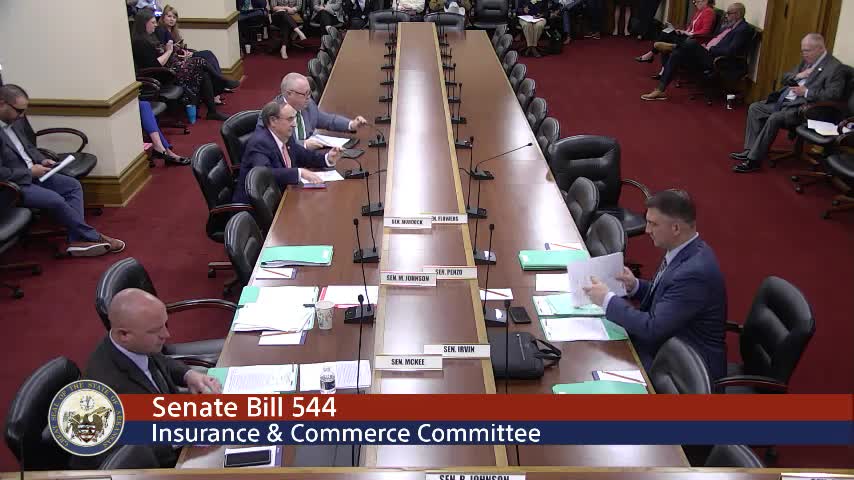
Senate Bill 544: PBM licensure amendments Senate Bill 544 (sponsor: Sen. Mark Johnson) would amend the Arkansas PBM Licensure Act to add definition clarifications, a new enforcement option short of license revocation (probation targeted at specific networks rather than an entire PBM), expanded fining authority (restating that fines up to $5,000 may be applied for any violation of the licensure act), and a mechanism to require interest and underpayment remedies to pharmacies (including a 12% interest charge for some underpayments, as described by witnesses).
John Vinson (identified in testimony as CEO of the Arkansas Pharmacists Association) described an opt‑out contract definition and a 60‑day review window for pharmacies to receive notice of contract changes. He and other pharmacy witnesses told the committee that national contract language sometimes defers to Arkansas law without specifying state‑level rates and terms in the contract language; SB 544 would require Arkansas‑specific contract terms to be included.
Sen. Johnson moved that SB 544 do pass; the committee approved the motion on voice vote.
PSAO bills and debate Committee members also debated proposals aimed at PSAOs. Senator Dismang presented Senate Bill 475 to require PSAO registration and licensing, disclosure of contracts and conflicts, audit authority and other oversight by the Insurance Department. Senators and pharmacists described PSAOs as the “middle man to the middle man,” and testified that some independent pharmacies rely on PSAOs to negotiate or enforce contracts with PBMs.
Pharmacists and industry representatives told the committee they support oversight but raised concerns about overly broad language in SB 475. John Benson (identified in the transcript as CEO of the Arkansas Pharmacists Association in one exchange) and other pharmacy witnesses said the language in SB 475 contained provisions the PSAOs and some pharmacists found unclear or beyond what PSAOs perform.
During discussion, Senator Dismang indicated he would pull SB 475 from consideration to work further on language after questions about scope and legislative drafting. He said he would return with a house sponsor and proposed amendments.
Senate Bill 593 (sponsor: Sen. Justin Boyd) was presented later as an alternative approach. Supporters said SB 593 would register PSAOs with the state, allow the Insurance Department to review contracts and require state‑specific contract amendments so Arkansas law is codified in contract language instead of deferred. Pharmacy owner testimony included a description of an instance where a PBM changed reimbursement rates unilaterally and the PSAO could not stop it. Senator Boyd moved that SB 593 do pass; the committee approved the motion on voice vote.
What remains unresolved Committee members repeatedly flagged the difference between licensing/registration and broader contract‑level interventions. Some senators preferred a narrowly tailored registration and audit regime; others supported stronger prohibitions on "take it or leave it" contracts and additional remedy tools for pharmacies. The Insurance Department’s role in rulemaking and enforcement was a recurring point: witnesses and members said precise enforcement standards, audit procedures and fee structures would need to be defined in rulemaking if the Legislature authorized the new powers.
The committee advanced SB 544 and SB 593; SB 475 was pulled for redrafting.
Ending Lawmakers said they expect continued negotiations between independent pharmacists, PSAOs, PBMs and the Insurance Department before final bills reach the Senate floor. The committee record shows divided views about how far state regulation should go to alter contract terms versus improving disclosure and enforcement tools for the regulator.