Get Full Government Meeting Transcripts, Videos, & Alerts Forever!
Get email alerts on the Sports Raffle topic
No spam. Unsubscribe anytime.
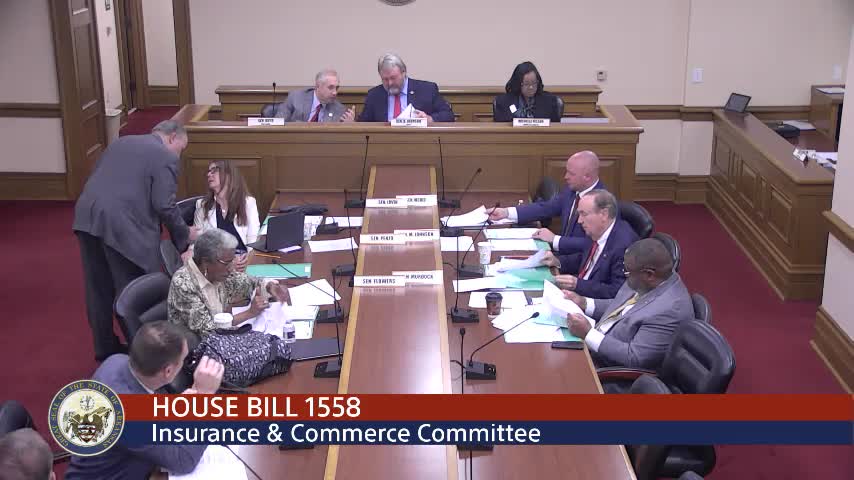
Committee approves bill to let Arkansas universities hold raffles under Amendment 84
Summary
State Representatives R.J. Hawk and Matthew Shepherd told the Senate Insurance & Commerce Committee that House Bill 1634 would allow Arkansas universities to hold raffles under the constraints of Amendment 84 to raise funds for scholarships, facilities, and, in some cases, name-image-and-likeness support.
State Representatives R.J. Hawk and Matthew Shepherd told the Senate Insurance & Commerce Committee that House Bill 1634 would allow Arkansas universities to hold raffles under the constraints of Amendment 84 to raise funds for scholarships, facilities, and, in some cases, name-image-and-likeness support.
The bill’s sponsors said the measure was drafted to comply with the state’s raffle amendment and Department of Finance and Administration oversight. Representative R.J. Hawk described the proposal as “a fundraising bill,” saying it would give smaller institutions new options for travel, scholarships and facility support while allowing larger universities to pursue NIL-related fundraising in ways the bill’s drafters believe fit within Amendment 84.
The committee’s discussion focused on whether using raffle proceeds for NIL payments or other athlete-related compensation would run afoul of Amendment 84’s prohibition on using raffle receipts to “compensate in any manner any person who works for or is in any way affiliated with the authorized bingo and raffles organization.” Alex Benton of the Arkansas Attorney General’s Office told senators Amendment 84 must be read together with the statutory scheme and regulations and that authorized organizations are defined and limited under the amendment and implementing statutes. Benton said the analysis is fact-specific and would vary by institution.
Matthew McCoy, senior associate general counsel for the University of Arkansas system, told the committee that the bill was reviewed by university counsel and the attorney general’s office and that the language “threads the needle” to permit some uses while remaining within the amendment’s limits. McCoy said universities could use raffle proceeds for permitted purposes (such as facilities or scholarships) and that freeing those dollars could, in practice, free other funds for NIL programs.
Carlton Saffa of Saracen Casino Resort, representing a gaming stakeholder, urged caution and recommended removing explicit NIL language to reduce the risk of litigation; he also warned the committee about an emergency clause combined with permissive rulemaking language that might produce an immediate statutory change without prior implementing regulations.
After debate and questioning from several senators, including Stephanie Flowers and Missy Irvin, the committee voted to consider the bill immediately and then approved it on voice votes. Sponsors told the committee the bill preserves allowable charitable raffle rules under Amendment 84 and gives institutions the option — not the obligation — to run raffles.
If enacted, the bill would direct that qualifying university-affiliated nonprofit organizations conduct raffles consistent with Amendment 84 and implementing regulations; it also asks the Department of Finance and Administration to promulgate rules, and contains provisions such as reasonable age verification and a numerical list of permitted uses for raffle receipts.
Votes at a glance: The committee approved immediate consideration on a motion by Senator Mark Johnson, seconded by Senator Justin Boyd; the committee later approved the bill on a motion by Senator Johnson, seconded by Senator Boyd; both votes passed by voice.
Supporters said the measure would provide new revenue tools for smaller institutions and allow larger programs to compete nationally for NIL funding under a constrained, constitutionally vetted approach. Opponents and cautious witnesses recommended removing the bill’s explicit NIL references to reduce litigation risk and suggested converting permissive rulemaking language from “may” to “shall” if the bill contains an emergency clause.
The measure will move forward from committee; sponsors and the Attorney General’s Office said institutions will need institution-specific legal review before using raffles for NIL purposes.