Get Full Government Meeting Transcripts, Videos, & Alerts Forever!
Get email alerts on the Developmental Disabilities topic
No spam. Unsubscribe anytime.
Legislature votes to require Disability Rights Arkansas to report to legislative subcommittee despite agency objections
Summary
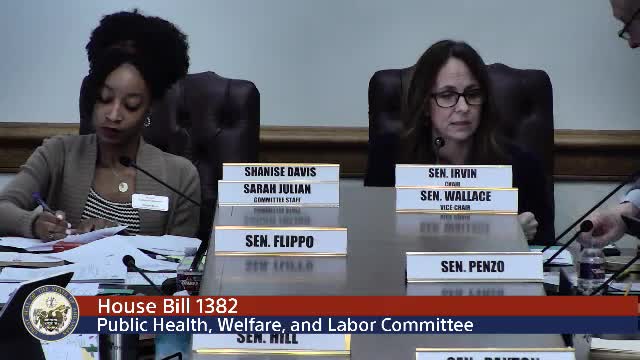
Representative Lademan introduced House Bill 13 82, which would require Disability Rights Arkansas to provide its existing reports and to appear before the Legislative Council's Hospital, Medicaid and Developmental Disabilities study subcommittee at the committee's request.
Representative Lademan introduced House Bill 13 82, a measure that would require Disability Rights Arkansas (DRA), the state's federally designated protection-and-advocacy nonprofit, to provide its existing reports and to make representatives available to the Legislative Council's Hospital, Medicaid and Developmental Disabilities study subcommittee when requested.
Supporters said the change would increase legislative oversight and offer families a regular forum to raise concerns. "This bill simply requires Disability Rights Arkansas to attend our subcommittees ... when requested and to communicate to the legislature their successes and their challenges," Representative Lademan said during his opening remarks. Parents and guardians described long histories with human development centers (HDCs) and urged the committee to approve the bill.
Julia Frost, a parent and guardian, said her adult daughter benefited from placement in an HDC and described being alarmed when DRA monitored the facility and recommended closure without notifying guardians. "It is unacceptable for DRA to use her as an example of inappropriate treatment without even talking to my husband and me, her legal guardians," Frost testified.
Other parents described situations in which family members with complex needs were sustained in HDCs and said that outside reviews by DRA had, in their view, introduced risk and anxiety. Carol Sherman, another guardian, told the committee DRA had used media coverage and litigation to push for changes she and other parents oppose. "The Arkansas PNA is a partisan organization which has sued the state multiple times over policy issues, and it has not recognized the role of the guardian," Sherman said.
Disability Rights Arkansas's director of legal and advocacy, Thomas Nichols, and Reagan Stanford, DRA's abuse-and-neglect managing attorney, urged the committee to narrow the bill or reject its FOIA provisions. Nichols said DRA already files annual reports with federal funders and is prepared to furnish those to the legislature, but cautioned that the bill as drafted would subject private attorney-client communications, investigative materials and other sensitive records to the state's public-records law. "Because we represent people, sometimes who are going through very, very difficult things in their lives, that privilege of our communications ... is very important," Nichols said.
Stanford told the committee that DRA conducts abuse-and-neglect investigations that rely on confidential information and that the organization lacks the staffing and funding to process extensive public-records requests. She said the bill could force DRA into litigation to determine which records are protected, draining resources from client services and monitoring.
Multiple nonprofit providers and advocacy organizations testified against the bill, warning that subjecting DRA to FOIA and unfunded legislative requests would impair its ability to represent clients and to conduct independent oversight. Dr. Sayeret Evans of Arkansas Support Network said DRA's work is "instrumental" to protecting people with disabilities and cautioned that the bill's administrative burden would limit that work.
Committee members questioned witnesses on both sides about whether DRA routinely contacts guardians before monitoring, what records DRA already provides to federal funders, and whether the bill would conflict with federal grant terms. Witnesses from DRA said they do notify guardians in many cases and that the agency uses federal authority to access records, but that the bill would create unique new obligations.
Representative Lademan said the bill was intended to create more direct communication between legislators, parents and DRA: "We want them to come to the legislature and talk to us about what they're doing. ... Come and talk to us. Give us a bit a report, which you already make, twice a year, and let us be involved."
After extended public testimony and committee discussion, the panel approved HB 13 82 by voice vote. The bill's FOIA and reporting provisions were a central point of debate throughout the hearing. Committee members who supported the measure described it as a way to ensure parents and legislators can hear DRA's findings directly; opponents warned that the FOIA language and broad request authority would expose confidential client information and create unfunded administrative work for the nonprofit.
Votes at a glance: the committee passed House Bill 13 82 (voice vote) and sent it forward. The transcript records a voice vote rather than a roll-call tally.
The committee's action does not change federal reporting DRA already files; it requires that those reports be made available to the legislative subcommittee and that DRA make staff available when asked. The measure drew particular attention to guardianship, HDC oversight, and the handling of maltreatment investigations in both state‑run and community settings.
What's next: The bill passed the committee and will be returned to the legislative calendar. Supporters said they want the subcommittee to be a forum for parents and DRA to present findings and discuss options; opponents said they intend to seek amendments to narrow FOIA exposure and to add funding or procedural protections for sensitive records.