Get Full Government Meeting Transcripts, Videos, & Alerts Forever!
Get email alerts on the Workers Compensation Package topic
No spam. Unsubscribe anytime.
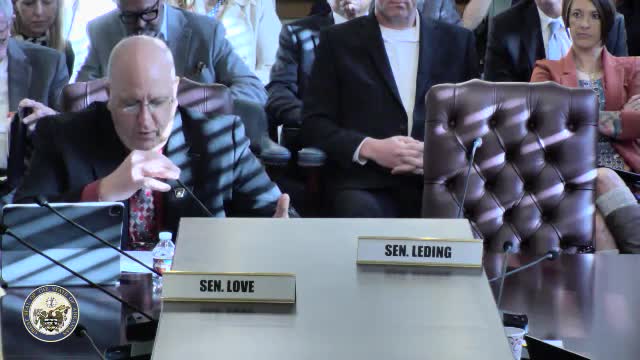
Senate committee advances multiple workers' compensation bills after hours of debate
Summary
The committee heard hours of testimony for a cluster of workers' compensation bills addressing physician choice, benefit caps, permanent-disability calculations and attorney fees; several measures passed while others were deferred or amended.
The Senate Public Health, Welfare and Labor Committee spent a significant portion of a multi-hour meeting considering a suite of workers' compensation bills that would change how injured workers access physicians, the state's maximum compensation cap, permanent-disability calculations and attorney-fee rules.
Sponsor Sen. Jonathan Peyton described a package of bills intended to alter the current system, including a measure to allow injured workers a limited change of specialist (Senate Bill 288), a bill to raise the maximum insurable wage used to calculate weekly compensation (Senate Bill 285), and related bills addressing how permanent disability is calculated (Senate Bill 286) and attorney fees for awarded medical benefits (Senate Bill 287).
Key outcomes and debate: - Senate Bill 288 (specialist change): Sponsor said the bill creates a hybrid model whereby an injured worker may change a specialist no more than once per year, provided the specialist is inside the workers' comp network and follows the fee schedule. Supporters, including Dr. Jason Lofton and attorney Jason Hatfield, said the change helps injured workers access trusted specialists; opponents, including the Arkansas Self Insured Association and State Chamber, warned of increased lifetime medical costs and possible rate impacts. The committee voted to pass SB 288 by voice vote; the chair announced the measure had passed.
- Senate Bill 285 (raise compensation cap / increase replacement rate): The bill would raise the statutory maximum used to calculate workers' compensation weekly benefits and raise the compensation formula toward 70% of average weekly wages for higher earners; sponsor Sen. Peyton said the change is intended to protect higher-paid workers whose take-home pay is substantially reduced under current caps. Witnesses testifying for the bill included injured-worker Steven Keeling and attorney Eddie Walker; witnesses against the bill (Carol Worley and Randy Zook of the State Chamber) cited NCCI analyses estimating a double-digit premium impact and warned of adverse effects on business recruitment. The committee approved SB 285 by voice vote following debate.
- Senate Bill 286 (adjust permanent-disability calculation): Sponsor said the bill adds discretion so the Workers' Compensation Commission may assess additional percentage adjustments for the practical effect of a scheduled injury on a claimant's career. Supporters argued it adds needed flexibility for life-changing injuries; the committee adopted immediate consideration and passed the bill by voice vote.
- Senate Bill 287 (attorney fees for awarded medical benefits): The sponsor proposed a fee schedule to pay claimant attorneys a percentage (12.5%) of awarded medical benefits with caps to help ensure representation in contested medical-benefit hearings. After questions about existing fee practices, the sponsor asked to pull the bill for amendment and it was set aside for further drafting.
Regulatory and fiscal follow-up: Workers' Compensation Commission Chair Dale Douthat testified the commission supports a negotiated, bipartisan approach and that NCCI is conducting financial-impact analyses for multiple bills; he cautioned that many of the proposals would increase cost to employers and likely increase litigation. The committee requested additional NCCI materials and briefings; Douthat said he would provide analysis when available.
Why it matters: supporters said the bills aim to expand injured workers' access to specialists and reduce the financial shortfall for higher-paid workers; opponents said the measures risk raising premiums, increasing litigation and harming Arkansas's business competitiveness.
What comes next: SB 288, SB 285 and SB 286 passed out of committee by voice vote; SB 287 was pulled for amendment. The Workers' Compensation Commission and NCCI will provide further financial-impact analyses requested by committee members.
Speakers in this report spoke during workers' compensation items on the committee agenda.