Get Full Government Meeting Transcripts, Videos, & Alerts Forever!
Get email alerts on the Hospice Service Area topic
No spam. Unsubscribe anytime.
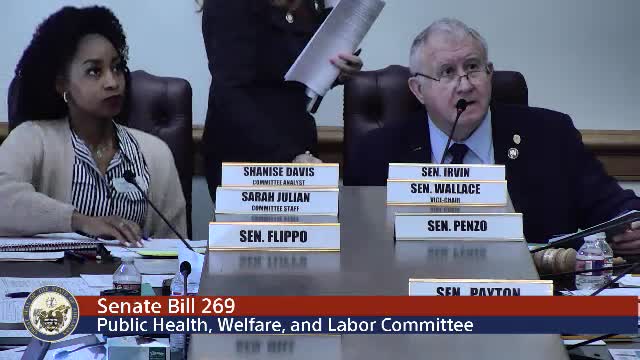
Heated debate at committee over hospice service‑area expansion; committee advances SB 269
Summary
Senate Bill 269 would let existing hospice providers extend service areas by up to 100 miles to match home‑health rules. The Senate committee approved the bill after hours of testimony that split industry providers and prompted concerns about access, travel times and quality oversight.
Sen. Penzo and supporters presented Senate Bill 269 to the Public Health, Welfare and Labor Committee as a measure to expand hospice providers' geographic service areas and make hospice rules consistent with earlier changes for home health.
Sponsor testimony framed the bill as a choice‑and‑access measure. Casey Casselberry and other proponents said the 2021 expansion for home health (Act 817) had operated without broad negative consequences and that extending the same geographic flexibility to hospice would let more existing Arkansas providers serve patients in underserved areas. Supporters argued the bill includes reporting requirements and application fees to preserve oversight; the sponsor said each new branch application would include a $3,000 fee to help cover administrative costs.
Opponents — including Catherine Grubbs, CEO of Circle of Life Hospice; Dr. Brian Bill, chief medical officer for Arkansas Hospice; Greg Wood of Hospice of the Ozarks and Charles Martin of Home Care Arkansas — urged a no vote. They told the committee that expanding service radii by 100 miles could result in delayed in‑person hospice responses, duplicate services in urban areas and deserts in rural coverage. "When you call hospice, we say we'll be there. Physically be there," Dr. Brian Bill testified, describing hospice's 24/7 on‑call expectation and saying that three‑hour travel times to remote patients would be unacceptable in crisis situations.
Several witnesses pointed to problems experienced in states that relaxed licensing and oversight, including higher fraud enforcement and moratoria on new licenses in states such as Louisiana and California. Melinda Black, who said she works for a large national hospice, described quality signals she watches for — visit frequency, trained nurses who can differentiate terminal delirium from agitation, and prompt response — and warned those measures can decline when unregulated providers enter a market.
Proponents responded that the bill does not authorize new out‑of‑state or additional providers; it would allow existing Arkansas providers to expand service boundaries and would preserve the existing permit/approval process for new license applications. The sponsor said the places most likely to see additional providers are underserved areas or places where residents are unhappy with local service.
After hours of testimony and exchanges with committee members, the sponsor moved for a do‑pass recommendation. The committee recorded a motion, a second and a voice vote; the chair announced the bill passed the committee.
The debate highlighted competing policy goals: proponents stressed increased choice and access, while opponents warned the change could undermine rural hospice access, strain scarce on‑call nursing resources and encourage duplicative urban entry by new branches. Several witnesses asked for stronger reporting or guardrails; the bill language presented included reporting requirements meant to address regulator concerns identified after the 2021 home‑health change.
Committee members heard several specific concerns — that a 100‑mile radius could cover most of the state from some locations; that hospice's median length of stay is short (a witness said about 13 days in his testimony); and that the permit/approval process should be preserved to protect rural service levels. Despite those concerns, the committee moved the bill forward.