Get Full Government Meeting Transcripts, Videos, & Alerts Forever!
Get email alerts on the Tax Credits topic
No spam. Unsubscribe anytime.
Senate committee approves tax-credit deal for Natural State Renewables after removing state buyback
Summary
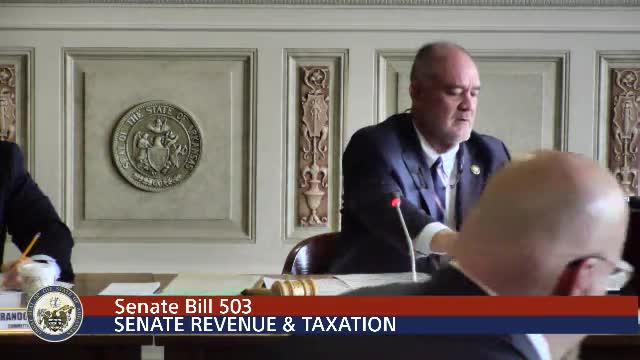
The Senate Revenue & Tax Committee approved House Bill 1303, as amended, authorizing a tax-credit package tied to Natural State Renewables’ planned sustainable aviation fuel facility in south Arkansas.
The Senate Revenue & Tax Committee approved House Bill 1303, as amended, authorizing a tax-credit package tied to Natural State Renewables’ planned sustainable aviation fuel facility in south Arkansas. The committee adopted an amendment that removes language authorizing the state to buy back certified tax credits and prevents the credits from being sold to third parties.
The amendment and final passage matter because the original bill had allowed the company to sell up to $10 million of certified credits per year back to the state at 80% of face value; the amendment eliminates that buyback and keeps credits with the taxpayer, redeemable only against the taxpayer’s liability. Department of Finance and Administration (DFA) staff told the committee the bill, both before and after the amendment, carried a revenue-neutral fiscal estimate when modeled under the bill’s required cost-benefit and clawback provisions.
Senator Matt Stone, who introduced the amendment and presented the project, described the company’s plans and local economic impacts. “They’re gonna use sawdust, oversized chips, wood from first any pine plantations that’s going, underutilized, the lowest price products out there on the market and turned it into a a viable economic business to make a sustainable aviation fuel,” Stone said. He also said the project would “create approximately 200 permanent jobs with an average salary of a hundred thousand dollars per year and generate over 1,500 construction jobs during the facilities build out.”
Michael Newton of Natural State Renewables said the company’s financial modeling projects substantial state tax liability after start-up. “All of our financial models show us making a profit and having a 20 to $40,000,000 tax liability with the state of Arkansas each year,” Newton said, adding that the plant would buy “50 to a hundred million dollars a year of forest products” currently without local markets.
DFA analyst Paul Gehring summarized the bill’s mechanics and the effect of the amendment. Under the bill as originally drafted, the company could claim a 30% tax credit on qualified expenditures; the credits would be certified by the Department of Energy and Environment, and the company would receive a tax-credit certificate. The original draft allowed the company to sell up to $10 million per year of those credits back to the state at 80% of face value; credits not redeemed by the state could be carried forward indefinitely by the taxpayer, and credits sold to third parties had a three-year lifespan before expiration. Gehring explained the amendment removes the state buyback and prohibits sale to third parties; under the amendment, the taxpayer would claim the credits on its tax return at full value when it has taxable income.
Committee members debated two central concerns: (1) whether removing the buyback option would reduce the ability of smaller or loss-making partners to monetize credits during construction, and (2) whether adopting the amendment would create an adverse precedent for future tax-credit legislation. Several members urged broader policy discussion on buyback mechanics for future bills; Natural State Renewables’ representatives said they accepted the amendment for this project.
Gehring also told the committee that any tax credits authorized under the bill would be subject to a Department of Commerce incentive agreement that must show a positive cost-benefit to the state and include clawback provisions in the event the company does not meet required performance criteria. He said DFA’s most recent fiscal impact statement for the house amendment indicated the bill would be revenue neutral under the bill’s assumptions.
The committee adopted the amendment (motion by Senator Caldwell; second by Senator Crow) and then voted to pass the bill as amended (mover: Senator Crowell; second: Senator Hester). The committee recorded no opposition during voice votes.
The bill’s supporters framed it as a rural economic development initiative that would create manufacturing and forest-product demand, and DFA emphasized that approvals and any future fiscal effects are governed by the statutory requirement that the Department of Commerce negotiate incentive agreements with positive cost-benefit and clawback terms.
Action taken: committee adopted the amendment and passed HB 1303, as amended.