Get Full Government Meeting Transcripts, Videos, & Alerts Forever!
Get email alerts on the Medicaid Reimbursement Cgms topic
No spam. Unsubscribe anytime.
Committee advances bill to restore dual reimbursement pathway for continuous glucose monitors after DHS cites lost rebates
Summary
The Senate Public Health, Welfare and Labor Committee passed House Bill 1255 to require Medicaid to maintain both pharmacy and durable medical equipment (DME) reimbursement pathways for continuous glucose monitors, after the Division of Medical Services told lawmakers the change would reduce rebate revenues and cost the state about $2 million.
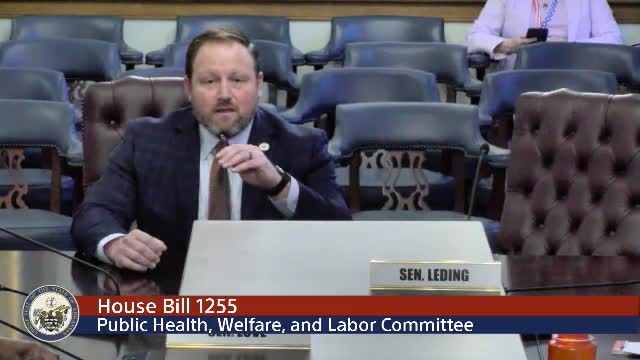
The Senate Public Health, Welfare and Labor Committee on Thursday passed House Bill 1255, a measure requiring the Division of Medical Services at the Department of Human Services (DHS) to maintain a dual reimbursement pathway for continuous glucose monitors (CGMs) as both a pharmacy benefit and a durable medical equipment (DME) benefit.
The bill arose after legislators and stakeholders said a previous change moved CGMs into pharmacy billing only and produced an “unintended consequence” limiting choices for providers and affecting how rebates are handled. Representative Jeremy Wooldridge, the bill sponsor, told the committee the dual pathway would restore access in counties that lack DME providers and give patients options on where to obtain monitors.
DHS Director for the Division of Medical Services Elizabeth Pittman testified that DHS already covers CGMs and that the state’s budget currently reflects the pharmacy-pathway pricing and rebate arrangements. Pittman said shifting some CGM billing back to DME would mean the state would lose certain manufacturer rebate revenue tied to pharmacy claims. DHS estimated about $6.7 million in total computable impact and approximately $2 million in state funds lost if the rebate collection is reduced.
Pittman explained that pharmacy billing arrangements often include confidential manufacturer rebates that reduce the net cost to the Medicaid program; moving items to DME sometimes removes the state’s ability to collect those rebates, with a portion of the rebate dollars ultimately returning to the federal government under Medicaid matching rules.
Senators asked DHS clarifying questions about how the rebate flow works and whether providers would receive rebate benefit if billing changes. Pittman said in some instances providers could retain discounts when items are billed as DME, which reduces the state’s share of rebate receipts. Committee members discussed the trade-off between local DME access and the state fiscal effect.
Senator Penzo and others asked for formal fiscal assessments on Medicaid bills going forward; committee members acknowledged DHS had provided testimony at the hearing. After discussion, the committee voted to pass the bill.
Votes at the Committee: The committee approved House Bill 1255 by voice vote. Specific roll-call tallies were not recorded in the committee transcript.
Why it matters: Restoring a DME pathway aims to broaden where Arkansans can get CGMs, particularly in areas with few pharmacies or DME suppliers. DHS’s fiscal testimony highlighted budget impacts tied to manufacturer rebate mechanisms that accompany pharmacy billing and the federal matching consequences of rebate recoveries.
What’s next: The bill passed the committee and will move through the legislative process to the next chamber or committee scheduling steps.