Get Full Government Meeting Transcripts, Videos, & Alerts Forever!
Get email alerts on the Teacher Certification topic
No spam. Unsubscribe anytime.
Rhode Island committee hears bill to allow multi‑year emergency teaching certificates
Summary
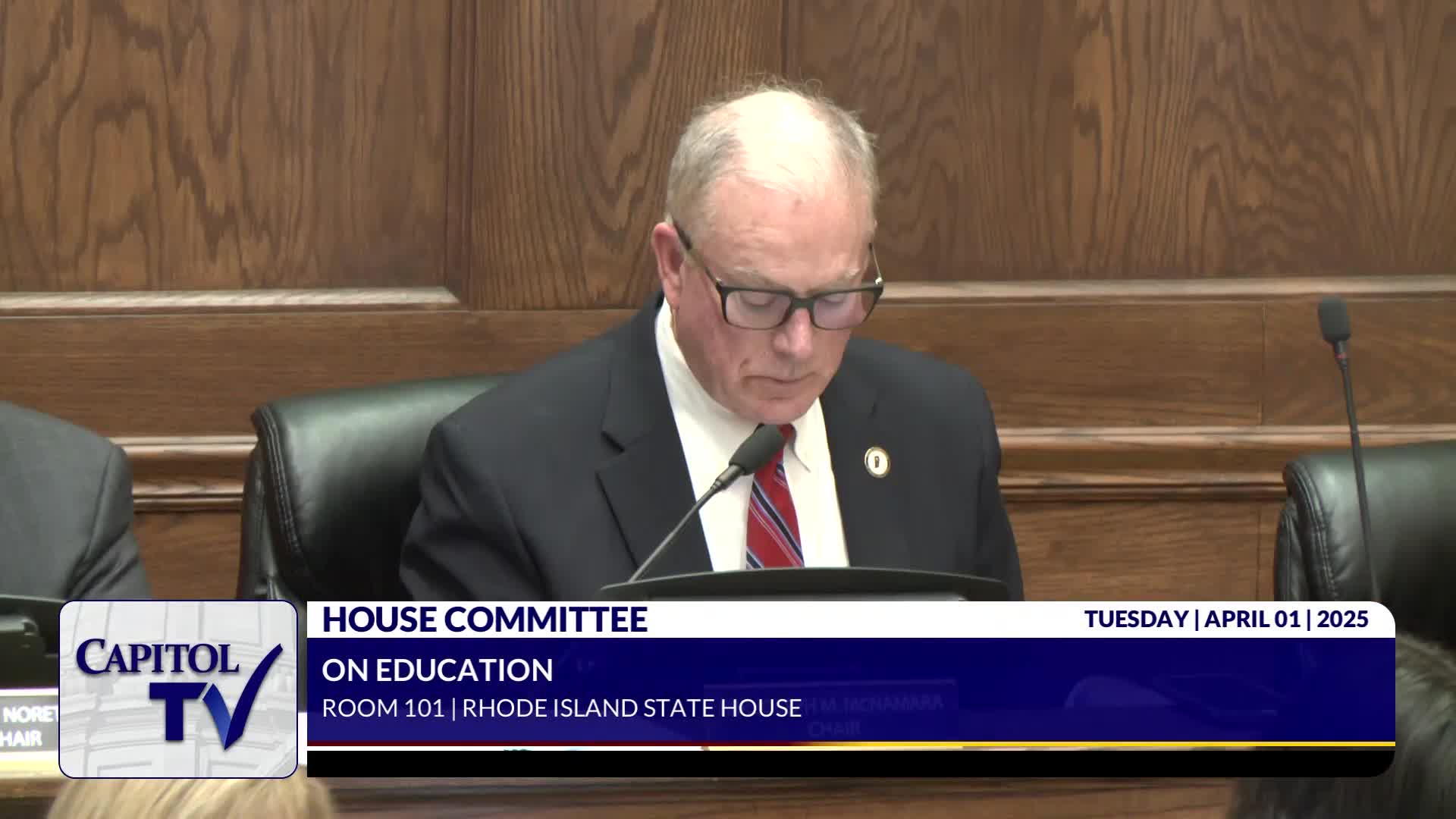
The Rhode Island House Committee on Education heard testimony April 1 on House Bill 5603, which would allow school districts to issue emergency preliminary teaching certificates that can be renewed annually for up to five years.
The Rhode Island House Committee on Education heard testimony April 1 on House Bill 5603, which would allow school districts to request emergency preliminary teaching certificates that can be renewed annually for a total of up to five years.
The bill, introduced for discussion by the committee chair, would require a school district to request an emergency certification and to show that it advertised the vacancy and was unable to find a certified teacher. The bill removes a mandatory initial testing requirement for emergency certificate holders and allows districts to renew the emergency certificate year by year if the district determines the teacher is performing satisfactorily.
Witnesses included a person identified as Andy Andrade (listed in the hearing as a witness) and Eric Hasselhorst, who testified on behalf of the National Education Association, Rhode Island. Hasselhorst said the state is experiencing a teacher shortage and described this bill as a tool to address staffing gaps while broader solutions are pursued. Andrade summarized how the process would work: district request, evidence of recruitment, no test required at the initial emergency appointment, and annual renewals tied to shown progress toward full certification.
Committee members asked for clarifications. A member asked how long a person could remain on an emergency certificate; witnesses reiterated that districts must demonstrate continued progress toward certification and expressed uncertainty that five years would commonly be needed if candidates are advancing toward certification. Another member confirmed the bill would cover career and technical education certifications as well.
The committee recorded a procedural motion to hold the bill for further study so staff could review written and verbal testimony and organize the hearing record. That motion was seconded and carried by voice vote and recorded in the affirmative. No final action on the bill was taken at the hearing.
The bill’s text, as discussed in the hearing, specifies: (1) districts must request emergency certification; (2) districts must show active recruitment and inability to hire a certified teacher; (3) no initial testing requirement for emergency appointment; (4) annual renewals available if the district documents satisfactory performance and progress toward certification; and (5) after one year of emergency certification the teacher must show good‑faith efforts toward completing certification requirements.
The committee did not vote on the underlying policy merits; members emphasized the procedural nature of holding the bill for further study so the committee can review the testimony and any suggested amendments.
No statutory citations were offered during testimony. The bill remains under committee consideration.