Get Full Government Meeting Transcripts, Videos, & Alerts Forever!
Get email alerts on the Aging Out Benefits topic
No spam. Unsubscribe anytime.
DHS says it conserves benefits for youth aging out; RFP to manage accounts failed, agency seeks consultant
Summary
DHS told council it serves as rep payee for youths’ federal benefit payments while in care, is conserving those funds internally, and is seeking an outside provider after a failed RFP to manage conservation and financial‑literacy services for youth who age out.
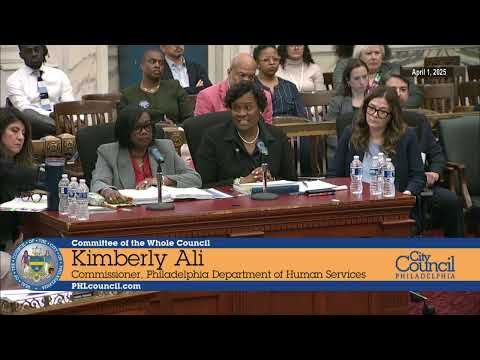
During a budget hearing, the Department of Human Services described its approach to federal benefits and financial accounts for youth in care, and outlined housing and rental assistance supports for young people who age out of the system.
Nadine Parisi, DHS chief financial officer, said DHS currently serves as the rep payee for Social Security benefit payments while young people are in care — a role the department said it is mandated to fulfill to receive federal funding that supports placements. Parisi said DHS tracks funds collected for youth and has been working with the Law Department and the state Office of Children, Youth and Families to find a way to “conserve” those funds for youth without jeopardizing federal funding. She told council the department had released an RFP to find a provider to manage accounting and conservation of those funds, that the initial RFP process failed, and that DHS is reworking the scope and reissuing procurement material.
Parisi explained DHS’s approach in part by distinguishing types of benefits: “So we don't do the Social Security Income, the SSI. We only collect the, what's known as RSDI,” she said, referring to retirement, survivor and disability insurance payments that are payable based on a family member’s record.
Council members also asked about testing youth for eligibility for benefits (disability or survivor benefits) and about transition planning when youth approach the age of leaving care. DHS said evaluations are provided when clinically indicated and that, if an evaluation identifies eligibility for benefits, the department assists with the process. DHS said it also tracks whether youth aging out have stable income, stable housing and a life connection; the department reported 88 young people aged out in FY24, down from a prior figure of 310 in FY2021.
On housing and rental assistance for older youth, DHS provided counts and program names: 16 clients served through a family reunification program; 40 young people served through a Fostering Youth to Independence (FYI) program; an older‑youth rental assistance program with 60 annual slots (serving more than 30 youth currently); Valley Youth House provides rental assistance and case management for 28 young people; and other rapid rehousing supports (Congresso) with 25 slots. The administration said the mayor’s housing plan will consider target populations including youth aging out of care.
Why it matters: Ensuring that funds owed to youth are conserved and that youth leaving care have housing and supports is a critical part of post‑care outcomes and budget oversight.
What council requested: Council members asked DHS for details on account setups, total balances, and the testing rate for benefits as part of aging‑out planning; DHS said it is tracking collections and is pursuing an outside provider to manage conservation and financial‑literacy supports.
Ending note: DHS emphasized a holistic approach — combining benefit conservation, financial literacy, housing assistance and case management — while noting procurement and scope work remains to be completed.