Get Full Government Meeting Transcripts, Videos, & Alerts Forever!
Get email alerts on the Cua Performance topic
No spam. Unsubscribe anytime.
Council questions CUA scorecard and persistent low rankings for some child‑welfare contractors
Summary
Council members pressed DHS about Community Umbrella Agency (CUA) performance scorecards, funding, staff pay and steps the department takes when providers receive low ratings.
Philadelphia City Council members used a budget hearing to question the Department of Human Services about its Community Umbrella Agency (CUA) model, recent scorecards and how the department supports or sanctions lower‑performing contractors.
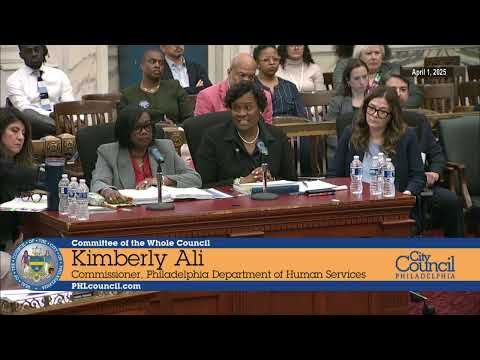
Nadine Parisi, DHS chief financial officer, told council that the city invests roughly $114 million annually across 10 CUA regions. “Across the 10 CUAs, we spend… a hundred $14,000,000 that we're investing, annually,” Parisi said when asked about the funding line and class category for contracts. Kimberly Ali said DHS has worked to align CUA salaries with DHS salaries and reported an average CUA case manager salary of $60,000 to reduce turnover.
Council members, including Councilmember Cindy Bass and others, pressed DHS to explain persistent low scores for particular providers that repeatedly appear near the bottom of the posted scorecards. DHS leadership said scorecards for 2023 and 2024 have been posted and acknowledged the department performs quarterly reviews and requires plans of correction for CUAs rated below expectations. Ali said that DHS brings CUA leadership together for transfer‑of‑learning sessions and that higher‑performing CUAs mentor lower performers.
Council members asked whether DHS would set a minimum acceptable grade or “floor” for CUAs; DHS said it meets regularly with underperforming providers, requires plans of correction and co‑locates practice coaches and senior learning specialists at CUAs to support improvement. DHS also said it posts scorecards on its website so results are transparent to the public.
Why it matters: CUAs hold day‑to‑day case management responsibility for many children and families; repeated low performance by a contractor raises questions about oversight, contract terms and options for replacement or restructuring.
What council requested: Council asked DHS to provide the evaluation criteria used to award contracts and to follow up with data and plans showing how underperforming CUAs will improve.
Ending note: DHS said it will provide more detailed evaluation materials and continue quarterly oversight; council members said they expect to review corrective plans and contracting timelines.