Get Full Government Meeting Transcripts, Videos, & Alerts Forever!
Get email alerts on the Land Use Zoning topic
No spam. Unsubscribe anytime.
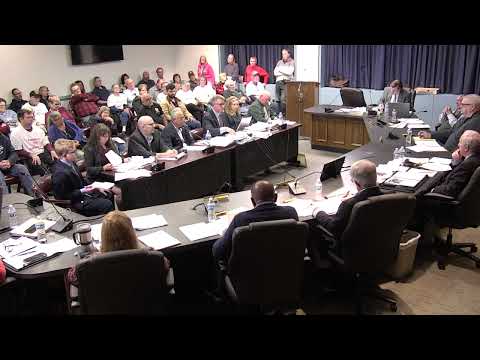
Wicomico board finds zoning administrator met initial burden in appeal over Rosewood Farm biorefinery; hearing continues
Summary
The Wicomico County board presiding over a zoning appeal on a proposed biorefinery at Rosewood Farm found on the record that the county zoning administrator met the initial burden of proof, and the hearing continued with testimony from the applicant.
WICOMICO COUNTY — The Wicomico County board presiding over a zoning appeal on a proposed biorefinery at Rosewood Farm found on the record that the county zoning administrator met the initial burden of proof, and the hearing continued with testimony from the applicant.
The decision on the burden was made after argument over disputed exhibits lodged by interested parties and a discussion of whether the proposed operation is an agricultural use or a more intensive industrial process. Board member James Turner moved to find the zoning administrator had met his initial burden of proof; the motion carried after the board called for aye votes.
The finding means the burden of persuasion shifted to the applicant, Katheria Farms, which then called owner Rajnish Katheria to describe the planned pilot operation. Katheria testified the project is a one‑year demonstration funded in part by grants and that the equipment — provided by the equipment manufacturer International Bio Refineries — would thermally process poultry litter produced on site into biochar, a soil amendment, while recovering bio‑oil and syngas that would be burned on‑site to supply most of the process heat.
Katheria described the technology to the board: poultry litter would be dried to about 10% moisture, fed to a sealed, oxygen‑starved thermal chamber and converted into condensed biofuel and a solid biochar product. He said the process “reduces the volume of the poultry litter by two thirds” and that the pilot’s output of biochar would require far fewer truck trips than hauling unprocessed litter. “It will take us about a month or so to fill a truck,” Katheria said, describing expected shipping frequency for biochar from the pilot.
Katheria also said the Maryland Department of the Environment issued an air permit for the facility that, in his account, found emissions “well below” thresholds requiring a full permit, and that the Maryland Department of Agriculture recognizes the project as a promising best practice to address poultry litter volumes. He said the pilot would not import litter from other farms during the grant‑funded demonstration year and that larger commercial operations that might import feedstock would require industrial‑zoned sites.
Board members and other participants questioned the characterization of the use. Member Ennis told the board he viewed the proposal as “an intense industrial use” rather than an accessory agricultural activity, saying it was not “customary” and noting the project’s involvement of outside grants, university partners and a technology provider. Other participants raised concerns about property values, environmental justice screening cited by interested parties, truck traffic, and whether exhibits submitted by opponents should be admitted into evidence. The board reserved rulings on some exhibits so they could be reviewed before final findings.
Counsel and parties also disputed how the county code and the county’s right‑to‑farm ordinance apply to the proposed processing activities. Advocates for the applicant argued that poultry houses and associated litter handling are permitted by right under the county’s zoning rules and that thermal processing of litter produced on the same parcel should fall within allowed agricultural operations or incidental activities. Opponents and at least one board member questioned whether the pilot’s technology and potential for scale make it a non‑permitted, industrial use in the A‑1 district.
Procedurally, the board’s finding that the zoning administrator met the initial burden of proof was limited to that stage of the appeal; the board expressly allowed the applicant to present evidence and testimony next. The record shows the hearing remained open after the applicant’s direct testimony and technical explanation. The board did not issue a final determination on the zoning permit during the portion of the hearing in the transcript provided.
Copies of multiple exhibits — including an executive summary submitted to the U.S. Department of Agriculture, a Maryland Department of the Environment permit, a map of nearby properties, a property‑value study abstract, and an environmental justice screening analysis — were discussed on the record. Interested parties objected to admission of several items; the board reserved ruling on those objections so members could review the materials before making final evidentiary determinations.
The board’s next procedural steps, including whether it will admit contested exhibits and when final findings will be issued, were not resolved in the portion of the record provided.