Get Full Government Meeting Transcripts, Videos, & Alerts Forever!
Get email alerts on the Firearms Policy topic
No spam. Unsubscribe anytime.
Senate adds Capitol Police to concealed‑carry waiting‑period exemptions
Summary
The Rhode Island Senate passed S-280 to add members of the Capitol Police to the list of law enforcement personnel exempted from concealed‑carry license waiting‑period requirements, a change sponsors described as correcting a drafting oversight; the bill passed 29–5 after floor debate.
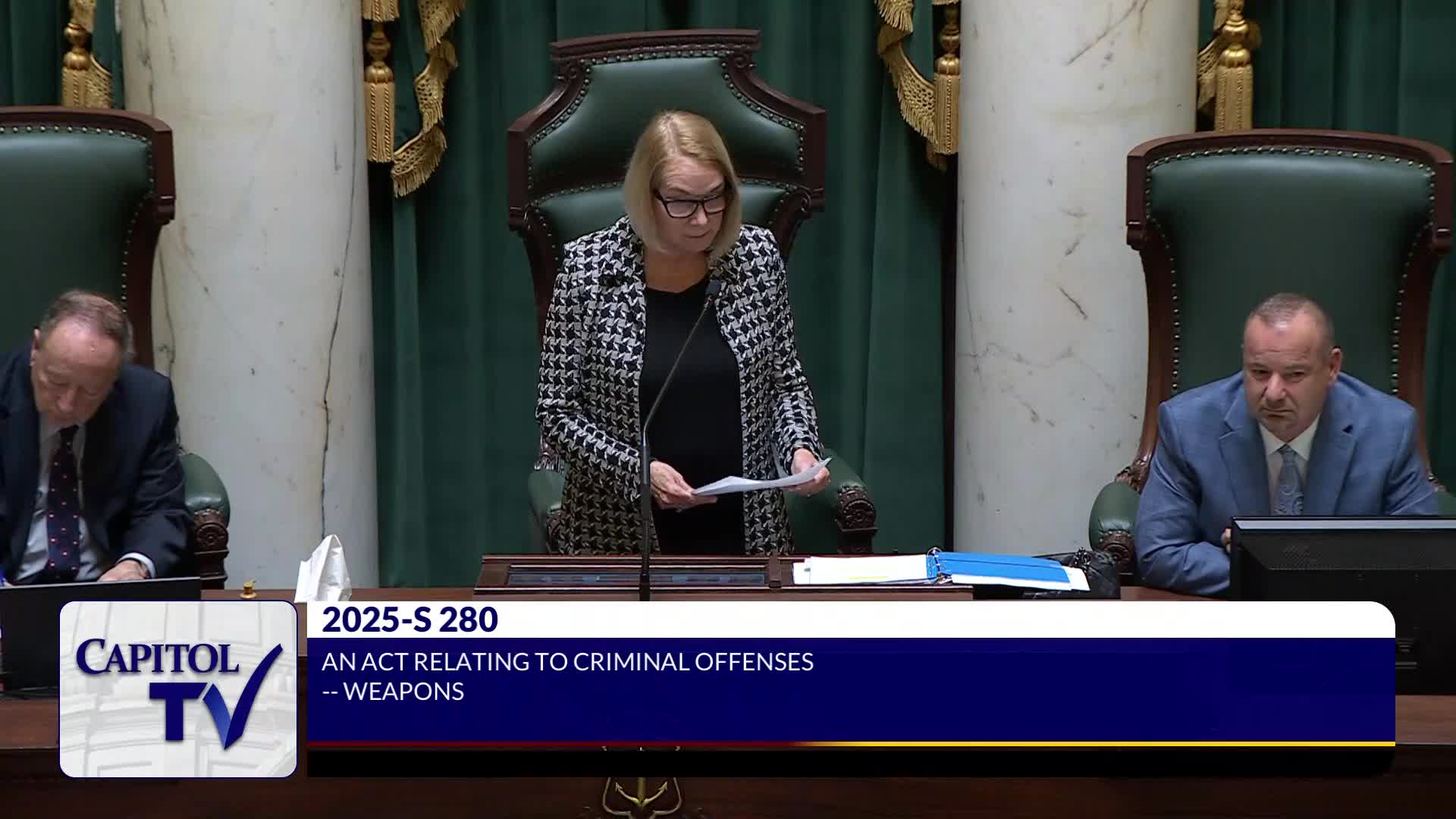
The Rhode Island Senate on Tuesday voted 29–5 to pass S-280, a bill that adds members of the Capitol Police to statutory exemptions from concealed‑carry licensing waiting periods.
Sponsors said the bill corrects a drafting error that left Capitol Police without the same exemption already afforded sheriffs, state police, airport police and state fire marshals. Senator Rogers, who introduced the bill, said the law had referred to “state marshals,” a position that no longer exists, and that the legislature intended to include Capitol Police in the exemptions.
The bill’s sponsor told colleagues the change “adds members of the Capitol Police to these exemptions. It's a good bill that corrects a mistake in our law.” Senator Bell voiced support on the floor, saying, “I rise in support of this legislation. It's eminently reasonable,” and noting that Capitol Police sometimes face sudden, unpredictable threats.
A senator who identified themselves only on the record as a voting senator opposed the measure, arguing more broadly about firearms policy and urging investment in training rather than expanded carry exemptions. That senator said, “I do not believe that the proliferation of guns makes us safer,” and concluded, “So I will be voting no.”
Clerks recorded 29 votes in the affirmative and five votes in the negative, and the bill was adopted.
The bill changes eligibility for an existing statutory exemption tied to concealed‑carry license waiting periods; it does not alter other elements of the concealed‑carry licensing scheme. The floor debate focused on the narrow drafting correction and broader policy differences over firearms and law enforcement training.