Get Full Government Meeting Transcripts, Videos, & Alerts Forever!
Get email alerts on the Higher Education topic
No spam. Unsubscribe anytime.
Higher Education Coordinating Commission presents governor's recommended budget; highlights student aid increases and IT modernization ask
Summary
The Higher Education Coordinating Commission presented the governor's recommended budget to the Joint Committee on Ways and Means for Education on April 1, outlining a $4.39 billion package with increases to student financial aid, an IT modernization proposal, workforce investments and capital projects.
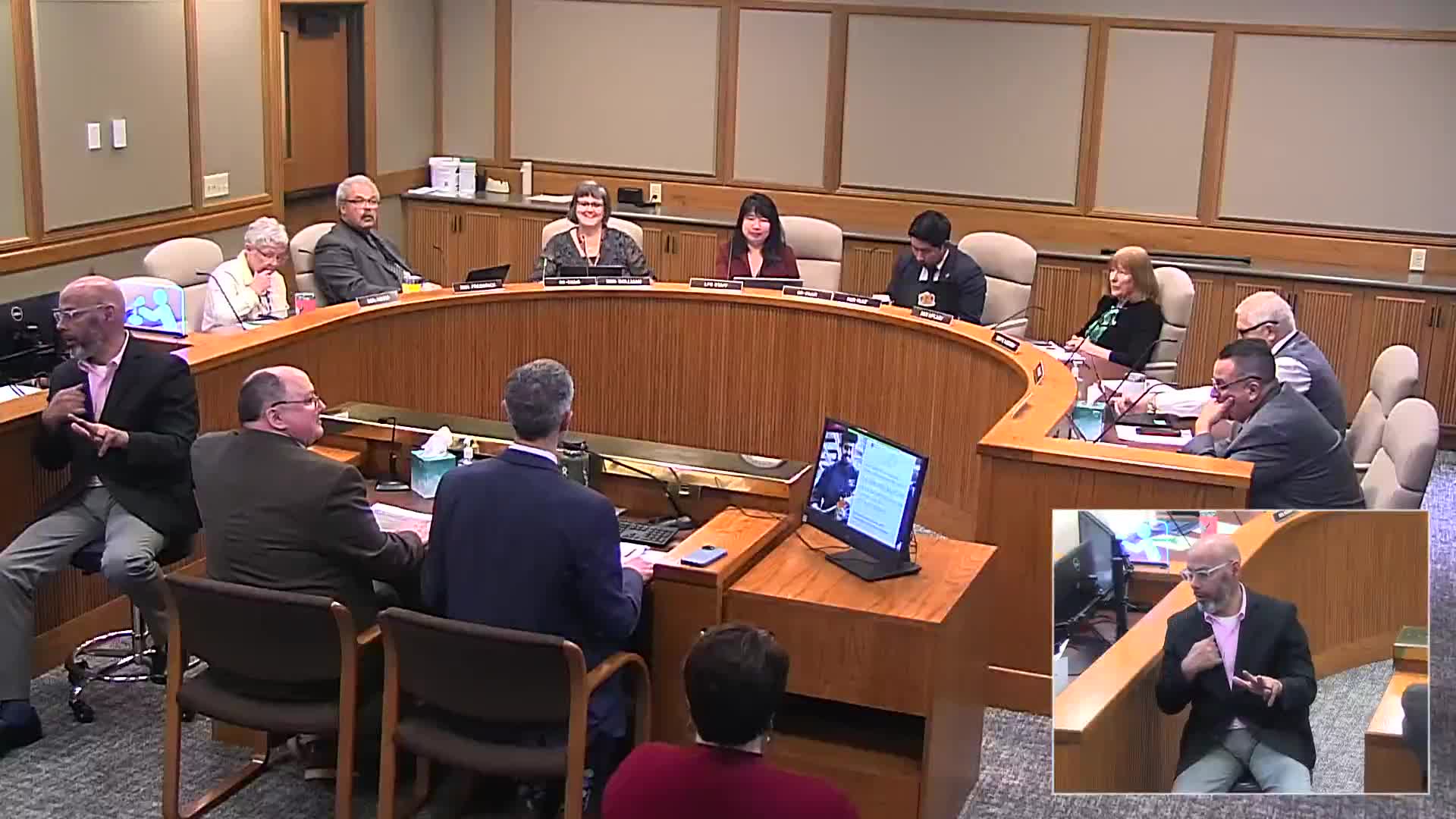
The Higher Education Coordinating Commission (HECC) presented the governor's recommended budget and agency priorities to the Joint Committee on Ways and Means for Education on April 1.
Ben Cannon, HECC executive director, and Tom Reel, HECC director of operations, led a budget‑intensive briefing that summarized national comparisons, state investments per student, institutional funding patterns and key elements of the governor's recommended budget (GRB). The GRB total for HECC programs was presented as approximately $4.39 billion, a 6.6 percent increase over the last biennium and a 14 percent increase from the current service level (CSL) baseline. HECC staff said roughly three quarters of the budget is general fund and that over 80 percent of HECC expenditures are special payments going directly to institutions, workforce boards and student financial aid.
HECC highlighted the governor's proposal to increase the Oregon Opportunity Grant by $25.1 million above CSL, new workforce investment funding including $25 million one‑time workforce investment (with $5 million for pre‑apprenticeship), and several capital projects. HECC staff described a policy option package for IT modernization to consolidate more than two dozen legacy systems and create a data governance office, with staffing and other costs identified in the presentation. Future Ready program continuity and a proposed educator administrator scholarship program were also described among the GRB items.
Committee members focused on several implementation and policy concerns. Senator Frederick and others asked about the potential impact of removing institution benefit navigator payments in a 10% reduction scenario; HECC staff responded that the positions have helped institutions connect students to benefits such as SNAP and housing assistance and that without state funding institutions would need to identify alternative funding sources. Senator Weber asked whether FAFSA issues from the prior year had been resolved; HECC staff said the federal FAFSA problems largely were resolved by fall and that, so far, the current cycle has been relatively smooth, though they noted national concerns about federal capacity for ongoing FAFSA IT support.
Other inquiries covered declining utilization of the National Career Readiness Certificate (NCRC), reach of HECC’s Aspire program (mostly high school with some middle school participation and college engagement), HECC’s data dashboards and the Oregon Longitudinal Data Collaborative (OLDC) as an interagency resource. HECC said it can provide more detailed follow‑up data on outdoor school participation, NCRC uptake, and the quantified impacts of benefit navigators.
HECC concluded by summarizing agency functions, key performance measures and several governor‑sponsored bills under consideration. The presentation flagged potential reductions (including elimination of institution benefits navigator payments and the NCRC program) as part of required reduction options documentation. Committee members requested follow‑up information on program participation, the benefits‑navigator outcomes, and FAFSA and federal funding interactions that affect state aid programs.
The HECC presentation was informational; no committee votes on HECC budget packages were recorded during the session.