Get Full Government Meeting Transcripts, Videos, & Alerts Forever!
Get email alerts on the Kplan Ona Implementation And Funding Risks topic
No spam. Unsubscribe anytime.
ODDS to begin Oregon Needs Assessment rollout under K plan; ARPA expiration and federal rules raise funding questions
Summary
The Joint Ways and Means Human Services Subcommittee was told April 1 that the Oregon Needs Assessment (ONA) will begin rolling out to individuals as their individual support plans (ISPs) expire, following the end of pandemic‑era maintenance‑of‑effort restrictions that previously prevented ODDS from changing authorized hours.
The Joint Ways and Means Human Services Subcommittee was told April 1 that the Oregon Needs Assessment (ONA) will begin rolling out to individuals as their individual support plans (ISPs) expire, following the end of pandemic‑era maintenance‑of‑effort restrictions that previously prevented ODDS from changing authorized hours.
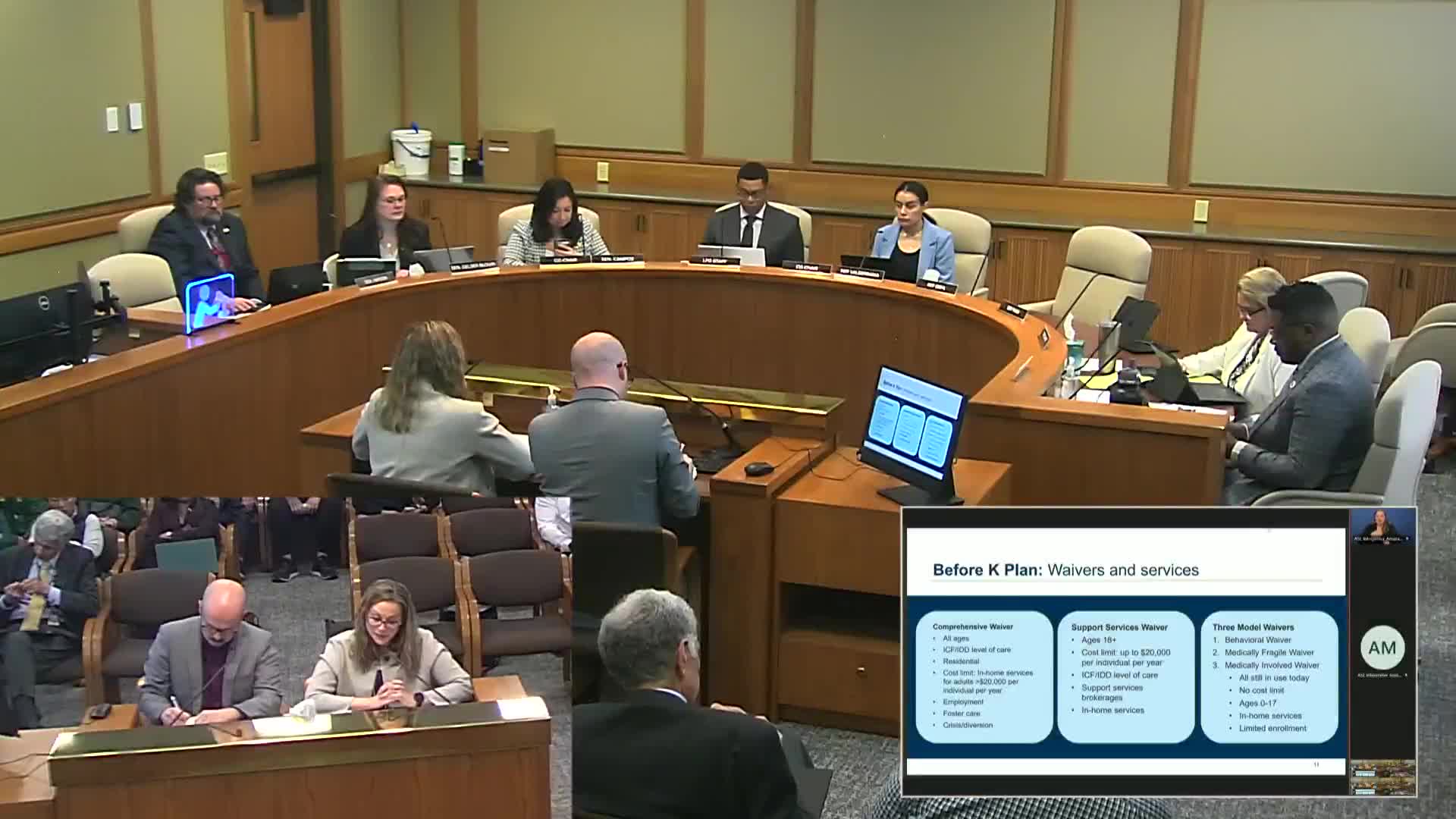
Dana Hittle, interim director of the Office of Developmental Disability Services, reviewed the history of federal Medicaid home‑and‑community‑based services authorities (including sections 1915(c) and 1915(k) of the Social Security Act, the latter known in Oregon as the K plan) and described why the K plan requires statewide, needs‑based service provision. Hittle said the ONA was tested and validated and that an exceptions process exists for people whose assessed service group hours do not meet their needs.
Nut graf: ODDS said it will implement service groups created by the ONA during 2025 and 2026 as ISPs come up for renewal. The department estimated significant movement in authorized hours for many recipients and warned committee members that federal and funding uncertainties could affect implementation.
Hittle said implementation has been delayed for years by litigation and the COVID‑19 pandemic. In February 2024 the United States District Court for the District of Oregon dismissed a class action judgment that had previously halted changes, and ODDS said enhanced federal funding tied to the pandemic maintenance‑of‑effort has now ended. “We are now rolling in the implementation of the in home service, our service groups, starting with individuals when their individual support plans are expiring,” Hittle said.
ODDS estimated about 50 percent of the individuals who currently receive in‑home services will receive a reduction in available hours under the new service‑group framework, while about 50 percent could receive increases; individuals may request an exception to a service‑group assignment and ODDS will review those exception requests.
Hittle also described two funding risks. First, ODDS asked for resources to implement the federal Home and Community‑Based Services (HCBS) access rule, including staffing, IT and contracting support; Hittle warned that failure to comply with the access rule could put federal funding at risk. Second, ARPA funds that had helped stabilize rates and subsidize one‑time infrastructure projects have expired; ODDS told the committee most ARPA dollars were spent on rate increases and one‑time stabilization projects and that the last ARPA funds were expended “as of yesterday.”
Ending: ODDS advised that the K plan requires services be provided based on assessed need without arbitrary enrollment limits, and that the exceptions process will remain for people who believe the ONA does not capture their needs. The department promised written follow‑up materials and pledged to work with tribal partners, advocates and providers during implementation.