Get Full Government Meeting Transcripts, Videos, & Alerts Forever!
Get email alerts on the Wildfire Hazard Map topic
No spam. Unsubscribe anytime.
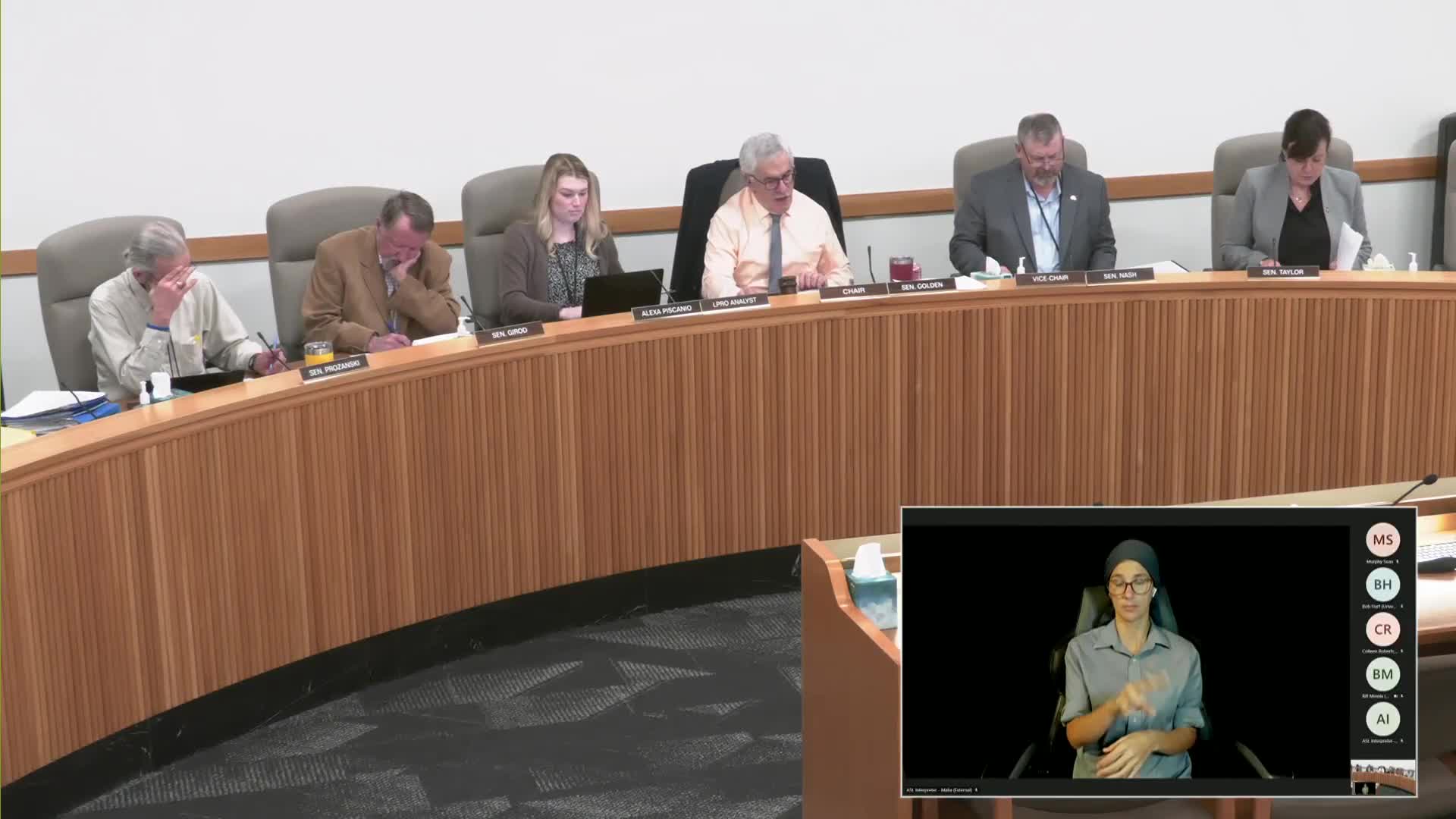
Senate committee hears broad support to repeal statewide wildfire hazard map; debate to continue
Summary
The Senate Committee on Natural Resources and Wildfire on April 1, 2025, held a public hearing on Senate Bill 83, which would repeal the statewide wildfire hazard map and strip the map-linked statewide mandates enacted in prior sessions.
The Senate Committee on Natural Resources and Wildfire on April 1, 2025, held a public hearing on Senate Bill 83, which would repeal the statewide wildfire hazard map and strip the map-linked statewide mandates enacted in prior sessions. Chair Golden opened the hearing and asked agency and stakeholder witnesses to present details and context.
Senate Bill 83 would declare prior Oregon Department of Forestry (ODF) orders that assigned properties to wildfire hazard zones null and void, remove statutory provisions that created the statewide hazard map and wildland‑urban interface classifications, and detach defensible‑space and building‑code obligations from any statewide map. Instead, the bill requires the State Fire Marshal to develop model defensible‑space guidance and a model building‑code option that local governments could adopt voluntarily. The bill also removes a question about wildfire hazard classification from property disclosure forms and detaches program priorities (including the small forest land grant program) from any map classification.
Doug Graff, Wildfire Programs Director and Military Advisor at the Governor’s Office, told the committee the governor asked the Department of Forestry to pause appeals of hazard‑map decisions while the legislature considers SB 83 so appellants’ places in the queue are preserved. Graff said the legislature must focus on “making Oregon communities safer from the growing threat of wildfire” and emphasized the role of defensible space and neighborhood collaboration in improving home survival rates.
Derek Wheeler, legislative coordinator for the Department of Forestry, reviewed the map’s history and how it was tied to laws enacted in 2021 (referred to in testimony as Senate Bill 762) and revised in 2023. Wheeler said the map and associated rules “have proven problematic,” explaining that the 2021 law and later regulations tied particular regulatory outcomes — such as defensible‑space requirements and some building‑code triggers — to locations on the statewide hazard map. Under SB 83, those statewide map‑based mandates would be removed; the bill instead would direct state agencies to develop model codes, reporting requirements, and voluntary approaches.
Dave Honeycutt, chair of the Wildfire Programs Advisory Council, said the council had not taken a formal position but that section 5 of SB 83 would add two council seats: one with structural firefighting experience inside the wildland‑urban interface and one from the insurance industry. Honeycutt told the committee the council expects the new positions would strengthen the council’s advice on program design and insurance impacts.
Several legislators and local officials spoke in support of repeal. Representative Christine Drazen (House District 51) said map‑linked mandates imposed “costly and burdensome” responsibilities on private landowners while public lands were not held to the same standards and said SB 83 would provide “relief” to rural homeowners. Representative Bobby Levy (House District 58) said repeal “does not mean we are ignoring wildfire risk” but instead shifts to a “smarter, more locally driven” approach that preserves voluntary tools such as defensible‑space guidance.
Senator David Brock Smith (Senate District 1), Representative Ed Diehl (House District 17), and Representative Kim Wallen (House District 6) also testified in support, describing constituent impacts ranging from insurance loss to limits on buildable land. Jackson County Commissioner Colleen Roberts testified for her board in support of removing the hazard map and urged clarifications in SB 83: she recommended explicit repeal of a specific section (cited in testimony as section 11 of the 2021 law), clearer statutory definitions for “near” and “concentration of dwellings” in the wildland‑urban interface definition, and clarification of how voluntary county adoption would affect eligibility for state financial assistance for home hardening.
Several municipal and civic witnesses urged the committee to preserve defensible‑space standards and to consider how remodeling triggers, accessory dwelling units and other land‑use issues should be handled at the local level. Jim Macaulay of the League of Oregon Cities said cities will want defensible‑space and home‑hardening tools available as they develop ordinances and suggested calibrating remodeling triggers and ADU treatment.
Several public commenters urged incentive‑based approaches rather than mandates. Bob Hart of Rogue River said he preferred incentives and that local model options should be required to be available for jurisdictions to adopt. Witnesses repeatedly raised funding as a central unresolved question: incentives and grant programs require appropriations and agreement by the legislature.
The committee closed the public hearing after an extended record of testimony and public comment. Chair Golden said staff and authors are attempting to consolidate several late amendment suggestions and anticipated returning to SB 83 for a work session later in the week; no final committee vote on SB 83 occurred on April 1.
Votes and formal actions on other bills were taken earlier in the meeting; the committee recorded notice of possible minority reports on other measures but did not take final action on SB 83. The committee said it intends to consolidate amendment language and to resume consideration at a later work session.
The hearing record includes requests for more precise statutory language on definitions, concerns about impacts to insurance and land use, and multiple calls by county and municipal officials to ensure voluntary incentives and funding are available if statewide mandates are repealed.