
House committee hears divided testimony on HB 39 40 wildfire funding package
Get AI-powered insights, summaries, and transcripts
Sign Up Free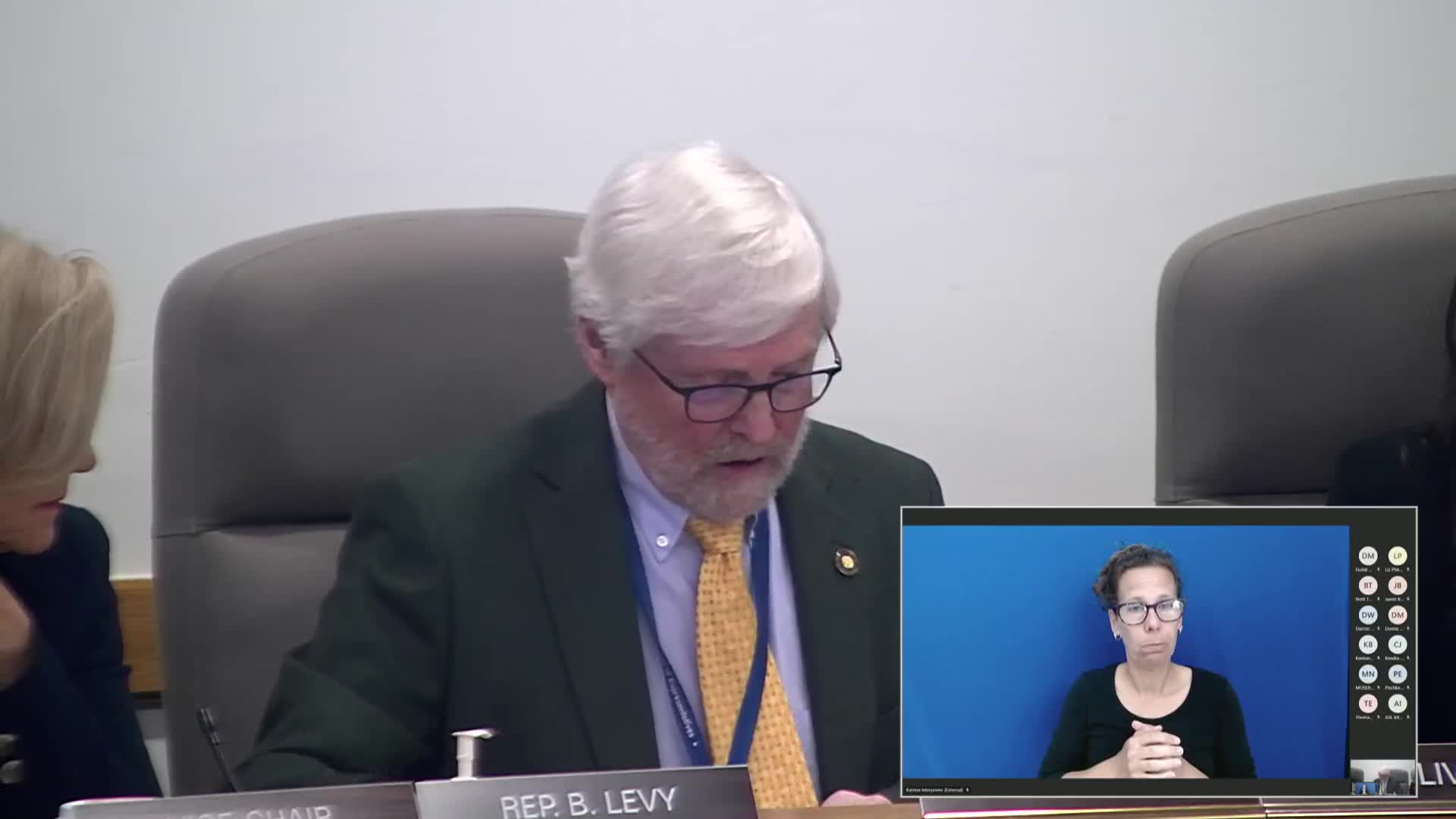
Summary
The House Climate, Energy and Environment Committee held a public hearing April 1 on House Bill 39 40 (dash 1), the omnibus wildfire funding proposal developed by the Fire 35 work group to supply an estimated $280 million per biennium for suppression and mitigation.
The House Climate, Energy and Environment Committee held a public hearing April 1 on House Bill 39 40 (dash 1), the omnibus wildfire funding proposal developed by the Fire 35 work group to supply an estimated $280 million per biennium for suppression and mitigation.
The bill’s sponsor and committee leadership presented the measure as the work group’s consensus package; Doug Graff, Wildfire Programs Director and military adviser to the governor, told the committee the work group’s funding “floor ask” is $280,000,000 per biennium, divided roughly into $150,000,000 for suppression and $130,000,000 for mitigation and readiness. “By every metric that we look at, wildfire conditions across the state and across the nation are on the rise,” Graff said, summarizing last year’s record acreage burned and historic suppression costs.
Why it matters: Committee members and witnesses framed the bill as an attempt to create durable revenue for both immediate wildfire suppression costs and longer‑term mitigation—fuel reduction, home hardening and community preparedness—rather than relying on repeated one‑time appropriations or emergency sessions.
The dash 1 amendment would: adjust several landowner assessment rates (including increases to the harvest tax portion that funds wildfire protection), reallocate landowner contributions to rural fire protection districts, modify rural fire protection district assessments, and direct new or reallocated state revenue (including a proposal to dedicate revenues from the state’s retaliatory insurance tax) toward wildfire programs and the Department of Forestry (ODF) and State Fire Marshal (OSFM). The work group report and Graff’s testimony described the package as four broad components: updated landowner assessment rates, realignment of fire protection district revenue, grazing rate adjustments, and short‑term Treasury loan authority to avoid special sessions for suppression cashflow.
Supporters, including timber, forest‑products and county representatives, said the current funding system is unsustainable and warned that continued steep increases in landowner assessments could cause large landowners to withdraw from the protection system. Chris Edwards, president of the Oregon Forest Industries Council, said landowners “already contribute around $80,000,000 per year to the wildfire suppression system” and that a harvest tax increase—described in testimony as moving the wildfire portion from 62.5¢ to $1.00 per thousand board feet—helps preserve the coordinated protection network.
Roseburg Forest Products’ government affairs manager Tiffany Roddy and Green Diamond Resource Company’s Jason Callahan described repeated catastrophic losses and operational strain from recent fire seasons. Callahan said Green Diamond paid approximately $1.6 million in recent assessments and logged thousands of man‑hours fighting fires, and warned that protection costs can exceed the value of working forests on some east‑side lands.
Public‑safety and fire service interests supported the bill’s goals. Brian Stewart, assistant chief of Clackamas Fire District and director with the Oregon Fire Chiefs Association, said the dash 1 package “meets the work group’s principles” and that proposed changes help maintain the “complete and coordinated system.” Several county and volunteer fire representatives urged passage so counties and local districts can avoid further destabilization.
Opposition focused on proposed revenue sources rather than the policy goals. The Oregon Beverage Recycling Cooperative (OBRC), beverage industry groups and grocery retailers strongly opposed sections 1 and 2 of the draft that would add a per‑container beverage sales surcharge they described as a de facto sales tax. Devon Morales of OBRC warned that adding a surcharge “will undermine consumer trust in Oregon’s bottle bill” and that the bottle program’s high redemption rate and nonprofit partnerships would be harmed. The Northwest Grocery Retail Association and Oregon Beverage Association urged removal of the container surcharge, recommending adoption of a dash 2 amendment that strips those sections before the bill moves on.
Other stakeholders sought technical changes. The Oregon Small Woodlands Association said the dash 1 text lacked needed clarifications for contiguous‑lot treatment, improved‑lot definitions and a handful of technical fixes carried over from prior proposals. Association of Oregon Counties staff asked the committee to forward the bill to revenue and Ways and Means with the intent to continue work on assessment implementation details.
Insurance industry testimony reflected support for dedicating the state’s retaliatory tax revenue to wildfire programs. Kenton Bridal of the Northwest Insurance Council, who participated in the Fire 35 group, said reinvesting retaliatory tax receipts “helps with both short‑term emergency wildfire response and long‑term efforts to make Oregon more resilient to wildfire.” Committee members noted that retaliatory tax receipts currently flow to general fund in statute and would be redirected under the proposal.
Committee disposition and next steps: Chair Lively said the committee intends to move the bill to the House Revenue Committee with no recommendation so that revenue questions can be addressed separately. Multiple members emphasized the time constraints of legislative deadlines and asked stakeholders to provide written technical comments; the chair said additional written testimony would be accepted up to 48 hours after the hearing. No final floor votes occurred in this hearing; work sessions on HB 39 40 were scheduled for a future date.
Ending: The hearing illustrated broad agreement that Oregon needs durable wildfire funding but exposed sharp disagreement over funding mechanisms—particularly the proposed beverage container surcharge and how to allocate responsibility among landowners, counties, insurers and all Oregonians—leaving the question of revenue sources to the Revenue and Ways & Means committees.