Get Full Government Meeting Transcripts, Videos, & Alerts Forever!
Get email alerts on the Long Term Care Oversight topic
No spam. Unsubscribe anytime.
Senate Human Services committee hears wide-ranging testimony on proposed oversight for adult foster homes, assisted living and memory care
Summary
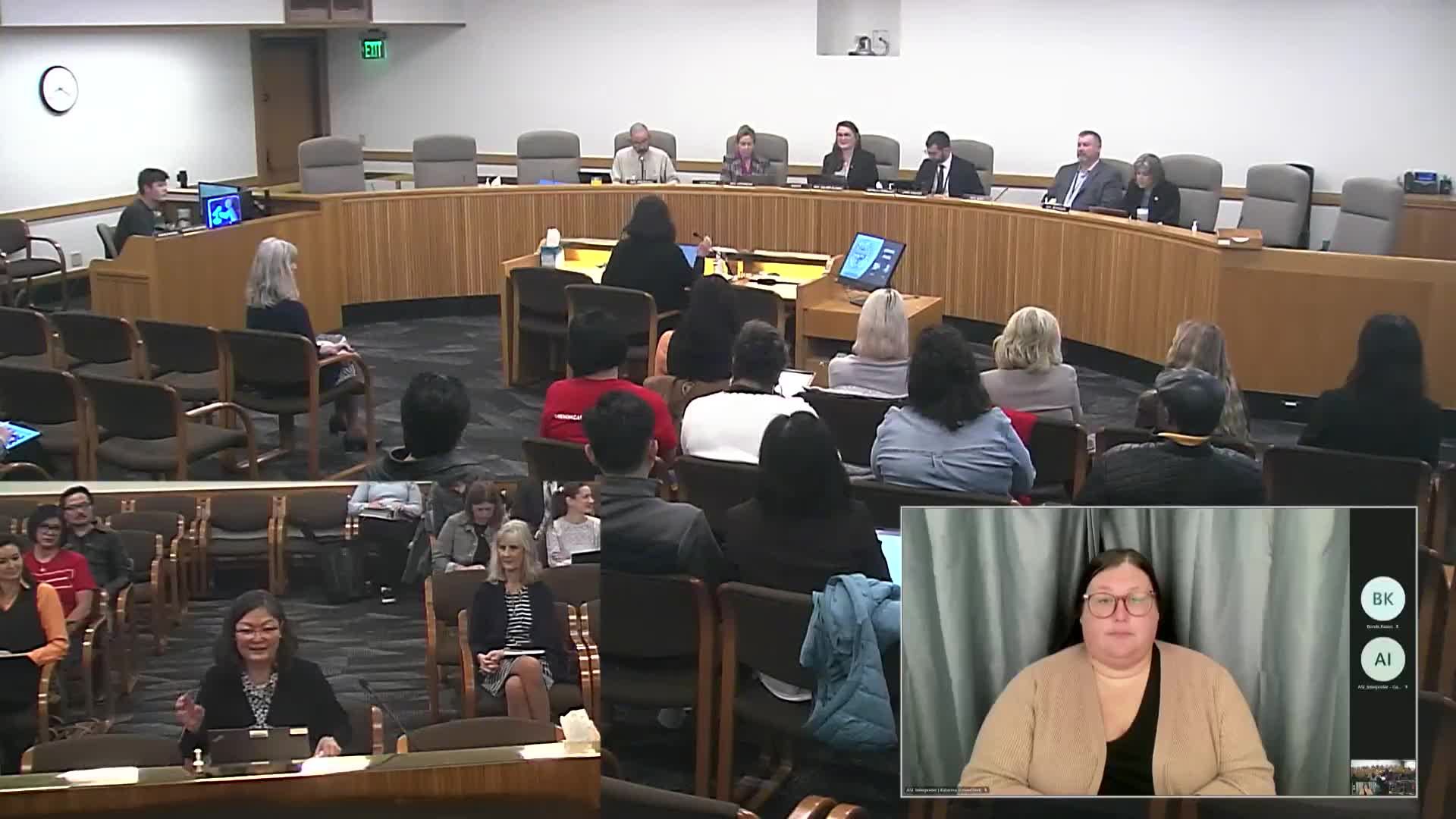
The Senate Committee on Human Services on April 1 took testimony on proposed changes to oversight of adult foster homes, assisted living and memory care, including provisions in Senate Bill 8 11 and Senate Bill 7 39 that the chair said would be consolidated into a single measure.
The Senate Committee on Human Services on April 1 took testimony on proposed changes to oversight of adult foster homes, assisted living and memory care, including provisions in Senate Bill 8 11 and Senate Bill 7 39 that the chair said would be consolidated into a single measure.
The committee opened work and public hearing sessions in which Corissa Neufeldt, Deputy Director for Safety and Regulatory Oversight at the Office of Aging and People with Disabilities (a program of the Oregon Department of Human Services), described amendments and clarified prior testimony. Neufeldt said the bill would give the department “the authority, clear direction, and a policy standard for 120 day on-site inspection to support the success of providers and ultimately the safety of residents and quality care through proactive identification of compliance concerns, technical assistance, training and coaching of the providers.”
Why it matters: supporters and families told the committee they want faster, clearer responses when residents are harmed or when facilities repeatedly fail to meet standards; providers said unclear definitions and uneven licensor training would create inconsistent enforcement and could harm small, family-run homes.
Key points and structure of the proposal
- Initial inspections and revisit timing: Neufeldt and others discussed requiring a department on-site inspection within roughly 120 days of initial licensure (described by witnesses as between three and six months in some testimony) and annual on-site inspections for adult foster homes even if a license is extended to two years.
- Definition of substantial compliance: the dash-1 amendment adds a definition modeled after the residential care standard: substantial compliance would mean a level of compliance “such that identified deficiencies pose a risk of no more than negligible harm to the health or safety of residents,” language the chair read into the record during the hearing.
- Consultants and new providers: the bills would strengthen expectations for consultants or management companies retained by new facilities with no prior Oregon experience. The Oregon Healthcare Association offered a “gut-and-stuff” amendment proposal that would set minimum qualifications for consultants, require on-site compliance audits, monthly reports to the department and clearer standards for when consultants must be used.
- Notification and transparency: proponents—including family members and advocates—urged stronger consumer notification. Testimony supported requiring facilities to notify residents and families when a licensing action places a restriction on admissions, when there is a substantiated death or serious injury, or when a facility enters an enhanced oversight program. Witnesses also urged a plain-language summary that explains how to find licensing records online and how families can use that information when considering placement.
What witnesses told the committee
- Corissa Neufeldt, Deputy Director for Safety and Regulatory Oversight, Oregon Department of Human Services: explained that local licensors review applications and perform site visits before licensure but that post-licensure visits currently rely on local professional judgment and can vary by area; the bill aims to set statewide expectations and produce a routine post-licensure visit cadence.
- Adult foster home providers and industry representatives: Reluca Lisonbee Stoica (Oregon Care Home Council president), Anna Petrus (Advocacy for Adult Foster Care Providers), and Mary Anne Casera (registered nurse and provider) testified they support the bill’s intent but opposed the measure in its present form. Providers repeatedly raised two concerns: 1) lack of a clear, uniformly applied definition of “substantial compliance” and 2) highly variable training and experience among local licensors, which they say leads to inconsistent enforcement and punitive outcomes. Petrus gave a specific example in which a licensor cited a longtime provider for “not in substantial compliance” after finding a single expired Tylenol that the provider immediately removed in front of the licensor.
- Families and advocates: Diana Allen, Cynthia DeAngelo (registered nurse), and Andrew Wolf (family member who lost his mother) urged stronger transparency and faster department responses to allegations. Wolf described his belief that a facility’s licensing record—if easily accessible—would have influenced placement decisions and could have prevented harm in his case.
- Labor and ombudsman perspectives: Courtney Graham (SEIU Local 503) and Fred Steele (State Long Term Care Ombudsman) supported the bill’s policy direction but emphasized that regulatory reforms must be matched by adequate department staffing. Graham cited a recent Alvarez & Marsal report noting a backlog of complaints and insufficient staffing levels; Steele called the bill a “first step” and urged investment in caregivers, training and department resources.
Agency staffing and fiscal questions
Committee members and witnesses discussed the bill’s staffing and fiscal impacts. Neufeldt said the department’s policy option package had included funding for Safety, Oversight and Quality (SOQ) licensing staff in Multnomah County and that the intent was for central SOQ staff—not local area agencies on aging—to conduct the 120-day reviews so as not to increase workload for local AAAs. Chair Gelser (committee chair) and multiple witnesses noted that one analysis had estimated a significantly larger staffing need (the chair referenced a figure on the order of 180 additional positions in an early outline), and stakeholders warned that unrealistic timelines or unfunded staffing mandates could set the department up to fail.
Points of disagreement and next steps
Providers predominantly urged clearer statutory language on the training and qualifications for licensors and consultants, and a consistent statewide interpretation of the “substantial compliance” standard before any new mandatory cadence is imposed. Families, advocates and the ombudsman emphasized that faster complaint initiation and clearer consumer notice would reduce harm and improve consumer choice.
The chair said the bills would likely be consolidated into a single vehicle (Senate Bill 7 39) for legislative efficiency and that she planned to convene further workgroup discussions over the next 24 hours to refine timelines, consultant standards and notification rules. The committee closed public testimony and carried the work sessions forward to follow-up days (the transcript records continued consideration on April 3 and April 8). No final floor-level votes were taken on the oversight provisions during this hearing.
Ending: The committee left the core policy questions unresolved: how to balance stronger, routine department oversight and consumer transparency with clear statutory definitions, uniform licensor training, and realistic funding to execute new responsibilities. Committee members and stakeholders agreed to continue negotiations and technical drafting in the coming days.