Get Full Government Meeting Transcripts, Videos, & Alerts Forever!
Get email alerts on the Childcare Siting topic
No spam. Unsubscribe anytime.
House committee advances two bills aimed at easing siting rules for childcare centers
Summary
The House Committee on Early Childhood and Human Services advanced guidance and land-use changes intended to make it easier to locate and develop childcare facilities. Lawmakers adopted amendments and sent the measures forward for additional review and appropriations vetting.
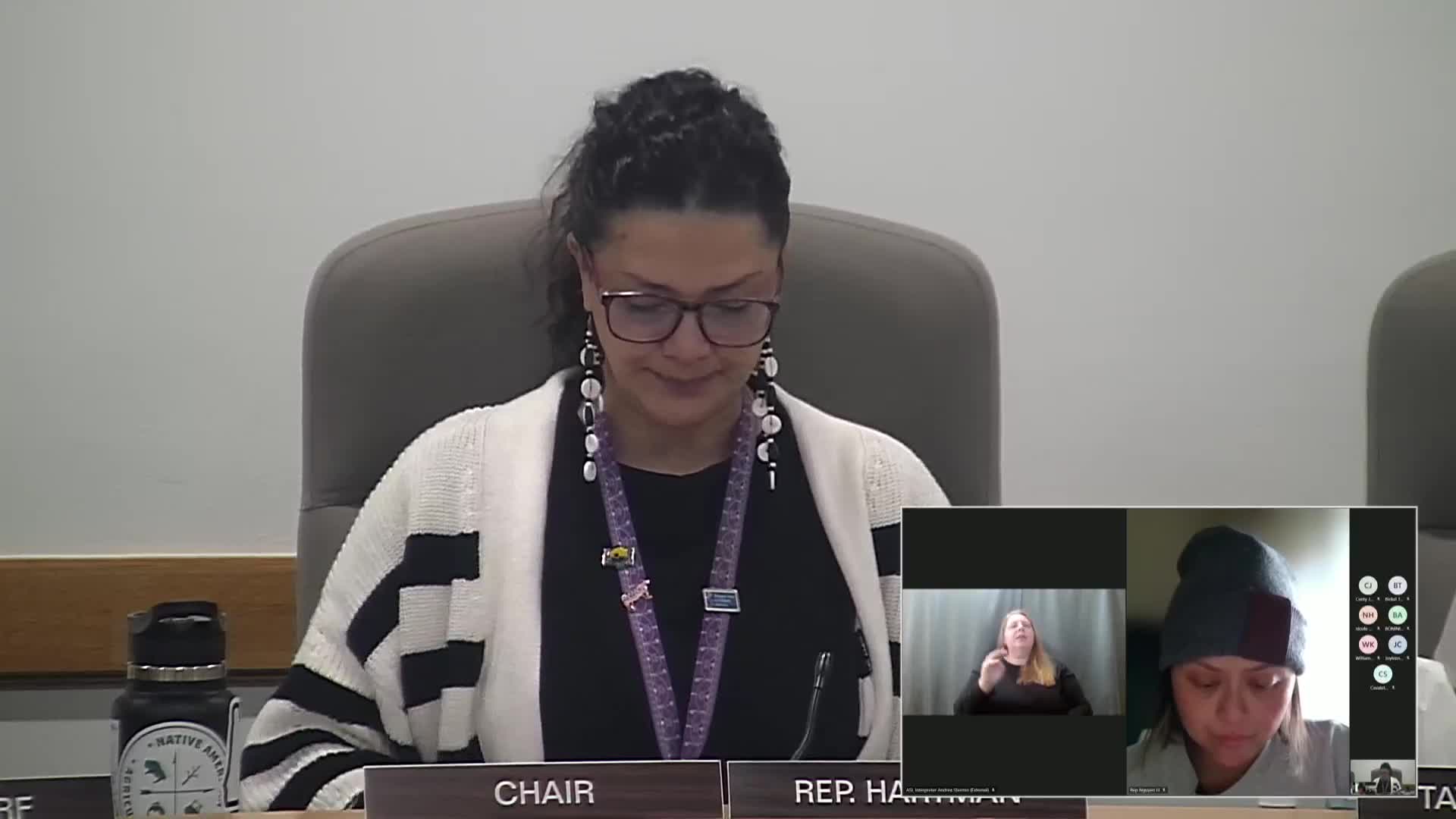
The House Committee on Early Childhood and Human Services on April 1 adopted amendments and advanced two bills intended to reduce barriers to siting and developing childcare facilities in Oregon.
House Bill 3496 directs the Department of Land Conservation and Development (DLCD) to develop guidance for local governments related to siting, incentivizing and developing childcare facilities, with a required completion date of Dec. 31, 2026. Committee members moved the measure with a do-pass recommendation and referral to the Joint Committee on Ways and Means. The chair announced the motion passed and the work session closed.
House Bill 3560, as amended (the “-3” amendment), expands allowable sites for childcare centers by clarifying where childcare facilities may be located, adds co-location rules with institutional uses, and updates references to certain land-use categories. The committee adopted the dash-3 amendment on a roll call and then moved the amended bill to the floor with a do-pass recommendation.
Supporters and committee members said the measures aim to reduce restrictive siting rules that limit where childcare centers may operate. Representative Walters said the conversation “has been happening for a long time” and praised efforts to remove “draconian rules” that make childcare harder to access. Vice Chair Scharf noted the dash-3 amendment incorporated stakeholder suggestions (including cooperative-parent provisions) that “close some loops.”
Opponents were not recorded during the work sessions; questions focused on fiscal impacts and implementation. Vice Chair Scharf and other members noted fiscal-impact statements were posted on the legislature’s OLIS site. Committee staff repeatedly referenced the fiscal-impact statements and the standard referral process to Ways and Means for budgetary review.
The committee closed both work sessions after the roll-call actions and named Representative Marsh as the carrier for HB 3560.
Votes at a glance: motions to adopt the amendments and to advance each bill were approved by the committee during the April 1 meeting; the committee recorded the motions as passed on roll call (members recorded their votes as “Aye” in the transcript). Detailed numeric roll-call tallies were not provided in a clear, machine-readable form in the transcript.