Get Full Government Meeting Transcripts, Videos, & Alerts Forever!
Get email alerts on the Prosecutorial Qualifications topic
No spam. Unsubscribe anytime.
Committee advances rewrite of prosecutorial qualifications; transfers some functions, adds subpoena penalties and likeness protections
Summary
House Judiciary advanced Senate Bill 218 after sponsors narrowed the bill’s scope, transferring some prosecutorial-qualification responsibilities, authorizing limited subpoena power with penalties for misuse, and adding protections for voice and visual likeness from House Bill 566.
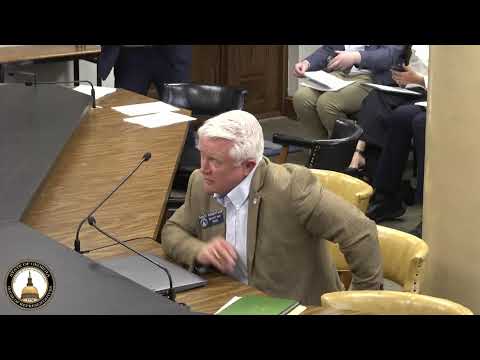
Senate Bill 218 was debated at length in the House Judiciary committee and advanced after sponsors substantially narrowed the bill’s text and added language from a separate measure addressing misuse of voice and visual likeness.
Sponsors described the bill as a change in where prosecutorial-qualification administrative functions are housed, moving certain responsibilities from the Prosecuting Attorneys' Council (PAC) to the Administrative Office of the Courts (AOC). Committee discussion, including testimony from Ian Heap, director of the Prosecuting Attorney Qualifications Commission, focused on operational details — such as the number of complaints received and the commission’s meeting schedule — and on limits to investigative powers.
Heap told the committee that the commission received about 40 complaints in its initial period, many of which lacked the required affidavit; after addressing those backlog filings the commission generally runs about 11 cases on its docket when it meets. He said the commission is transitioning to regular meetings every two months and that, to date, no matters had moved from the investigative panel to the public hearing panel.
Sponsors said the original draft sought broader authority, including search-warrant powers, but they removed that request as an overreach. The committee retained language granting limited subpoena authority to the administrative body and added basic penalties for misuse of the subpoena power. Committee leadership repeatedly enumerated sections to be stricken from the bill and then offered an amendment to leave only a short set of sections in the bill (retaining sections 2-8, 2-9, 3-1, 6-1 and 6-2 in one reading of the amendment).
Later in the meeting a floor-leader amendment inserted language from House Bill 566 — described in the meeting as a provision providing liability and penalties for violation of intellectual-property rights in voice and visual likeness — and presenters referred to that change informally as the John Fogarty amendment. That amendment was put to a voice vote and approved. The committee then approved SB 218 as amended by voice vote and moved the measure to rules.
Committee members and witnesses emphasized that the revised bill should reduce budget impact compared with earlier drafts and that safeguards (struck language and removed search-warrant authority) were intended to limit any overreach. The committee’s votes were taken by voice; no roll-call tallies were recorded in the transcript.