Get Full Government Meeting Transcripts, Videos, & Alerts Forever!
Get email alerts on the Transgender Health Policy topic
No spam. Unsubscribe anytime.
Committee advances substitute to SB39 barring state funds for transition-related interventions, including in correctional facilities
Summary
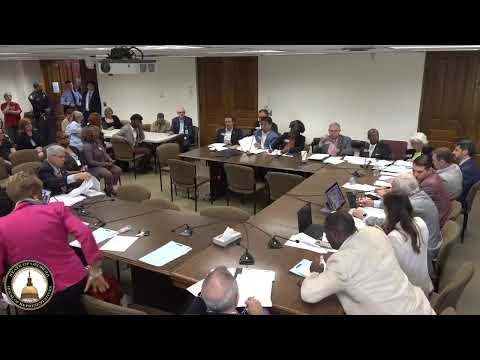
After hours of debate and public testimony, the committee passed a substitute to SB39 (LC461248S) that would prohibit state funds, including for Medicaid and state employee health plans, from covering transition-related surgeries and certain hormone dosages; opponents warned of medical harm and costly litigation.
The committee voted to give a due pass to the committee substitute for Senate Bill 39, LC461248S, a measure that its sponsor said would prohibit public dollars from covering transition-related interventions — including surgical procedures and what the bill describes as "supraphysiological" hormone dosages — across state employee health-care plans, Medicaid, and state-owned or operated facilities, including correctional institutions.
"The bill prevents public dollars from covering transgender surgeries. It prohibits state employee health care plans from covering intervention. It also prohibits medical assistance programs, including Medicaid, from covering any medical interventions," Representative Cox, the sponsor, told the committee. He said the measure was intended to "not use state funds to account for that" and that procedures could still be obtained "like many other surgeries and treatments with an individual's own money."
Committee members repeatedly pressed the sponsor on definitions and legal exposure. Representative Shinde Lamb asked whether "state funds" would include federal funds administered or appropriated through state agencies and whether the bill would be defensible in light of previous litigation and settlements; Cox replied that he believed the measure "brings clarity to the judicial system" and that he would seek clarification on the federal-funding question.
Several legislators raised legal and fiscal concerns. Representative Clark noted earlier litigation costs she said totaled more than $4 million and asked whether the state might face additional litigation if the bill were enacted; in response, the sponsor said he expected codifying the policy would ultimately reduce litigation costs, though he acknowledged courts would decide legal challenges.
Multiple medical witnesses testified in opposition. Dr. Ashley Urrutia, a primary care physician in Atlanta, said "gender affirming care is backed by science and multiple medical organizations" and warned that abruptly stopping hormone therapy could increase depression and suicidality, calling that risk "life threatening." Cassie Grimsley Ackerley, an internal-medicine and pediatrics physician, urged the committee to consider people who are incarcerated, saying the bill would force some inmates to "detransition while incarcerated" and that withholding evidence-based care "is harmful." Jeff Graham, executive director of Georgia Equality, reminded the committee that the state has been involved in multiple lawsuits over denial of care and said the state has not prevailed in those cases.
The committee considered, then rejected, an amendment that would have preserved coverage for individuals already receiving care under the state health benefit plan. A motion to insert a grandfathering provision that "any individual already receiving this care under the state health benefit plan will not lose their current care" failed on a recorded show-of-hands vote. After further procedural motions and discussion, the committee passed the committee substitute and the clerk announced that LC461248S had "received a due pass." The transcript records the final action as committee passage; no roll-call tally by name is provided in the excerpt.
Supporters of the bill framed the measure as a fiscal responsibility question that would keep state-funded premiums and actuarial costs in check. Opponents argued the measure would harm patients, create conflicts with medical standards of care, and invite costly litigation; several speakers pointed to federal court and circuit-court precedent, pending Supreme Court review, and prior settlements as reasons to proceed cautiously or delay action until litigation is resolved.
The bill's final legislative and legal consequences will depend on further legislative steps and any subsequent court challenges.