Get Full Government Meeting Transcripts, Videos, & Alerts Forever!
Get email alerts on the Oto Well Withdrawal topic
No spam. Unsubscribe anytime.
Commission withdraws Oto Well construction-permit decision; public comment remains part of record
Summary
The Commission on Water Resource Management withdrew agenda item A‑1 (a construction-permit matter for the Oto Well) until a newly appointed commissioner can participate; staff clarified withdrawal by the commission halts the contested-case clock and public speakers offered testimony on water and housing implications.
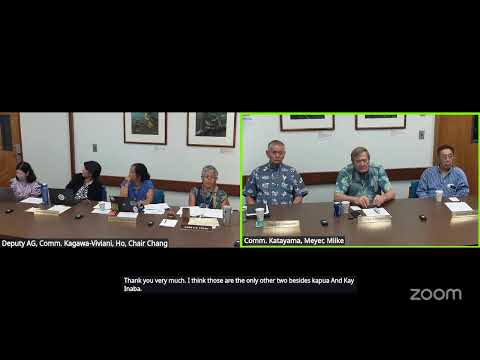
The Commission on Water Resource Management on April 1 withdrew agenda item A‑1, a construction-permit matter relating to the Oto Well, until a newly appointed commissioner can be present to participate in deliberations.
Chairperson Dawn Chang said the commission would withdraw the action from the agenda so the new commissioner, Hannah Springer, who represents the island at issue, could participate. Deputy Attorney General Linda Chow clarified for the record that a commission withdrawal — as opposed to a deferral or a commission vote to postpone for cause — means the statutory deadline to request a contested case was not triggered at the meeting.
Although the item was withdrawn and no decision was taken, the commission allowed public testimony so statements would be part of the administrative record when the matter returns. Speakers included community, county and nonprofit representatives who expressed a range of positions. Wendy Laurels, president and CEO of the Kona Kohala Chamber of Commerce, testified in support of the Oto Well as an infrastructure source for planned affordable housing at Kamakana Villages and for credits to the Natural Energy Laboratory of Hawaii Authority. Environmental advocates, including Elena Bryant of Earthjustice, said approving a well construction permit before updated groundwater analyses and protections for groundwater-dependent ecosystems and traditional and customary uses would undermine the commission’s constitutional obligations.
Commission staff and several commenters reiterated that water resource planning for the region remains incomplete: commissioners and members of the public raised concerns about wastewater treatment, conservation, cumulative impacts of multiple wells and the need to incorporate both western science and indigenous knowledge into site-specific analyses. The commission did not take a vote on the permit at this meeting; staff said the item will be placed on a future agenda once Commissioner Springer can participate.