Get Full Government Meeting Transcripts, Videos, & Alerts Forever!
Get email alerts on the Parks Recreation Master Plan topic
No spam. Unsubscribe anytime.
Soledad Council adopts 20-year Parks and Recreation Master Plan after months of public input
Summary
The Soledad City Council unanimously adopted a 20-year Parks and Recreation Master Plan, establishing enforceable park standards, a phased implementation roadmap and priorities shaped by more than 800 local residents.
The Soledad City Council on Oct. 1 unanimously adopted Resolution No. 6284, approving a new Parks and Recreation Master Plan that sets enforceable standards and a 20-year investment roadmap for the city’s park system.
The plan, finalized after nearly three years of outreach and technical work, responds to community requests for more shade, restroom access, youth program space and safer walking and biking routes, city staff said.
Jessica Potts, Soledad’s parks and recreation director, told the council the plan reflects extensive community input and a new focus on standards that the city can require of future development. “The new plan isn’t just an update. It provides the tools and standards we need to ensure our parks keep pace with growth and are built right the first time,” Potts said.
The 284-page plan documents outreach to more than 800 residents and establishes park standards intended to move Soledad from its current 3.8 acres of parkland per 1,000 residents toward the nationally recommended five acres per 1,000. Staff’s analysis estimates a roughly 40-acre shortfall as the city reaches build-out under existing plans. The document ranks needs for shaded play areas, reliable restrooms, multiuse fields and dedicated youth spaces and lays out near‑term (0–2 years), midterm (3–5 years) and long‑term (6–20 years) priorities for projects and grant pursuit.
Potts said the city brought in BFS Landscape Architects in 2024 to translate community feedback into “clear, enforceable park standards” so developers deliver “complete, fully functional parks, not just open grass.” Those standards include baseline amenities such as restrooms, shaded picnic and play areas, accessible pathways, safety lighting, and sustainable landscaping and windbreaks.
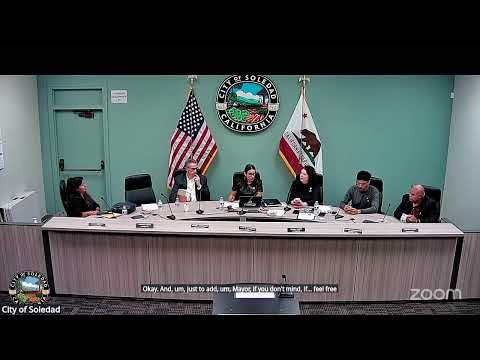
Council members pressed staff on details including maintenance funding, retrofitting existing pocket parks, lighting for safety at sports fields, wireless connectivity and use of recycled water for irrigation. Councilmember Fernando Anzaldo Sanchez urged inclusion of seniors and youth as regular partners in facility assessment; Mayor Velasquez asked staff to add Wi‑Fi and charging-station pilots under the connectivity goal; Councilmember Caldera asked staff to pursue solar panels and to ensure fields are designed to allow daytime and evening use without harming nearby residents.
Potts and staff said the plan is a guiding document; project-by-project prioritization and funding will be set through the city’s capital improvement and strategic planning processes. The council asked staff to return with a strategic implementation schedule and suggested edits to the plan goals to call out outdoor adult fitness equipment, maintenance commitments tied to budgeting, expanded equitable access for people with disabilities and stronger grant-writing partnerships.
The motion to adopt Resolution 6284 was made by Mayor Pro Tem Fernando Cabrera and seconded by Councilwoman Beatriz Benuelos; the council voted unanimously to approve the plan.
Council members said the plan positions Soledad more competitively for state and federal park grants and gives staff clearer leverage in negotiations with developers in growth areas such as Miramonte.
City staff said next steps include publishing the adopted plan, updating park‑by‑park inventories and bringing a draft strategic implementation/CIP schedule back to council for prioritization and funding decisions.