Get Full Government Meeting Transcripts, Videos, & Alerts Forever!
Get email alerts on the Water Fluoridation topic
No spam. Unsubscribe anytime.
St. Clair County advisory board backs medical director's push to pursue county rules limiting addition of fluoride to municipal water
Summary
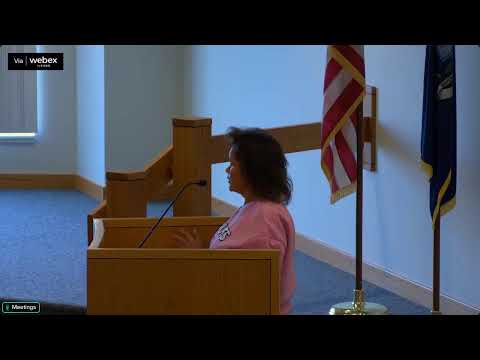
After hours of testimony and a long debate, the St. Clair County Health Department Advisory Board voted to direct the health officer and medical director to develop local regulations that would prohibit adding fluoride chemicals to municipal water systems and endorsed a medical director memorandum on the issue.
The St. Clair County Health Department Advisory Board on Oct. 7 voted to ask the health officer and medical director to draft county-level public-health regulations that would prohibit the addition of fluoride chemicals to municipal water systems.
The measure, which passed on a recorded vote, follows two hours of presentation and public and board discussion about recent court rulings, federal scientific reviews and local complaints by municipal water managers. Medical Director Dr. Nevin told the board he had prepared a draft memorandum and supporting Freedom of Information Act emails showing coordinated efforts he says have discouraged municipalities from discontinuing fluoridation. He said recent federal activity and an August 2024 National Toxicology Program report support a reassessment of community fluoridation.
The board's action directs the health officer and medical director to work with legal counsel and stakeholders to draft regulations for consideration by the board of commissioners. The board also voted separately to endorse the medical director's memorandum and distribute a department fact sheet to municipalities.
Why it matters: The medical director framed the matter as a public-health and regulatory issue with potential statewide and federal ripple effects. He cited a federal district court ruling ordering the U.S. Environmental Protection Agency to regulate fluoride at its current recommended concentrations as an "unreasonable risk" under the Toxic Substances Control Act and said EPA signaled it will review the science expeditiously. Dr. Nevin told the advisory board he believes an eventual EPA action could lead to lower allowable concentrations or prohibition of adding fluoride to municipal systems.
Board members split sharply. Supporters said the county has authority under the public health code to regulate environmental hazards and should act proactively to protect children. Opponents said the board had not heard opposing expert testimony, raised concerns about taking a countywide regulatory approach that would limit municipal discretion, and worried the action could lead to costly litigation.
Dr. Nevin's presentation and draft memorandum Dr. Nevin provided the advisory board with a multi-page draft memorandum and said he had obtained emails under FOIA documenting a coordinated response by state agencies and dental associations when a municipal water supervisor sought information about discontinuing fluoridation. He characterized those emails as evidence municipalities that try to remove fluoridation have been "dissuaded" by state-level pressure. He cited the August 2024 NTP review and the federal district court ruling arising from litigation by the nonprofit Food and Water Watch that led the court to direct EPA to treat fluoride at 0.7 parts per million as an unreasonable risk.
Several board members said they had not had sufficient time to review the entire packet. A motion to table the issue until the next meeting failed on a roll call vote. A subsequent motion to direct the health officer and medical director to draft regulations passed on a recorded vote, and the board voted to endorse the draft memorandum and distribute the department's fact sheet to municipalities.
What the board did and next steps The board did not itself adopt regulations; it voted to have the health officer and medical director begin drafting regulations. The medical director said drafting and legal review could take six to 12 months. Any final local regulations would be subject to the administrative process and would need formal adoption steps and likely review by the county board of commissioners. Dr. Nevin also said he planned to send the memorandum and fact sheet to municipal governments in the county promptly.
Legal and scientific context Dr. Nevin cited specific Michigan statutory sections for local health authority and referenced the federal court ruling, the National Toxicology Program monograph, and the Food and Water Watch litigation. He said EPA is likely to revisit fluoride regulation under the Safe Drinking Water Act but that litigation may delay formal federal rulemaking. Several board members and public commenters cited statements from the American Dental Association and the American Academy of Pediatrics urging caution before removing community fluoridation.
Public comment and board concern Public commenters and multiple board members pressed for more time and for balanced presentations that include dental and pediatric expertise. Opponents argued that the public should be able to decide locally through their elected municipal bodies; supporters countered that local water-plant managers may be pressured by state agencies and industry and that county-level action could provide consistent protection for residents.
The board's motion directs the health officer and medical director to draft regulatory language, work with legal counsel and stakeholders, and return recommended language for further public review and potential adoption steps.