Get Full Government Meeting Transcripts, Videos, & Alerts Forever!
Get email alerts on the Land Use Zoning topic
No spam. Unsubscribe anytime.
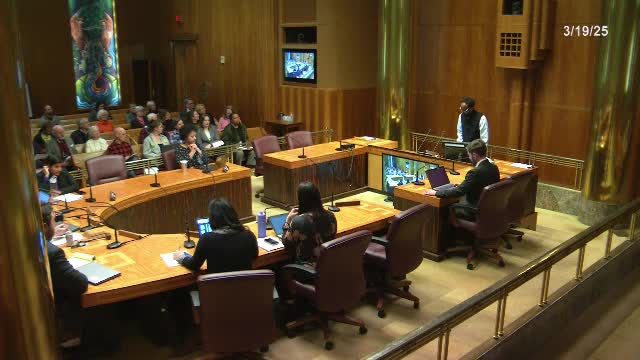
City Council grants appeal, sends FCC waste-truck decision back to planning commission
Summary
The St. Paul City Council voted to grant an appeal by the West Seventh Fort Road Federation challenging a Planning Commission determination that a proposed FCC Environmental truck dispatch and maintenance facility at 560 Randolph Avenue was similar to a public works yard.
The St. Paul City Council voted to grant an appeal by the West Seventh Fort Road Federation challenging a zoning determination that would have allowed FCC Environmental Services to operate a solid-waste truck dispatch, maintenance and compressed natural gas fueling facility at 560 Randolph Avenue.
Council President Nager moved to grant the appeal and the council voted 5-0 to send the matter back for further consideration. The motion followed hours of testimony from neighborhood residents, community groups and the applicant about traffic, environmental impacts, plan consistency and the completeness of the Planning Commission record.
The West Seventh Fort Road Federation and dozens of neighborhood speakers told the council the Planning Commission's decision was tainted by missing written testimony and inaccurate maps. Meg Duerer, representing the federation, said 19 written community statements and the federation's opening remarks were not included in the Planning Commission packet and argued the omission undermined the fairness of the commission's vote.
The federation and multiple neighbors testified the proposed FCC operation—described in project materials as a truck dispatch center with fleet maintenance and a CNG fueling station—would generate substantially greater truck traffic and heavier vehicles than a typical public works yard. Testimony estimated peak daily vehicle trips well above prior uses at the site and raised concerns about noise, odors, road damage and safety for pedestrians and cyclists near a neighborhood node and river access point.
FCC's general manager, Greg Revering, told the council the company believes its use is comparable to a public works facility because it stores and services trucks, includes fueling and has office space. Revering said FCC sees itself as a long-term partner to the city and pledged to engage with neighbors.
Council members focused on three errors in the Planning Commission process: (1) an error of fact relating to traffic and the scale of trucks, (2) an error in the Planning Commission's findings about consistency with the comprehensive plan and neighborhood-node policies, and (3) a procedural error because key public comment materials were missing from the Commission's packet. Council President Nager said the omissions meant commissioners lacked relevant evidence when they decided the similar-use question.
Speakers from environmental and river advocacy groups, including Friends of the Mississippi River and Sam Morgan Regional Trail representatives, said the site is identified in multiple adopted plans as a future mixed-use or river-access location and that an industrial facility would conflict with long-standing city planning for walkability, housing and neighborhood amenities.
After discussion, the council moved to grant the appeal and remanded the matter for further review. Council members specified the Planning Commission should have a complete record and should consider the neighborhood-node designations and relevant comprehensive-plan policies when reevaluating whether the proposed private facility is similar in character and impact to a public works yard.
The council vote was 5 in favor, none opposed. The council instructed staff and the commission to address the procedural and substantive issues raised in testimony when the Planning Commission reconsiders the determination of similar use.
Provenance: The appeal was introduced by city staff in a briefing to the council and discussed in public testimony and the council's final action. The Planning Commission record and the council's deliberations are referenced throughout the transcript of this meeting.
Ending: The decision sends the project back to the Planning Commission for further review; the commission must consider the missing public testimony and the comprehensive-plan policies cited by neighborhood groups before a new determination is finalized.