Get Full Government Meeting Transcripts, Videos, & Alerts Forever!
Get email alerts on the Juvenile Concurrent Jurisdiction topic
No spam. Unsubscribe anytime.
Committee approves bill to allow concurrent juvenile jurisdiction on military installations
Summary
House Bill 11-21 would enable Indiana to establish concurrent jurisdiction with the federal government for certain juvenile delinquency proceedings on military property; Department of Defense officials and the bill sponsor told the committee the change would remove jurisdictional gaps for juveniles on installations.
The Corrections and Criminal Law Committee voted to advance House Bill 11-21, a measure that creates a process for the State of Indiana to establish concurrent jurisdiction with the United States for certain juvenile delinquency proceedings occurring on military installations.
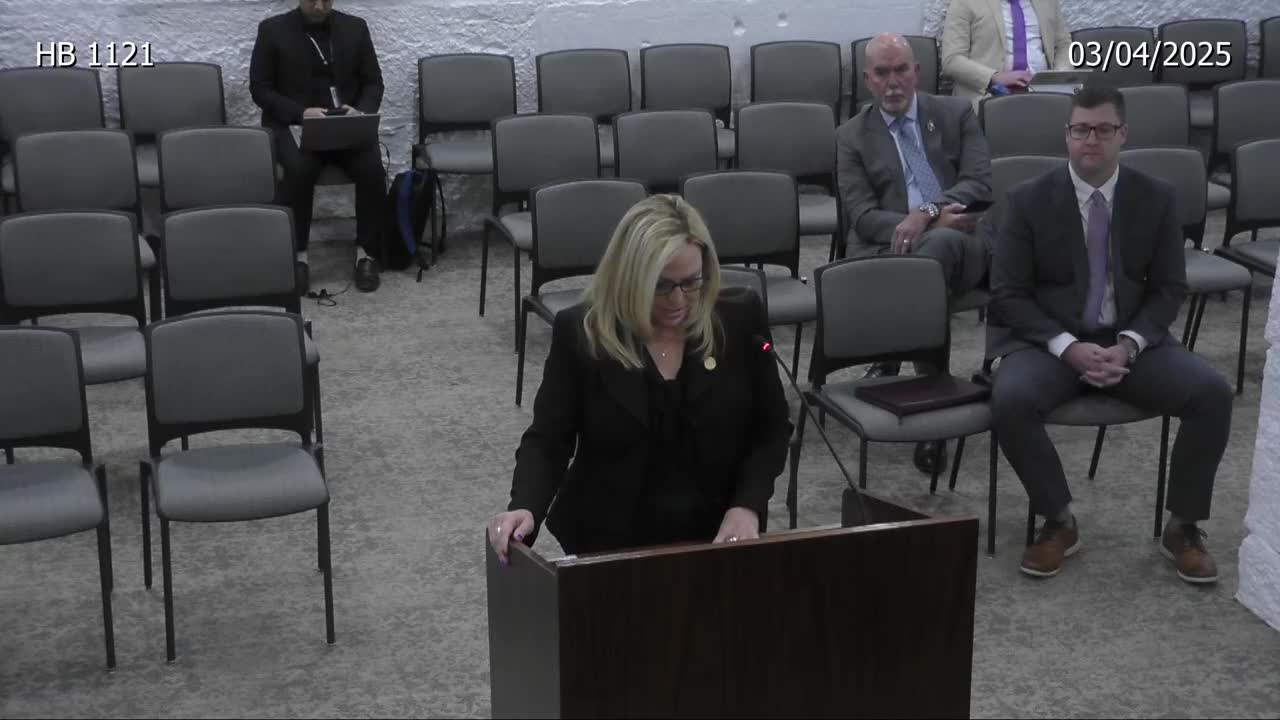
Committee members heard from Shane Preston, Great Lakes Regional Liaison at the U.S. Department of Defense State Liaison Office, who said the Department of Defense supports the bill because concurrent jurisdiction can help address a “black hole” in juvenile justice that can occur where the federal government has exclusive jurisdiction over land. Preston cited prior studies and an article referencing a case at Fort Lewis, Washington, where a state could not prosecute a juvenile offender because exclusive federal jurisdiction precluded state action.
Preston said the federal framework for juvenile offenders is limited in scale and services, and that concurrent jurisdiction enables state authorities to apply state juvenile justice resources and services to civilian family members on military property. He asked for a yes vote on the policies reflected in House Bill 11-21.
Committee discussion was brief; the clerk called the roll and recorded unanimous support. The voting record in the hearing transcript lists affirmative votes from the committee members present; the chair announced the result as 8–0 in favor. The sponsor and a Department of Defense liaison committed to providing technical information about which military facilities in Indiana would be affected if members asked for that detail.
The bill was reported out of committee without amendment in the hearing. No effective date or implementation timeline was specified during the committee testimony.