Get Full Government Meeting Transcripts, Videos, & Alerts Forever!
Get email alerts on the Nonpublic School Authorities topic
No spam. Unsubscribe anytime.
Bill would let accredited nonpublic schools form police departments, access STEM grants and appeal scholarship denials
Summary
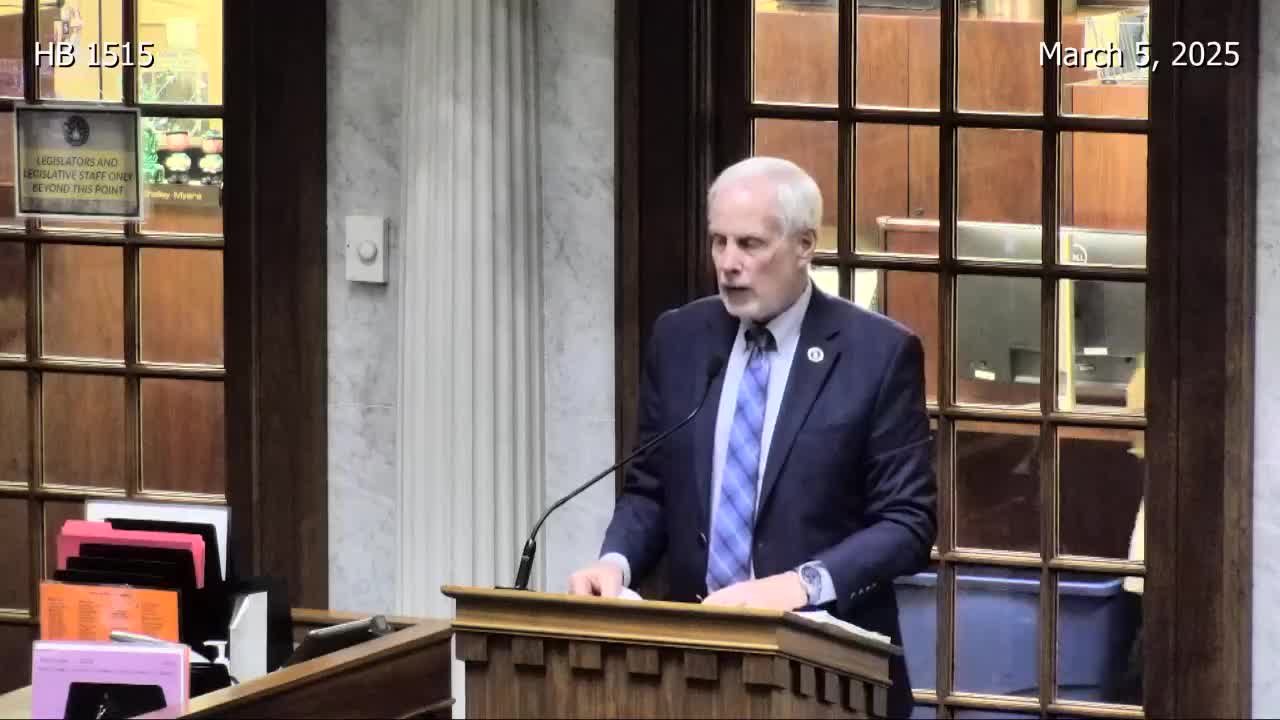
Representative Bob Behning presented House Bill 1515 to the Senate Education and Career Development Committee to allow accredited nonpublic schools to form police departments, access STEM teacher recruitment grants and principal leadership programs, and to appeal certain choice‑scholarship determinations.
Representative Bob Behning presented House Bill 1515 to the Senate Education and Career Development Committee as a package of measures aimed at expanding optional programs and services to accredited nonpublic schools.
Behning said the bill would allow accredited nonpublic schools to create school police departments under the same statutory protocols now available to school corporations and charter schools and would make nonpublic schools eligible for STEM teacher recruitment grants and for seats in the Indiana Principal Leadership Institute. He described the measures as optional and locally financed: "There's approximately 300 non pubs...Most of them are not gonna create their own" police departments, he said, adding the schools that choose to do so would fund training and equipment themselves.
Heritage Christian School head of school Brian Doherty testified in favor, saying the school serves about 1,600 students and currently uses a private security team of five officers. "This bill would provide non public schools like us the same opportunity to establish a school based police department to enhance security and better serve our school community," Doherty told the committee, adding his school is prepared to fund necessary training and equipment.
Supporters also argued the bill would reduce administrative friction. John Elsesser of the Indiana Nonpublic Education Association said the measure would allow nonpublic schools to appeal choice scholarship denials caused by data errors and to participate in existing teacher recruitment and leadership programs that serve public and charter schools.
Opponents and some senators raised zoning and transparency concerns. Senator Sarah Yoder sought clarification about residency requirements for the education secretary in HB1002 and asked, in this bill's context, how local communities could weigh in on the siting of new schools. Senator Kodura and Senator Kidora said the bill's language could limit municipal zoning authority; Kidora, representing Washington Township, described a recent local dispute over a proposed all‑girls STEM charter and said community notice and engagement were at issue. Labor representatives and some education advocates also warned that deleting reporting requirements could weaken public oversight: Sally Sloan of AFT Indiana testified HB 1002 and related changes "delete the requirement for charter school operators to submit state statements of economic interest," and she said that reduces public scrutiny.
Committee members asked whether the state would fund police departments at nonpublic schools; Behning replied there was no plan to use state dollars for those departments and that participating schools would pay costs locally. The transcript contains no recorded committee vote on HB 1515; the measure received testimony from nonpublic school representatives, school leaders and statewide advocacy organizations.
The bill remains in committee for further consideration.