Get Full Government Meeting Transcripts, Videos, & Alerts Forever!
Get email alerts on the Buffer Zone Interference topic
No spam. Unsubscribe anytime.
Committee advances bill creating misdemeanor for approaching officers after warning
Summary
House Bill 11-22, which would make it a class C misdemeanor for a person to knowingly approach a law enforcement officer after being warned to stop when the officer reasonably believes the person is interfering with duties, advanced out of the Corrections and Criminal Law Committee on a unanimous vote.
House Bill 11-22, which would make it a class C misdemeanor for a person to knowingly approach a law enforcement officer after being warned to stop when the officer reasonably believes the person is interfering with law enforcement duties, advanced out of the Corrections and Criminal Law Committee on a unanimous vote.
Sponsor testimony said the bill responds to court decisions about the 25-foot buffer zone law enacted in 2023 and aims to resolve a vagueness concern identified by a later court decision. The presenter summarized the measure as allowing an officer who “reasonably believes the present presence of a person interferes” with duties to order the person to stop, and making a knowing, intentional approach after a warning punishable as a class C misdemeanor.
Chief Kyle Pruitt of the Plainfield Police Department, testifying for the Indiana Association of Chiefs of Police, told the committee the bill provides clarity for officers and a “measure of safety.” He said, “I kind of draw a similarity between this and a youth sporting event where a member of the crowd is being a little too boisterous … nobody would bat an eye at an official telling that person to be quiet. And if they didn't, then be quiet to ask them to leave.”
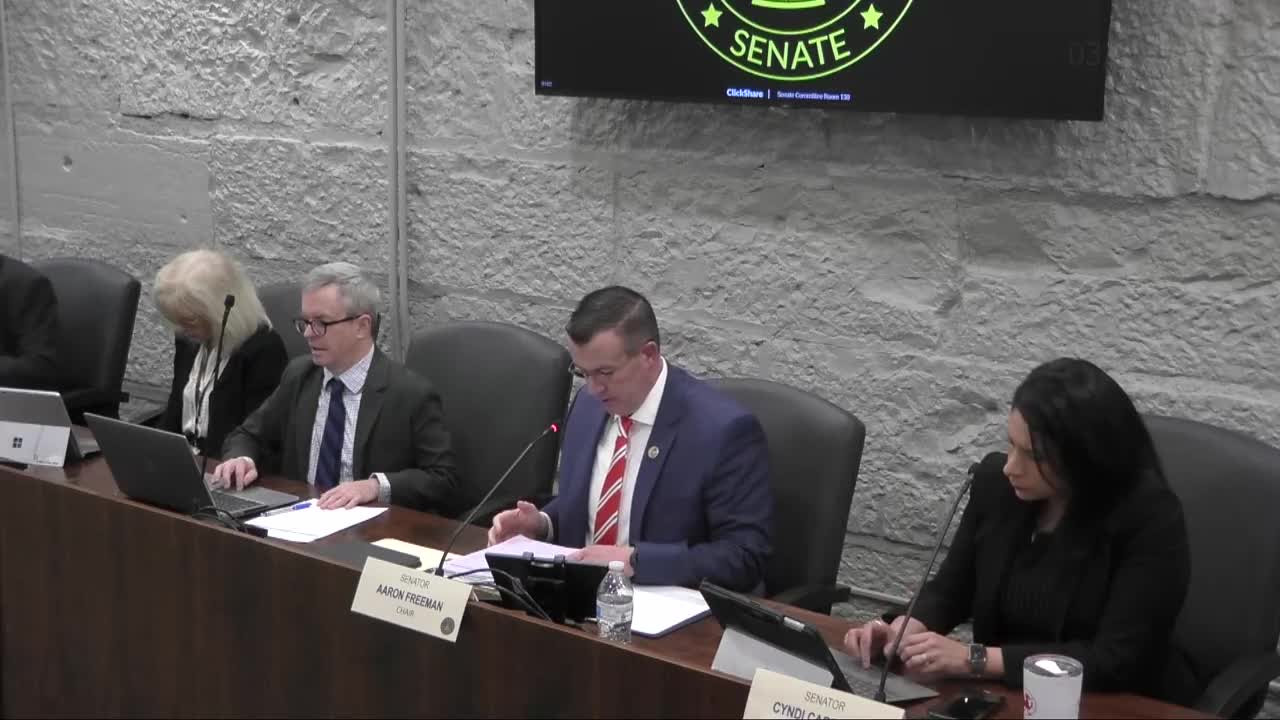
The committee offered no substantive amendment during the hearing and took a roll-call vote after brief procedural remarks. The clerk recorded the following affirmative votes: Senator Pohl (aye), Senator Taylor (aye), Senator Carrasco (aye), Senator Cook (aye), Senator Bohachik (yes), Senator Brown (yes), Senator Clark (aye), Senator Glick (yes), and Chair (Chairman Freeman) voting aye. The committee reported the bill as passed out of committee by an 8–0 tally as announced at the hearing.
No further implementation details, penalties beyond the class C misdemeanor designation, or effective dates were specified during the hearing.
The bill will proceed to the next reading in the legislative process.