Get Full Government Meeting Transcripts, Videos, & Alerts Forever!
Get email alerts on the Virtual Schools topic
No spam. Unsubscribe anytime.
Virtual charter leaders urge funding parity and outline accountability safeguards
Summary
Representatives of virtual charter schools told the subcommittee funding parity in the K—2 formula is necessary to provide consistent services for 6,000+ students statewide, and described auditing, attendance and accountability measures they said protect taxpayers.
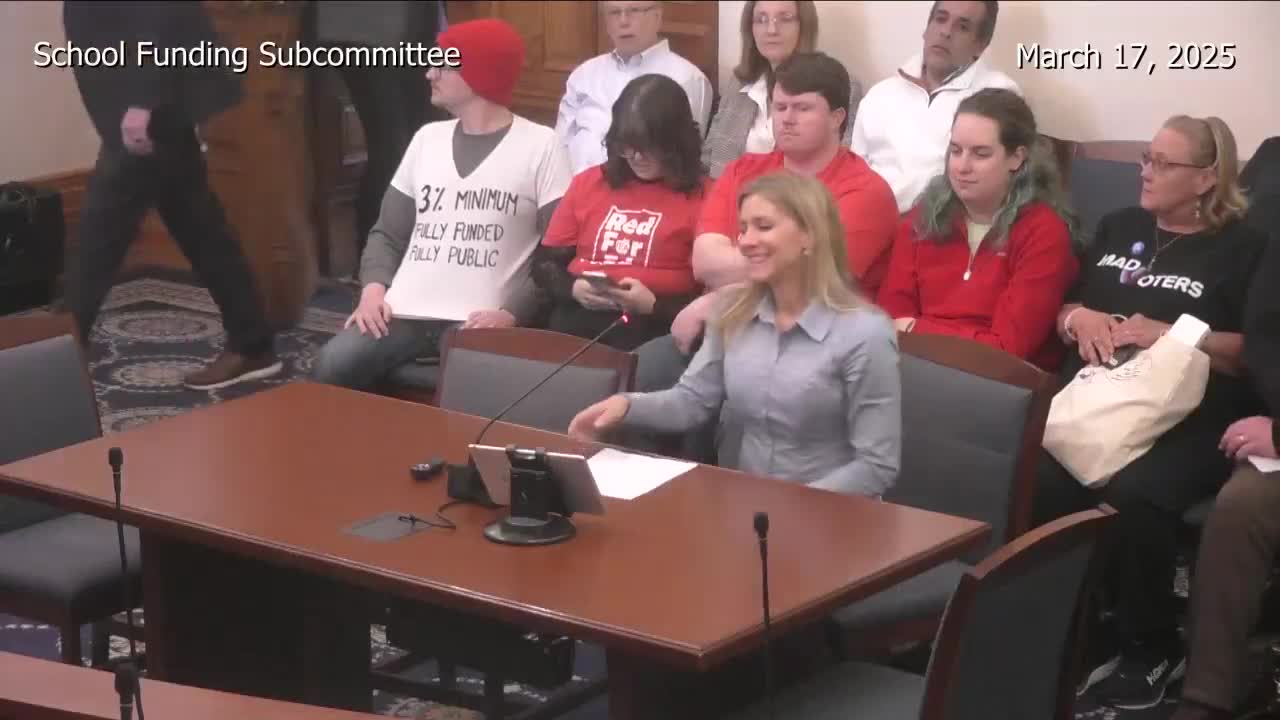
Leaders of Indiana's virtual charter schools testified to the School Funding Subcommittee about funding parity and accountability for online instruction, saying equitable state support is required to deliver required services to students statewide.
Kelly Simone, executive director of Indiana Connections Academy, which serves more than 6,000 students in every county and legislative district, told senators that virtual students receive about 85 cents on the dollar compared with a traditional public school student. "The funding we receive through the state budget is critical to our survival. It is our only source of revenue," Simone said.
Simone said nearly 20% of the students served by her schools qualify for special education services and almost 45% qualify as economically disadvantaged. She described state compliance, audits and attendance tracking, and responded to committee questions about past accountability controversies by noting that attendance and engagement metrics are now closely aligned with state accountability rules.
Simone also noted formula constraints: virtual schools must spend a large portion of tuition support on teacher compensation; she said that requirement leaves limited funds for technology, curriculum and other costs. She offered to provide senators with detailed expense breakdowns and invited follow-up with the subcommittee.
Committee members asked for documentation on internal controls and attendance metrics. No formal action on virtual school funding was taken during the hearing.