Get Full Government Meeting Transcripts, Videos, & Alerts Forever!
Get email alerts on the School Choice Vouchers topic
No spam. Unsubscribe anytime.
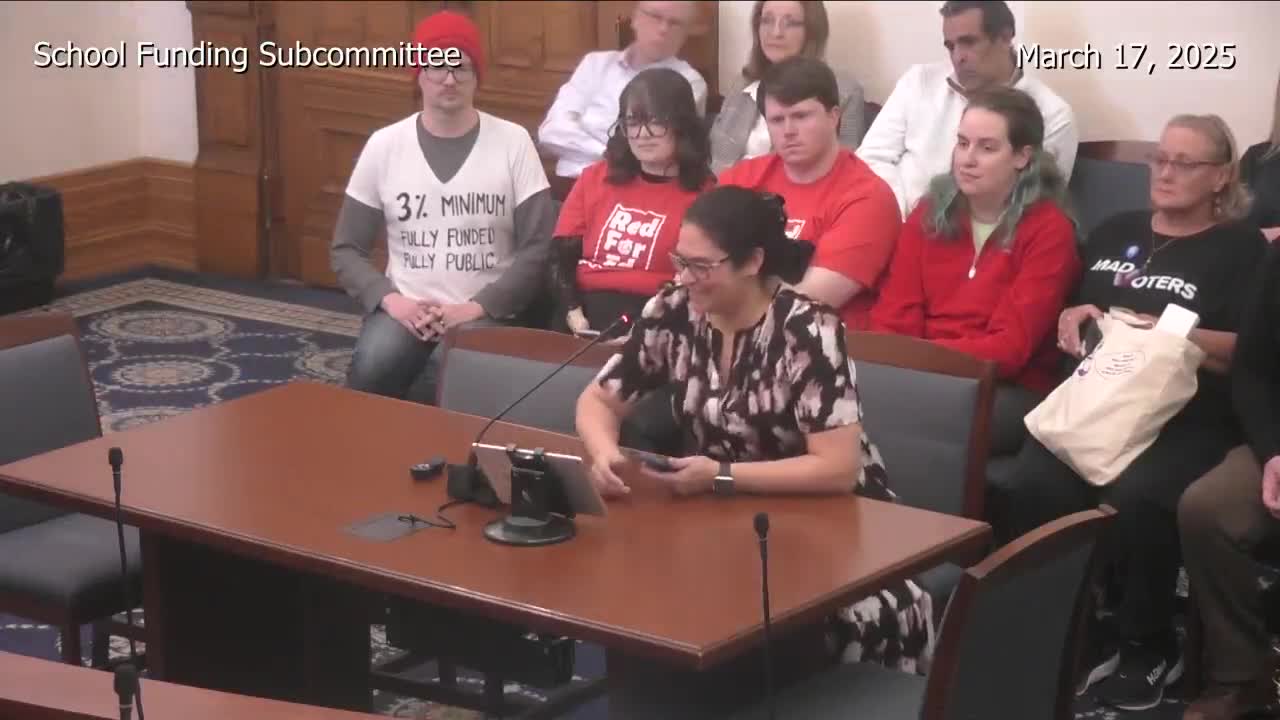
Parents, educators and opponents clash over proposed universal voucher expansion in HB1001
Summary
Dozens of witnesses offered competing views on expanding the state's school choice scholarships; supporters said removing income caps would help working families, while opponents warned expansion diverts funds from public schools and can increase private tuition costs.
The Senate School Funding Subcommittee heard sustained, sharply divided testimony on House Bill 1001, the budget provision that would expand eligibility for school choice scholarships (voucher programs) and remove or raise income caps for some families.
Opponents said the expansion diverts scarce funding from traditional public schools and can subsidize already'affluent families. Diane Hannah, a Carmel parent, told senators that "every single dollar that goes to a public school gets put to use in helping ensure that the school can meet the educational needs of every kid who lives in that community." Several speakers representing public school advocacy groups and parent coalitions warned that expanding vouchers while maintaining tight K—2 budget increases would reduce resources for students who remain in public schools.
Witnesses also presented economic concerns. Jim May, speaking as a private citizen and researcher, told the subcommittee that in many cases private-school tuition rose faster than inflation once voucher subsidies were available. "If the government provides no-strings-attached money for people to purchase a specific good, the providers of that good will always end up raising their prices," he said, and presented a sampling of tuition changes since 2011 to illustrate his point.
Supporters of universal expansion offered personal testimonials about stability and access. Several parents, guardians, and school leaders described families who depend on choice scholarships to keep children in a faith'based or otherwise preferred school. Mary Beth Rupsich said the voucher allowed her granddaughter to remain at a blue-ribbon private school during a prolonged family medical crisis. Multiple speakers described year-to-year household income volatility that can make families eligible some years but not others; those witnesses urged removing annual income verification as an administrative barrier.
Representatives of private and choice schools described operational compliance and audit practices. Kelly Simone, executive director of Indiana Connections Academy, which runs virtual schools, urged funding parity and described audits, attendance tracking, and accountability procedures her schools use. Charter and private school leaders also said many private institutions provide additional financial aid and are accountable to parents.
Committee members asked detailed fiscal and policy questions but did not take a vote during the hearing. They pressed witnesses on enrollment tracking, property tax impacts, per-student funding differences, and how voucher dollars interact with property tax revenue in wealthy districts. No formal changes to HB1001 were recorded in the transcript.