Get Full Government Meeting Transcripts, Videos, & Alerts Forever!
Get email alerts on the Law Enforcement Training topic
No spam. Unsubscribe anytime.
Senate Bill 95 would let public agencies seek training cost reimbursement when officers are hired away
Summary
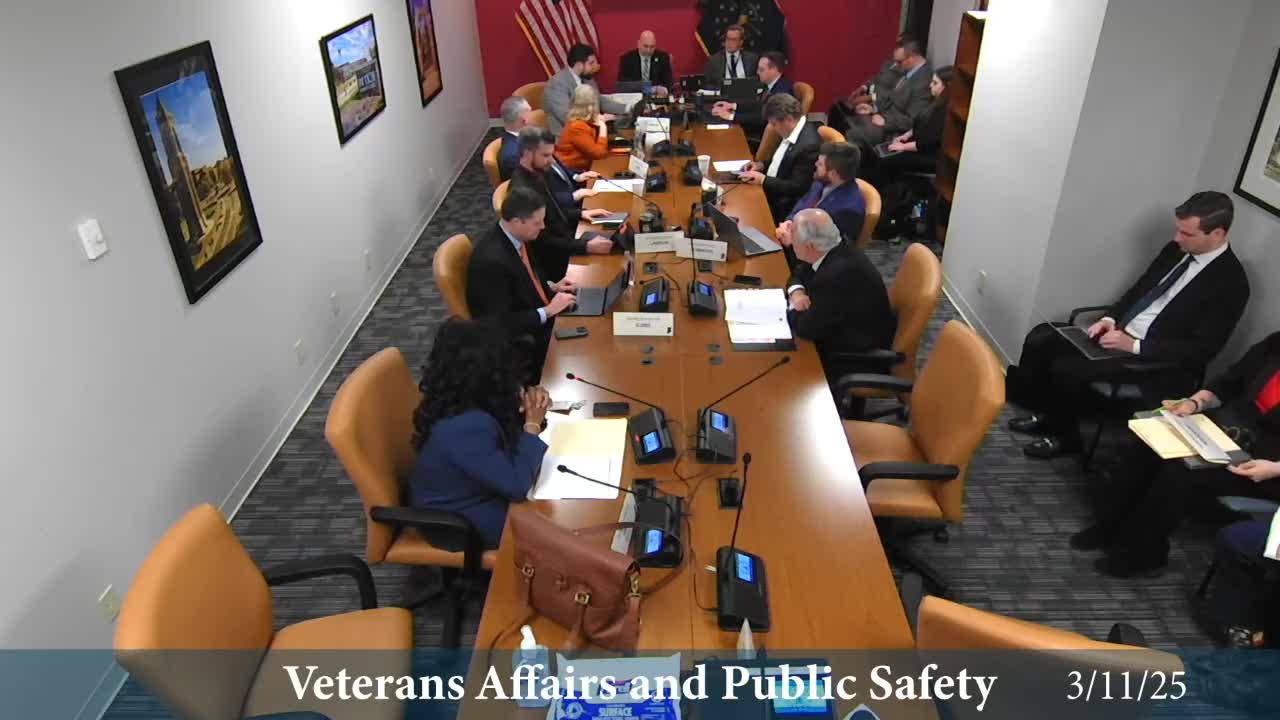
Senate Bill 95, presented by Senator Byrne, would allow a public law‑enforcement agency that loses a newly trained officer to request reimbursement from the agency that hires that officer for up to three years on a sliding scale. The House committee approved the bill on a unanimous voice/roll call vote.
Senate Bill 95 would let a public law‑enforcement agency that loses a newly trained officer seek reimbursement from the agency that hires that officer for up to three years, with declining percentages: 100% in year one, 66% in year two and 33% in year three. Senator Byrne presented the bill to the committee and said the measure "promotes public safety and puts rules in place that makes the cost of training officers fair to all the agencies."
Why it matters: The bill aims to reduce turnover costs borne by agencies that hire and train officers using public funds by giving those agencies a defined path for cost recovery. Supporters said the measure will stabilize staffing and make training investments fairer across jurisdictions.
Details and discussion: Byrne told the committee that a three‑year clock would begin when the officer "graduates from the basic training" and that reimbursement amounts are defined in the bill. He said the bill also permits a public employer to enter into an individual contract with an officer in the event the officer is later hired by a nonpublic employer. "There are some cases where the agencies make the officer sign an individual contract," Byrne said, adding the bill preserves that option for agencies.
Representative Mossell asked whether the reimbursement requirement would apply in the event of a termination or reduction in force; Byrne responded that if an officer leaves because the agency terminated the officer or reduced force, "they would not be in effect," and suggested the committee could add clarifying language on second reading if necessary. Representative Cash asked whether an officer who leaves for private employment could be held responsible; Byrne confirmed the bill allows the public agency to use an individual contract in those cases.
Mike Biberstein, representing the Indiana Sheriffs Association, testified in support: "We rise in support of this bill. We thank senator Burn for working on it, with us over the last year and a half."
Outcome: The committee moved to pass SB 95 and the roll call recorded 13 yes votes and no recorded no votes. The clerk announced, "Bill passes 13."
Context and authorship: Byrne listed multiple coauthors while presenting the bill and thanked committee sponsors on the House side. The bill language defines reimbursement percentages and the three‑year period; Byrne said the bill "passed out of committee with an eight‑zero vote and on third reading 49‑0" in the Senate.
Next steps: The committee reported the bill as passed; the transcript does not record subsequent floor scheduling or final enactment.