Get Full Government Meeting Transcripts, Videos, & Alerts Forever!
Get email alerts on the Carbon Sequestration topic
No spam. Unsubscribe anytime.
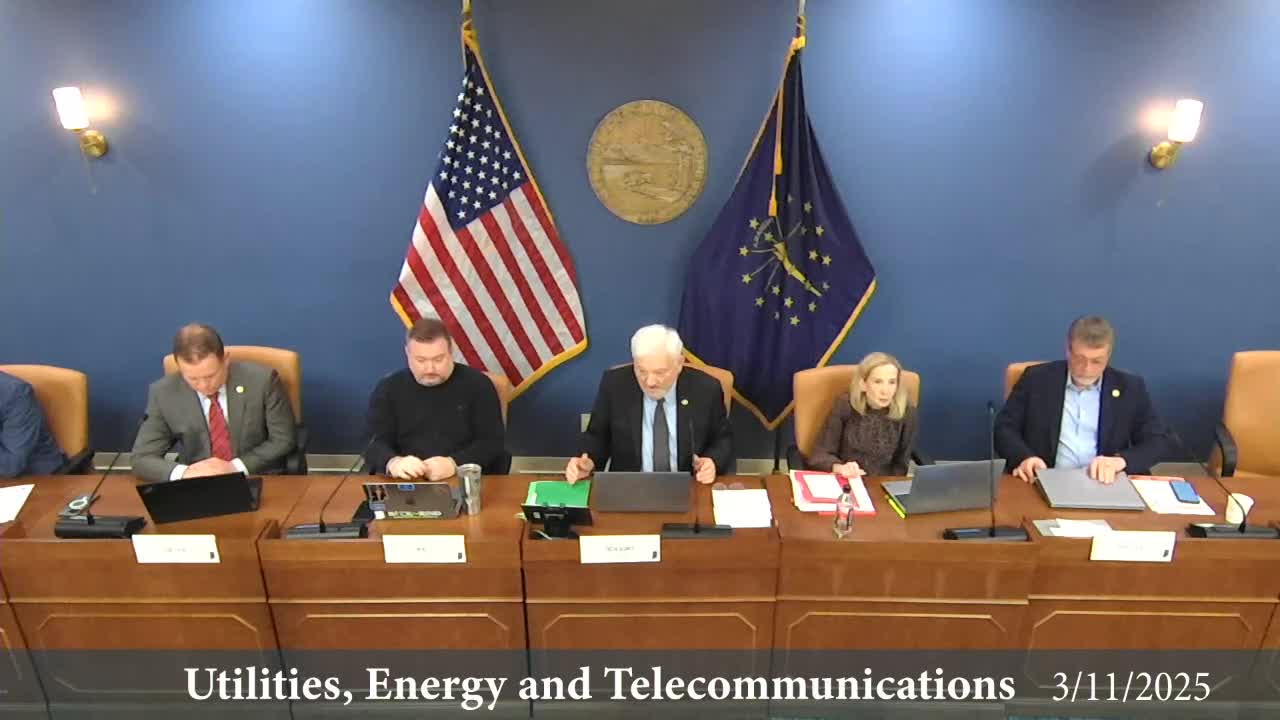
Committee advances cleanup bill on carbon sequestration funding, 11-2 vote
Summary
The Utilities, Energy and Telecommunications Committee voted 11-2 to pass a technical cleanup to earlier carbon sequestration law, centering on who ultimately pays — investors or taxpayers — and how collected fees are handled.
The Utilities, Energy and Telecommunications Committee advanced a bill that modifies provisions of the state's carbon sequestration law and changes how associated fees are allocated, passing 11-2.
Senator Glick, sponsor of the measure, told the committee the bill is "simply about who pays — will it be the taxpayer or the investor?" He said the measure revises earlier language to streamline administration and clarify timelines for applicants.
The bill amends the prior act by replacing an 8-cent-per-metric-ton flat fee measurement and creates a year-end settlement process; it also shifts initial fee receipts into the general fund rather than a sequestered account, subject to appropriation decisions the Appropriations Committee may later revisit. "We went from an 8¢ a metric ton measurement on the carbon dioxide...and if at the end of the year they determined more was injected...then they will settle up," Senator Glick said.
Representative Matt Pierce, who voted no, said he supports the concept of sequestration generally but opposed several changes in the bill. Pierce noted concern that pipelines running through private property could be exempted from permit requirements and questioned removing the current permit prerequisite so that filing an application would be sufficient to proceed. He also said the bill extends potential long-term state responsibility for storage without assuring stable funding for long-term monitoring and oversight.
Chairman Soliday and other supporters said financing and permit language will be further considered in the finance and ways-and-means processes and that federal oversight provides constraints on state primacy. "If the state tends to drift past that, the feds are in there in a minute," Senator Glick said.
The committee moved to pass; a roll call recorded 11 ayes and 2 no votes. The recorded no votes were Representative Chris Culp and Representative Matt Pierce. The committee record shows Representative Tim Westko requested and was granted permission to explain his aye vote, saying he viewed the measure as harmless and allowing companies to proceed if they wish.
The bill advances to the next stage for committee and appropriations review.
Votes at a glance: Move to pass — motion moved and seconded; outcome: passed. Tally: yes 11, no 2.