Get Full Government Meeting Transcripts, Videos, & Alerts Forever!
Get email alerts on the Emergency Shelter Licensing topic
No spam. Unsubscribe anytime.
Committee reviews bill to ease rules for emergency child shelters and let DCS view prescription data
Summary
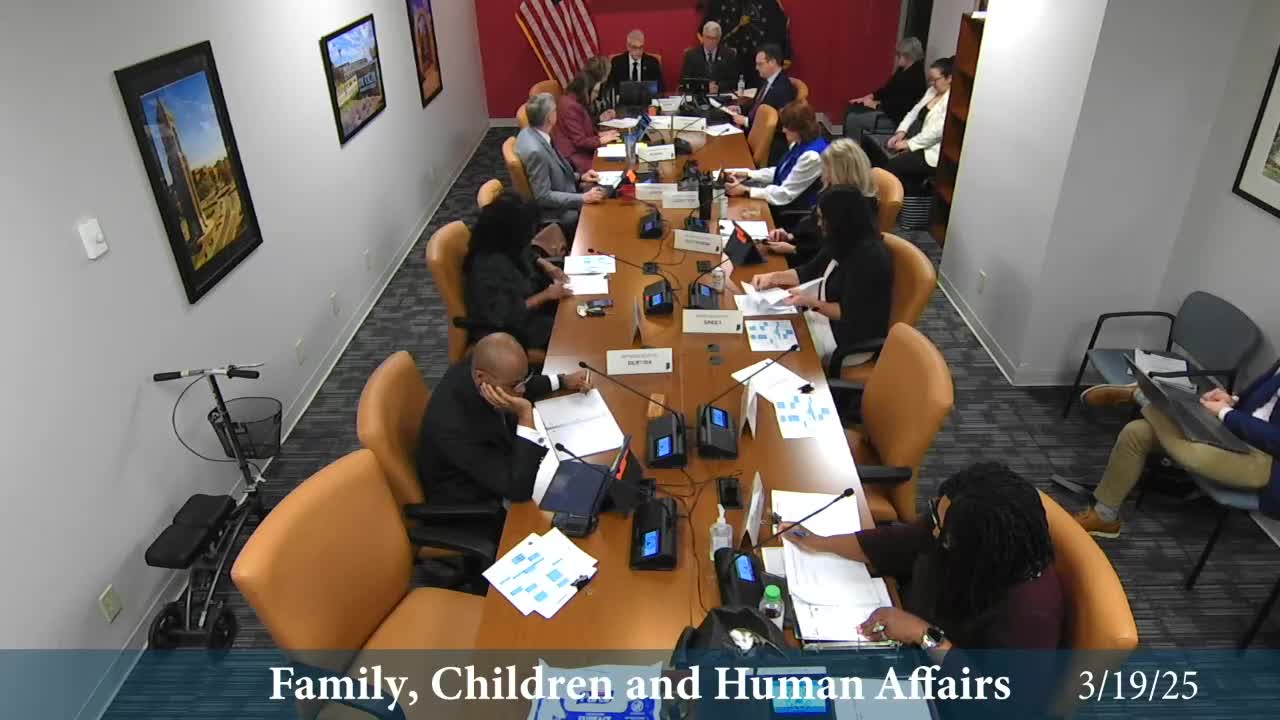
At a meeting of the Family, Children and Human Affairs Committee, lawmakers and child welfare providers reviewed Senate Bill 498, a measure the sponsor and witnesses said is intended to reduce operational burdens on emergency child shelters and help with recruiting and placements for children without expanding permanency timelines.
At a meeting of the Family, Children and Human Affairs Committee, lawmakers and child welfare providers reviewed Senate Bill 498, a measure the sponsor and witnesses said is intended to reduce operational burdens on emergency child shelters and help with recruiting and placements for children without expanding permanency timelines.
The bill would allow licensed emergency shelter care facilities to extend the current 20-day maximum stay in certain cases, loosen educational requirements for casework supervisors, and make targeted definitional and recordkeeping changes for licensees. It would also create a narrowly limited route for Department of Child Services supervisors to access the state prescription-monitoring database for active cases.
“It's to help some of our providers and to deal with really some of the additional burden of recruiting and finding qualified people,” Chairman Walker said, summarizing the bill's purposes. Walker told the committee the measure would ease some training and educational requirements and permit extensions beyond the 20-day cap for licensed shelter placements when appropriate.
Hannah Joy, executive director of the Indiana Association of Residential Childcare Agencies (IARCA), told the committee SB 498 is “kind of an omnibus bill” that primarily cleans up code sections affecting emergency shelters and licensed child-caring institutions. She asked for more time to review proposed amendments before the committee votes.
Representative Gossary introduced an amendment to allow supervisors at DCS limited access to the state's prescription-monitoring system, referred to in testimony as the "inspect" database. "The amendment would give supervisors of DCS agencies access to the inspect information," Gossary said. Supporters said access would help family recovery courts and individual cases where medication histories are relevant; opponents and some committee members flagged privacy and misuse concerns.
"This request was brought to me from DCS caseworkers," Hannah Joy said; "it would be the only time that they would have the ability to access that" information for an active case. Matt Lapret, interim legislative director at the Department of Child Services, said the provision was intended in part to ensure compliance with federal law and that contractors are already required to be background checked. "One of the purposes of it is to comply with federal law," Lapret said, adding the department would work to clarify operational language to avoid unintended consequences.
Tina Clower, CEO of Firefly Children and Family Alliance, described a licensing limitation the bill seeks to fix: the current law's age restriction on children that emergency shelters may accept. "Senate Bill 498 addresses a vulnerability that currently exists in the law, which limits the age of the children who can be served in an emergency shelter environment," Clower said. She said Firefly typically serves at least 100 children age 6 and under per year but has had to turn some away for the past nine months because of the licensing restriction.
Committee members pressed for clarity about several amendment components, including the scope of background checks for outside contractors who briefly enter a facility to perform repairs and whether emergency shelters should be temporarily exempt from two specific requirements that generally apply to longer-term residential placements: a documentation schedule for psychotropic medication and an immunization/booster requirement at intake. Under current law discussed in committee, shelters that administer psychotropic medication must obtain a written report from the licensing physician at least once every 35 days; one proposed amendment would exempt emergency shelters from that 35-day reporting cadence.
The committee did not vote on SB 498 or on the amendments. Chairman Devon said the bill and amendments would be held for further review and likely come back for an amendment vote at a subsequent meeting.
Looking ahead, sponsors and witnesses asked the committee for more time to work through technical language so the bill would not create unintended operational or privacy problems, particularly around contractor background checks and the limited sharing of prescription-monitoring data.