Get Full Government Meeting Transcripts, Videos, & Alerts Forever!
Get email alerts on the Employment, Labor And Pensions topic
No spam. Unsubscribe anytime.
Committee adopts uniform procurement standard for construction subcontract awards, moving to "lowest and best"
Summary
A bill to standardize the award standard in public construction statute to "lowest and best" (matching higher education and state owners) passed the committee. Supporters said the change gives owners and construction managers flexibility to consider reputation, schedule and value; industry groups noted trade-offs and urged clarity.
A House committee voted to change Indiana's public contracting language so the same award standard would apply across all public owners: switching local government projects from a "lowest responsive and responsible" standard to a "lowest and best" standard that higher education and state owners already use.
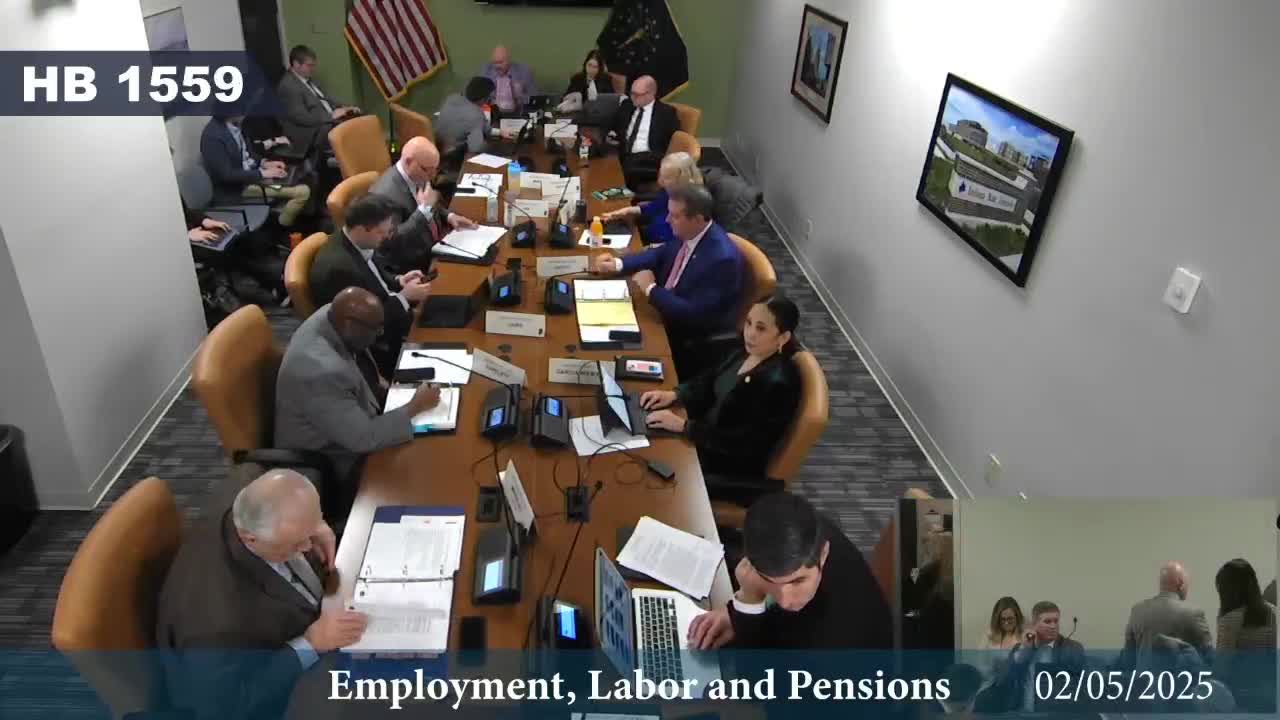
Representative (author) introduced House Bill 15-59, saying the change's purpose is to "level the playing field" by making one award standard under IC 5-32. He said the change would not alter how public entities contract with construction managers; rather, it affects how construction managers select first-tier subcontractors.
Lance Gasser, chief operating officer at Garmont Construction, described practical differences. Under "lowest responsive and responsible," bids that fail a technical submission requirement can be disqualified even if they are substantially lower. Under "lowest and best," evaluators may account for factors such as reputation, schedule, value engineering and quality, which proponents said can yield better value and sometimes save taxpayer money.
Kevin Tharpe of the Associated General Contractors of Indiana said his organization was officially neutral and urged the committee to recognize trade-offs: lowest responsive and responsible has established court interpretations and limits discretion; lowest and best provides flexibility but requires sophisticated owners and construction managers to avoid inconsistent application.
Representative Mosley said he would vote yes but asked to work with the author on concerns. The committee voted to pass the bill; the recorded tally was 12-0 in favor.
Supporters said the change mirrors language already used by higher education and INDOT and would be implemented by owners and construction managers; opponents urged caution and recommended outreach to less-sophisticated public owners to avoid unintended consequences.