Get Full Government Meeting Transcripts, Videos, & Alerts Forever!
Get email alerts on the Enforcement topic
No spam. Unsubscribe anytime.
Ethics Commission enforcement team outlines SARP revisions and explains probable‑cause and hearing procedures
Summary
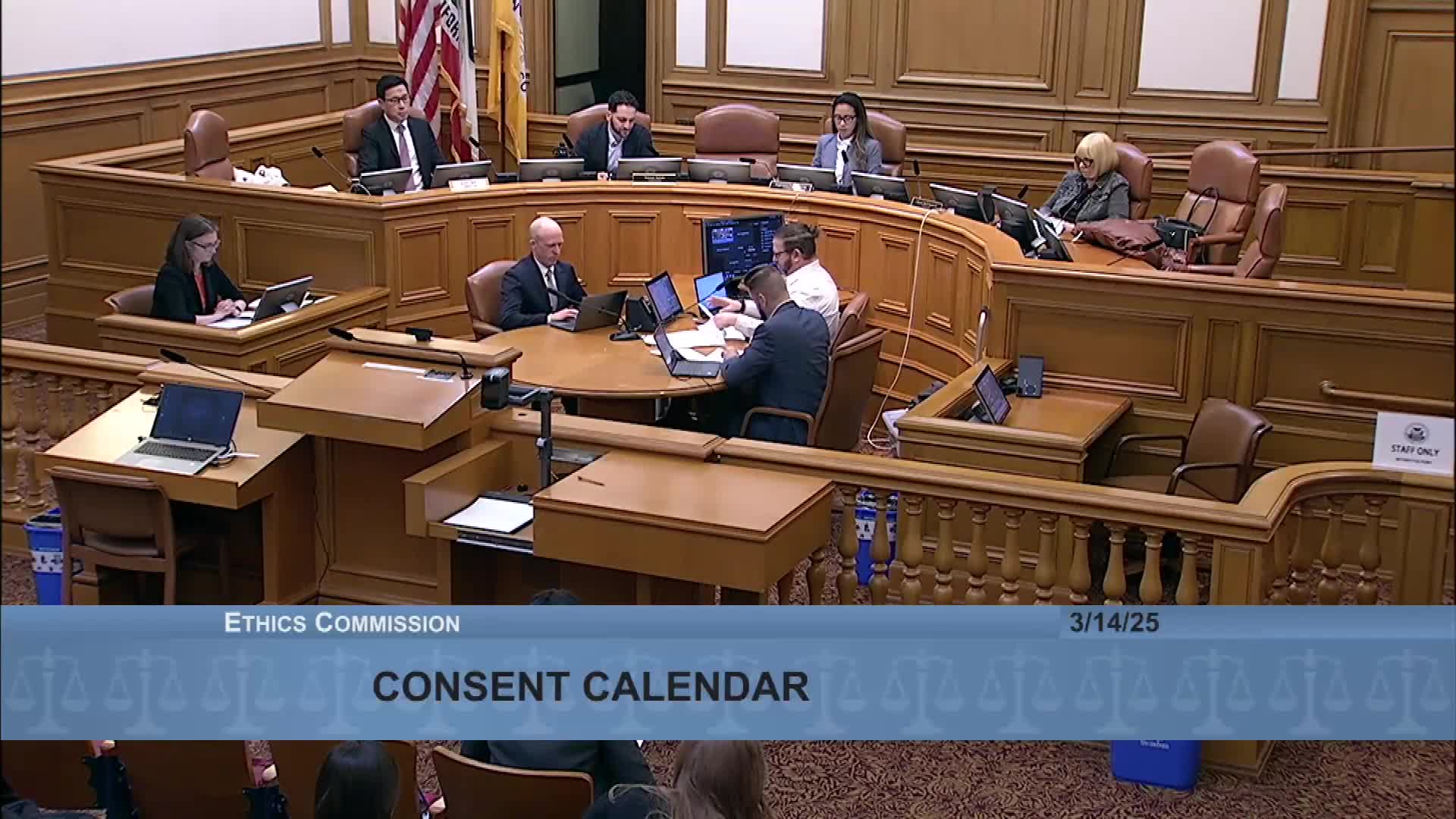
Director of Enforcement B.C. Matthews and staff briefed commissioners on March 14 about planned Streamlined Administrative Resolution Program (SARP) revisions, the probable cause and administrative hearing process, and next steps for interested‑persons outreach and draft amendments.
B.C. Matthews, director of enforcement for the San Francisco Ethics Commission, updated the commission March 14 on quarterly enforcement work and described two near‑term rulemaking efforts: proposed revisions to the Streamlined Administrative Resolution Program (SARP) and clarifications to the probable cause and hearing process.
"We have two major projects this fiscal year to revise the enforcement regulations and our streamlined administrative resolution program," Matthews said, adding that several informational presentations and interested‑persons meetings are planned.
Why it matters: SARP is the commission dministrative tool to resolve certain enforcement matters through a standardized, expedited process rather than a full hearing. Staff said updates aim to broaden eligible violations and refine eligibility criteria and penalty formulas based on four years of implementation experience.
Key points from staff presentations
- SARP status and timeline: Eric Willett, senior investigator, said SARP was adopted in February 2021 and currently covers 41 provisions of law, primarily filing omissions and other violations that require little additional investigation. Willett said staff have consulted peer jurisdictions, will hold two interested‑persons meetings in April, present draft amendments to commissioners in June, and aim for adoption in July.
- Probable cause and hearing overview: Bertha Chang, senior legal and investigative analyst, provided a detailed walkthrough of the probable cause (PC) proceedings and the administrative hearing process. Chang described mandatory timelines and stakeholders' rights, including that a respondent has 21 calendar days to file a written response to a PC report and 14 days for any rebuttal, and that the executive director must issue a determination within 60 calendar days of a PC conference.
- Commission review and closed sessions: Chang explained the commission's role in ratifying probable cause determinations. Once the executive director reaches a PC determination, commissioners have five calendar days to request a review; if any commissioner requests review, the PC determination must be ratified by at least three commissioners at a subsequent meeting, and that review is conducted in closed session.
- Prehearing and hearing logistics: Chang reviewed options for handling prehearing matters (assigned commissioner, appointed licensed attorney, or full commission), the 30/15/10 calendar‑day schedule adopted in a prior hearing for submissions (an approach the commission found more practicable than the shorter timelines in the enforcement regulations), discovery tools (including subpoenas), and the structure of hearings on the merits. She noted the commission must issue findings within 45 calendar days after a hearing concludes and that a finding of violation requires a preponderance of the evidence and at least three commissioners' votes.
Commission and public questions
Commissioners asked whether prehearing proceedings are public; staff confirmed prehearing conferences are held in closed session unless the full commission elects to handle them in open session. Commissioners also asked about discovery mechanisms; staff confirmed subpoenas and other discovery tools are available during investigations and hearings.
Matthews and other staff said the enforcement division is actively processing several cases; Matthews noted that a probable cause determination had been issued the prior week in a matter involving William Walker. Staff also referred to the Paul Allen Taylor hearing as the most recent full hearing on the merits held by the commission in the past decade.
Next steps
- SARP amendments: staff will convene interested‑persons meetings in April, circulate proposed amendments to commissioners in June, and target a July meeting for potential adoption.
- Hearing process refinements: staff said they would bring recommendations on mechanical and procedural refinements to the process of preparing findings and handling prehearing matters, with an eye to avoiding Brown Act issues and ensuring an efficient, fair process.
Public comment included callers praising the enforcement report and asking clarifying questions about procedure and commission voting requirements.
Ending note: The presentations emphasized both incremental rule changes to SARP and procedural clarifications to preserve due process while making the enforcement pipeline more efficient.