Get Full Government Meeting Transcripts, Videos, & Alerts Forever!
Get email alerts on the Advanced Placement Transcripted Credit topic
No spam. Unsubscribe anytime.
District review finds steady AP results, rising transcripted credit and gaps in course uptake between high schools
Summary
District staff presented three years of advanced‑course and college‑credit data, noting steady AP participation and improved AP exam performance, increases in transcripted credit through Blackhawk Technical College at some sites, and enrollment disparities between Craig and Parker that the district will study further.
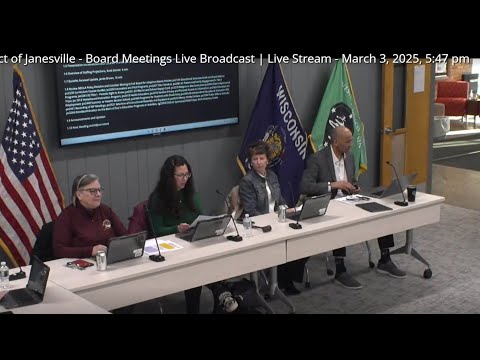
District staff led by Dr. Lisonbee DeGraff and Chris Menwalt presented an overview of advanced placement (AP) courses, transcripted credit (TC), Project Lead The Way and Start College Now opportunities at the March 3 Policy, Personnel & Curriculum Committee meeting.
The presentation described three years of participation data and performance trends. Menwalt said AP pass rates (score of 3 or higher) have shown steady improvement over the last three years, and that participation relative to enrollment has stayed “pretty steady.” He noted that AP offerings and enrollments vary by school, and that teacher availability and who teaches a course frequently drive whether sections run.
The district described the distinction among college‑credit pathways: AP (College Board), transcripted credit through Blackhawk Technical College (BTC), Start College Now (technical colleges) and early college credit with four‑year institutions (commonly University of Wisconsin–Whitewater for Janesville students). Staff explained that transcripted credit teachers must meet credential requirements governed by the Higher Learning Commission and that staffing turnover or credential gaps can cause TC offerings to disappear even if a course previously ran.
Staffers highlighted program specifics: some transcripted courses were discontinued after BTC changed curriculum (example: TC chemistry), Project Lead The Way requires teacher training rather than specific licensure, and RUHS’s proximity to BTC yields higher transcripted‑credit participation there. The district also noted that advanced standing (district‑approved course content recognized by BTC) differs from transcripted credit and requires student enrollment at BTC to receive college credit.
Board members raised equity and access questions. One member asked whether Parker is a Title I school and whether costs and early test fees for AP (which students must pay to take AP exams) discourage participation. Menwalt and other staff acknowledged socioeconomic and tradition factors likely contribute to differences between Craig and Parker and said the district will consider communication, fee support and outreach strategies to increase access. A board member urged clearer communication to families about AP, TC and other college‑credit routes; staff said they are piloting ninth‑grade conferences and improving academic and career planning outreach.
Staff did not propose immediate program eliminations; instead they recommended further analysis of enrollment patterns, barriers to AP exam registration and measures to streamline registration and payment for low‑income students. The presentation emphasized that staffing and credentialing, rather than student interest alone, often determine which college‑credit options are available.