Get Full Government Meeting Transcripts, Videos, & Alerts Forever!
Get email alerts on the Energy Policy topic
No spam. Unsubscribe anytime.
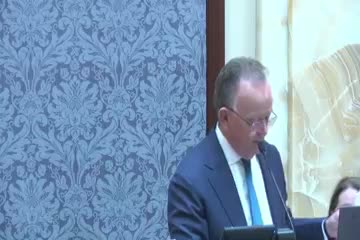
Senate approves measure to promote large-scale electrical energy projects after contentious debate over local control and nuclear focus
Summary
The Utah Senate passed a bill creating state support for large electrical energy projects, including a focus on nuclear development, after hours of debate about local consent, appointments to a new council and the bill's scope. The bill passed 22-6 and will return to the House for further consideration; senators said a fiscal note will follow.
The Utah Senate voted to pass third substitute House Bill 249, which creates a state structure intended to facilitate large electrical energy projects and establishes an investment fund to support development, transmission and related infrastructure. The measure, focused in the bill text on enabling nuclear energy projects alongside other large-scale generation, passed the Senate 22-6 with one senator absent.
Supporters said the bill is meant to begin long-term planning for the state's projected electricity needs. "If we're gonna meet the governor's goal to double our production capability in the next 10 years ... we have to begin looking at nuclear," sponsor Senator Ann Milner said. Milner told colleagues the measure would create an Office of Energy Development to coordinate work with research institutions, industry and local communities and to prioritize projects that provide baseload power.
Senators who opposed the bill framed their objections largely around process and local control rather than an explicit opposition to nuclear technology. Senator Luz Escamilla asked whether the substitute removed a minority caucus appointment to the new council; the sponsor confirmed that an amendment to do that had been proposed but "did not pass." Senator Jenny Wilson said the debate was about process: "I think it's an anti-process conversation ... people are concerned about having local input or not having local input here and the ramifications of trying to push big projects onto communities from the top down." Senator Reebie said many constituent emails raised the same concern: residents feel "disenfranchised" and want local voices included.
Other senators supported the bill as part of an "all-of-the-above" energy approach. "When you increase the cost of our energy by demanding that we only use certain types ... you're increasing the cost of moving everything from one place to another," Senator Brammer said, arguing that including nuclear can help keep energy costs lower for low-income households. Senator Vickers, who supported the measure, urged colleagues to consider a range of energy sources and to treat nuclear as part of a technology mix that can provide reliable baseload power.
Senators raised several procedural and scope questions during debate. Multiple senators asked whether designated energy development zones would allow other types of energy (for example geothermal or large-scale wind) or be limited to nuclear; the sponsor said the bill is "focused primarily on nuclear" but does not expressly preclude other large-scale projects if the council and local partners agree. Senators also pressed whether interlocal agreements referenced in the bill would provide communities a way to slow or opt out of projects; the sponsor said interlocal agreements would require negotiation between localities and the state.
Fiscal and implementation details remained unresolved on the Senate floor. Several senators noted the substitute had not yet been accompanied by a final fiscal note; Senate leadership indicated the bill will return to the House for further consideration and that fiscal impacts will be addressed there. Senator McKay said the bill creates an Electrical Energy Development Investment Fund tied to revenues from another bill recently passed in the Senate and described it as a step toward funding large projects.
The Senate recorded a final roll-call: 22 senators voted in favor, six opposed and one was absent. The president directed the bill returned to the House for further consideration and for associated fiscal materials.
How the Senate debated the bill
Discussion on the bill ran more than two hours on the floor and included a mix of policy arguments, local-control concerns and questions about board membership. Supporters emphasized long-term supply needs and the need for baseload generation; opponents emphasized community consent, potential limits on local incentives for projects outside designated zones, and the absence of an up-to-date fiscal estimate.
The bill outcome and next steps
Third substitute House Bill 249 passed the Senate 22-6 and will be returned to the House for further consideration. Sponsors and Senate leaders said the House will receive the bill along with a fiscal note and that the measure may be refined in subsequent committee work. The bill language creates a state office and an investment fund intended to coordinate projects and negotiate with local partners; several senators said they expect the text to be revised in future sessions.