Get Full Government Meeting Transcripts, Videos, & Alerts Forever!
Get email alerts on the Tourism Taxation topic
No spam. Unsubscribe anytime.
Senate passes transient room tax changes to fund rural visitor-impact grants, returns bill to House
Summary
The Senate passed eighth substitute House Bill 456 to raise the statewide transient room tax by 0.75 percentage points, create a grant fund for rural visitor-impact mitigation, and establish a county option for additional local revenue. The measure passed unanimously in the Senate and will return to the House for further consideration.
The Utah Senate approved an amended transient room tax package designed to direct new revenue toward rural visitor-impact mitigation, including emergency medical services and search-and-rescue in smaller counties.
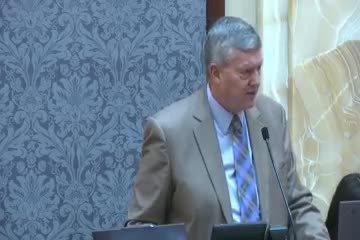
“During the interim…we recognized there's been a challenge with trying to find some funding for rural EMS or emergency medical services and search and rescue and some other related visitor impacts in some of the smaller counties,” Senator Vickers said while presenting eighth substitute House Bill 4 56.
The bill raises the statewide transient room tax (TRT) by 0.75 percentage points. According to the sponsor’s floor presentation, roughly half of that increase would be placed in a grant fund administered by Outdoor Recreation within the Department of Natural Resources to support mitigation projects in rural counties, while another quarter percent would be earmarked for a long-term capital improvement program and flow through the general fund into capital accounts. The remaining quarter percent would be a county-option local tax that counties may elect to impose and use for local mitigation, bonding or visitor-impact responses.
Senator Vickers said the package exempts counties that generate more than $10 million in TRT receipts (named examples included Summit and Washington counties by agreement) from eligibility for the rural grant program, allowing the legislation to focus on smaller, higher-need jurisdictions. The sponsor estimated the statewide half-percent fund would raise about $15 million annually.
Floor debate focused on fund distribution, notice and reporting requirements, and coordination with an existing reporting bill (Senate Bill 261). The bill includes audit and reporting language placing audit responsibility with the state auditor and — by coordination clause — allowing legislative fiscal staff to receive reports if SB261 also passes.
The Senate passed the eighth substitute of HB456 under suspension of the rules; the roll call recorded 27 ayes, 0 nays and 2 absent. The bill will be returned to the House for further consideration and signature.
Ending: Sponsors and rural advocates framed the measure as a narrowly targeted funding tool to help counties address visitor impacts in low-population areas; implementation details, reporting and the local-option decision will be critical as the bill moves forward.