Get Full Government Meeting Transcripts, Videos, & Alerts Forever!
Get email alerts on the Statutory Drafting topic
No spam. Unsubscribe anytime.
Senate passes bill to strip 'legislative intent' language after objection over privacy and access clause
Summary
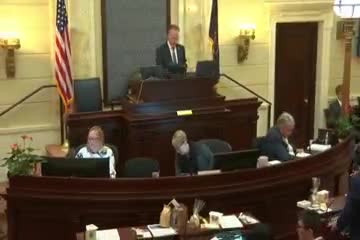
The Utah Senate on March 7 passed First Substitute House Bill 394, which removes statutory "legislative intent" language from state law. Opponents warned the bill would repeal an existing statutory finding recognizing public access and privacy rights; supporters said the change is a technical clarification to make statutes more direct.
First substitute House Bill 394, statutory intent amendments, passed the Utah Senate on March 7, 2025, under suspension of the rules. The measure, which removes language framed as legislative intent from the statutory code, passed by roll call 20–7 with two senators absent.
Sponsor Senator Musselman told the Senate the change is meant to streamline statutory language and reduce ambiguity. “That this bill goes through and removes that subjective language. Streamlining statutory language, the bill enhances transparency and, reduces ambiguity in legal pro provisions,” Senator Musselman said during his presentation. He added later that the bill “treats every bit of legislative intent language the same, and it pulls it out.”
Senator Thatcher opposed the measure on the floor, saying the bill was not merely technical. Thatcher pointed to a specific provision the bill would repeal and read the statutory language during debate: “in enacting this act, the legislature recognizes 2 constitutional rights. The public's right of access to information concerning the conduct of the public's business and 2, the right of privacy in relation to personal data gathered by government entities. The legislature also recognizes a public policy interest in allowing a government to restrict access to certain records as specified in this chapter for the public good.” Thatcher said she did not “believe that is a technical correction” and described removing that language as “a very, very significant policy decision.”
Musselman responded that the bill uniformly removes statements of intent and that findings of fact could still appear in bills where appropriate. He asked for the question to be called and the Senate proceeded to a roll call vote.
The final tally recorded 20 yes votes and 7 no votes; two senators were absent. The clerk announced the bill will be signed by the president and returned to the House for the speaker's signature.
Why it matters: The contested line cited by Senator Thatcher appears in section 63G-2-102 in the Utah code, and explicitly notes the legislature's recognition of both the public's right to access government information and privacy rights related to personal data collected by government. Opponents said removing that language raises a policy question about statutory recognition of those rights; supporters said the bill merely eliminates subjective interpretive language so statutes state only operative requirements.
The bill will be returned to the House for further processing after the president signs it.