Get Full Government Meeting Transcripts, Videos, & Alerts Forever!
Get email alerts on the Public Funds Transparency topic
No spam. Unsubscribe anytime.
Utah House approves public‑funds reporting bill and advances dozens of measures in busy floor session
Summary
The Utah House on March 3 passed legislation to expand public‑funds reporting and approved a long list of bills on consent and concurrence votes, including measures on Medicaid pharmacy, recycling, school safety and ballot titles.
The Utah House of Representatives on March 3 passed House Bill 475, a bill directing the legislative auditor to compile more comprehensive, publicly accessible reports on cash and investments held by state entities and political subdivisions, and approved a wide package of other measures during a busy floor session.
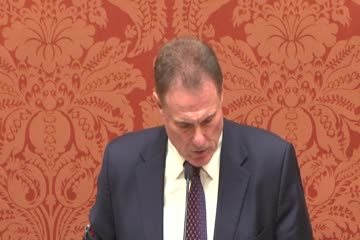
House Bill 475 passed on a final vote of 71–0. Sponsor Representative Walter said the bill will use data already reported in annual financial statements to create an accessible, consolidated view of cash and investments held by more than 1,000 political subdivisions. “All we wanted to do was to create a process where it would be easy for us to see, what those numbers were,” Representative Walter said on the floor.
Why it matters: supporters said the measure packages publicly available data in a way meant to improve transparency and policymaker access without creating new reporting burdens. Representative Walter told colleagues the change is not a budget review; it relies on the annual financial reports already submitted to the auditor and is intended to offer a broader, easier-to-use picture of cash and investments across cities, counties, special districts and state entities.
What the bill does: HB 475 directs the Office of the Legislative Auditor General to generate an accessible report drawing on the annual financial reports that political subdivisions submit, and to use the auditor’s tools and technology to provide a consolidated view. Representative Walter said the legislation grew from discussions after a 2024 report and aims to avoid creating disincentives to participation in the Public Treasurer’s Investment Fund; he noted the fund had grown from about $14 billion in 2016 to roughly $35 billion by the date of debate.
Representative Albrecht asked whether the measure would include budgeted but unspent amounts from prior years; Walter replied, “This isn’t about budgets. It doesn’t reflect budgets. All it does is say when they turn in their annual financial reports, they report the amount of cash and investments … as of June 30.” That exchange was recorded during floor discussion.
Other measures approved
The House cleared several bills on the consent, concurrence and third‑reading calendars with little or no floor debate. Tallies below are taken from the House record during the March 3 session:
- Second substitute Senate Bill 217 (recycling and waste amendments) — passed 64–0. Representative Kyle described the bill as updating Department of Environmental Quality (DEQ) web pages to help the public find collection points and community collection events and encouraging producer education programs for electronic waste.
- House Bill 531 (division of professional licensing amendments) — passed 63–0. Representative Grant Miller said the bill removes an associate‑degree requirement that blocked some nursing‑certificate holders from licensure as substance‑abuse coordinators and clarifies supervision requirements.
- House Bill 538 (judgment information amendments) — passed 67–0. Representative McPherson said the bill replaces a requirement to file full Social Security numbers in judgment lien filings with a requirement to file only the final four digits, aligning statute with current recording practices and reducing publication of personal identifying information.
- HCR 10 (concurrent resolution celebrating the 250th anniversary of the Declaration of Independence) — passed by recorded voice; the House record shows the measure advanced and will be transmitted to the Senate for consideration.
- House Bill 560 (School Safety Foundation) — passed 66–0. Representative Wilcox said the bill would allow private donations to a school safety fund to speed local responses when appropriate.
- HCR 14 (House concurrent resolution supporting streamlining Utah housing policies) — passed 60–4. Representative White framed the resolution as support for consolidating housing‑related state efforts and implementing recommendations from a November 2023 legislative auditor housing audit.
- Senate Bill 269 (telecommunications amendments) — passed 68–0. Representative Wilcox said the bill maintains pricing flexibility for incumbent carriers designated as carrier of last resort.
- Multiple concurrence and concurrence‑vote items were adopted, including first substitute House Bill 76 (public education revisions) — concurrence adopted and bill passed the House 71–0; first substitute House Bill 190 (motorcycle amendments) — concurrence adopted and final House vote 56–12.
- On third reading, first substitute House Bill 501 (law enforcement salary amendments) — passed 71–0. Representative Wilcox said the bill requires state HR to include certain state law enforcement positions in pay comparisons to avoid becoming a “training ground” for other agencies.
- House Bill 409 (Medicaid pharmacy amendments) — encircled and passed later in the session, recorded as passing 71–0.
Floor dynamics and next steps
Floor time included committee reports and a series of mostly uncontroversial consent and concurrence votes; a number of bills were returned to or sent to the Rules Committee for prioritization because of fiscal impact. Representative Walter’s presentation and subsequent questions from Representative Albrecht were the most substantive floor exchange recorded on HB 475. After finishing business, the House recessed until 2 p.m.
Votes at a glance: the House recorded unanimous or strongly favorable votes on many items; measures that recorded notable opposition included HB 190 (56–12) and HCR 14 (60–4). Most other listed measures passed with overwhelming, often unanimous, support and were transmitted to the Senate or otherwise placed for further processing.
(Reporter’s note: vote tallies and bill designations are taken from the House floor record during the March 3, 2025 session. Where a bill number was read aloud with spacing in the transcript—e.g., “HB 5 31”—this article uses the conventional compact form, e.g., “House Bill 531.”)