Get Full Government Meeting Transcripts, Videos, & Alerts Forever!
Get email alerts on the B2 Basement Residential Ordinance topic
No spam. Unsubscribe anytime.
Commission punts proposed downtown ordinance to revise basement residential rules after extended debate
Summary
The Planning Commission discussed a draft ordinance to allow below‑grade residential units in the B2 Central Business District but voted to have staff revise the proposal and return it for further consideration. Commissioners and public commenters raised building‑code, parking, historic‑preservation and tax‑incentive concerns.
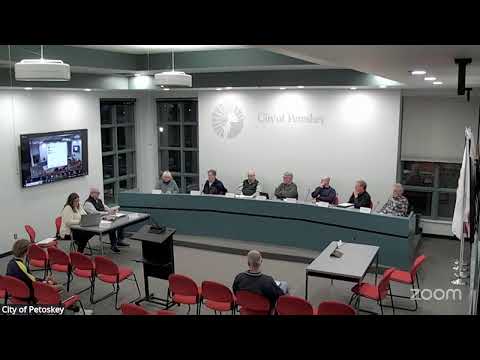
The Petoskey Planning Commission reviewed a proposed ordinance amendment that would allow residential uses—including co‑living and seasonal housing—in lower levels of buildings in the B2 Central Business District as a special condition use, but commissioners voted to send the draft back for revisions and to reconsider it at a future meeting.
John (planning staff) presented the draft language and said Emmett County Construction and the city’s fire code will be significant hurdles; any below‑grade units would have to meet Michigan building, electrical, mechanical and plumbing codes as well as local fire protections. “Construction has to comply with the Michigan building, electric, mechanical plumbing, and fire codes,” he said.
Key concerns and proposed conditions: The draft includes conditions intended to protect downtown character and safety: access to residential units should use side or rear entrances when feasible; outdoor furniture or grills would be disallowed unless part of a screened private courtyard not visible to the public; refuse collection for the unit should not be located in a public alley or space; and the property owner would be responsible for refuse control.
Commissioners and downtown representatives raised several issues: Carolyn asked whether the city should require a commercial tenant on the storefront level before allowing residential conversion of a lower level. Commissioners worried that allowing basement residential could encourage property owners to leave street‑front retail vacant while generating income from rental units below. Others noted that egress, window access and sprinkler requirements make many basements expensive to convert.
Housing types and definitions: Commissioners requested clear definitions for co‑living (the draft uses a common definition: three or more unrelated persons sharing common space such as a kitchen) and for seasonal rental. The commission discussed limiting permitted lower‑level housing to co‑living and seasonal workforce housing and explicitly excluding short‑term rentals and typical upper‑level short‑term rental provisions from applying to lower levels.
Safety and nuisance controls: Several commissioners and public commenters recommended banning grills in downtown exterior areas because of fire and smoke concerns. Staff and building officials warned that some conversions will require sprinklers and upgraded egress if bedrooms lack code‑compliant windows.
Tax and vacancy concerns: Public commenters and some commissioners warned that allowing below‑grade residential could create incentives for owners to convert marginal commercial space into rental housing while leaving street‑front retail vacant, a result that could reduce downtown retail vitality and complicate enforcement of property‑maintenance standards.
Outcome: Commissioner Albert moved to have staff revise the proposed ordinance and return it for reconsideration at the next or a subsequent meeting; Commissioner Charlie seconded. The motion carried; commissioners agreed to postpone the public‑hearing step until staff returns with a revised draft addressing the highlighted concerns.
Next steps: Staff will add a chart title (clarifying the B2 district reference), prepare definitions for co‑living and seasonal rental, consult with the downtown manager (Amy Tweeden) and building officials (Emmett County Construction) about enforceable code and refuse solutions, and return a revised draft for further review.