Get Full Government Meeting Transcripts, Videos, & Alerts Forever!
Get email alerts on the County Budget topic
No spam. Unsubscribe anytime.
Dorchester County projects $7.7 million FY26 shortfall; officials propose $2.1M in capital cuts and fee, tax options
Summary
Dorchester County officials said a projected $7,740,000 shortfall for fiscal 2026 is forcing a mix of capital reductions and potential new revenues, including a proposed 911 line fee increase and ending long-standing municipal tax differential payments.
Dorchester County officials said a projected $7,740,000 shortfall for fiscal 2026 is forcing a mix of capital reductions and potential new revenues, including a proposed 911 line fee increase and ending long-standing municipal tax differential payments.
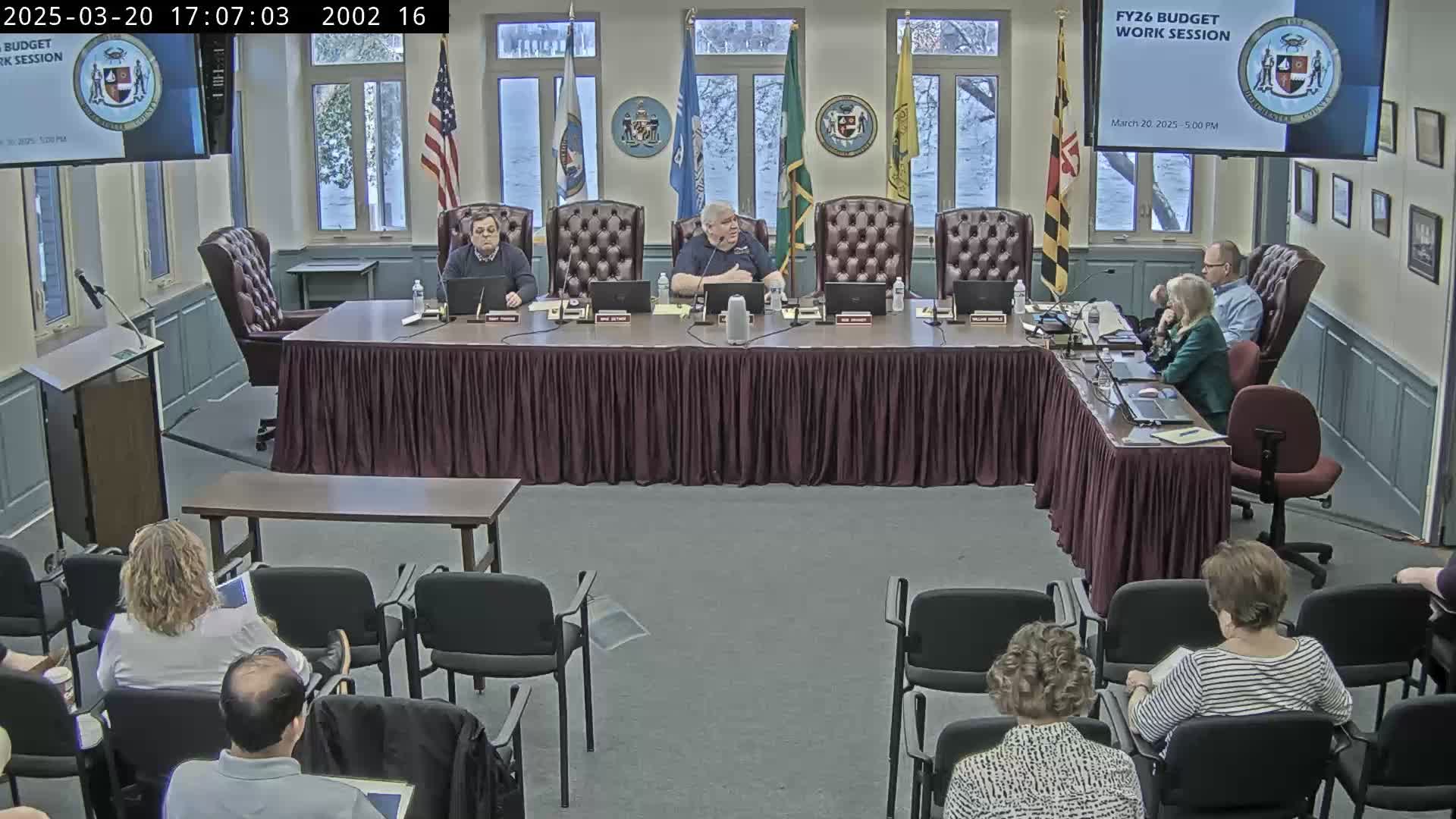
County staff presented the update at a budget work session and described the shortfall as driven largely by proposed state reductions and lower local revenue projections. With last year—s $2,449,000 surplus removed from the FY26 plan, staff said the county faces a larger gap that they are working to close through departmental cuts, capital deferrals and revenue changes.
The budget situation matters because county officials say the remaining gap could require either a property tax increase or other measures that would affect residents and county services. County staff calculated that each one-cent increase in the property tax rate yields about $340,000; covering the full projected shortfall without other changes would require roughly a 12-cent increase, officials said. Staff cautioned the numbers remain fluid pending action in the Maryland General Assembly and the governor—s review.
Staff numbers and proposed changes
County staff said the state-level actions account for roughly $5,600,000 of the current impact on Dorchester County. The full revenue-to-expenditure gap shown at the meeting was about $7,740,000; removing last year—s one-time surplus increased the shortfall staff must cover.
On the capital side, the county had $3,800,000 of requests included in the draft. The administrator—s recommendations would defer or reduce projects and equipment purchases enough to free about $2,100,000, lowering the shortfall to about $5,641,000 if the board adopts those recommendations.
Staff identified other controllable savings and revenue options that together could reduce the remaining gap by several million dollars: - Increase the county—s 911 line fee from $2 to $4.25 per line, advertised for public hearing; staff estimate the change would raise about $1,210,000. - Eliminate tax differential payments to municipalities, estimated to return about $1,140,000 to the county budget. Staff provided a breakdown showing Cambridge would account for roughly $985,000 of that amount, Hurlock about $143,000 and the remaining municipalities about $6,500. - Include turnover savings in departmental budgets (estimated about $1,100,000).
Staff also reported that some capital items are funded from enterprise or restricted funds (for example, litter fences) and cannot be used for general operating needs.
Education and maintenance-of-effort pressures
The county presented a multi-year projection that shows pressure from education funding. Staff said the combined requests from Chesapeake College and the local Board of Education represent about 37% of the county—s overall budget and that the Board of Education—s FY26 capital ask approaches $486,000 in the materials shown at the session. The presentation included a projection that, absent changes, education-related spending could increase by roughly $10 million annually by fiscal 2034 relative to current levels.
Officials discussed the legal and policy concept of maintenance of effort for education, which requires the county to provide at least the prior year—s level of funding. Staff identified the school system—s request (a figure shown as about $2,580,000 in the packet) as a material driver of the long-term gap and said staff would pursue discussions with school finance officials about possible state waivers or adjustments that might reduce the county—s obligation.
Service impacts and uncertainty
Department heads and staff flagged services and projects that could be affected. Public Works is conducting a post-winter road assessment, and staff said the cost of pavement and other repairs is uncertain and could require emergency allocations if severe deterioration is found. Staff noted the difference between asphalt paving and lower-cost chip seal or tar-and-chip treatments, explaining lower-cost options reduce short-term outlays but shorten pavement life.
Public safety capital requests under review included replacement ambulances, police vehicles and 911 logging/recording system upgrades; staff said a recent estimate for the 911 logging replacement was about $522,000 with a county share near $370,000. The sheriff—s office requested vehicle replacements; county staff proposed reducing the initial request and phasing purchases.
County staff said no paramedic positions were slated for elimination at the time of the meeting, but they emphasized many decisions remain and that reductions to services remain possible if revenue options are not adopted.
Community reaction and next steps
Members of the council and the public at the workshop expressed concern about the potential impacts on seniors and low-income residents if tax increases are used to close the gap. Officials repeatedly framed the situation as largely driven by state decisions and described the local options as difficult trade-offs.
County staff said they would revisit capital requests with department directors and return next week to finalize capital recommendations. They also said the 911 fee increase has been advertised and will proceed to public hearings as required. Staff emphasized the fiscal picture could change if the General Assembly or the governor alters state proposals before final passage.
The council scheduled a follow-up budget session for next Thursday at 5:00 p.m. for further review and potential final recommendations.