Get Full Government Meeting Transcripts, Videos, & Alerts Forever!
Get email alerts on the Privacy Tracking Devices topic
No spam. Unsubscribe anytime.
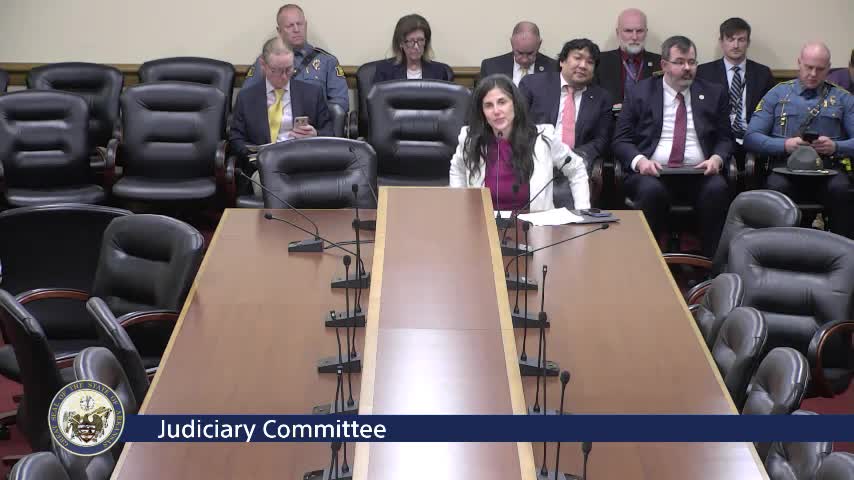
Committee rejects proposal to criminalize nonconsensual tracking devices after questions about custody, employers
Summary
House Bill 1641, which would have added nonconsensual use of a tracking device to the harassment code with an explicit parent/guardian exception, failed in committee after extended questioning about custody conflicts, employer use and unintended consequences.
House Bill 1641, introduced by Representative Nicole Clowney, would have added an offense to the harassment code for using a tracking device to determine a person’s location without consent, with an explicit exception to allow parents and legal guardians to track minors. After extended questioning from committee members, the measure failed to pass in committee.
Clowney told the panel the bill was prompted by a constituent who discovered a tracking device had been placed on her car and said roughly 30 states have taken action on similar technology. The proposed statute would have defined ‘‘tracking device’’ and made it harassment to place such a device with the purpose of tracking someone without good cause or legal authority.
Committee members pressed the sponsor and prosecutors on numerous scenarios. Several senators asked whether the bill would let a parent who shares custody track a child while the child is physically in the care of the other parent. Representative Clowney said the bill’s language mirrored current practice and that parents who want to track their own children already do so; prosecutors testified they would exercise discretion about what constitutes ‘‘good cause.’’
Senators raised additional concerns about employer tracking of company vehicles, unintended privacy effects when parents live together but one objected to tracking, and the potential to escalate domestic disputes into criminal cases. Several committee members said they were unconvinced the bill’s exceptions and prosecutorial discretion would avoid the unintended consequences described in testimony.
After questions from multiple committee members and an extended back‑and‑forth about custody and enforcement, the chair announced the bill did not pass the committee.