Get Full Government Meeting Transcripts, Videos, & Alerts Forever!
Get email alerts on the School Safety And Career Prep topic
No spam. Unsubscribe anytime.
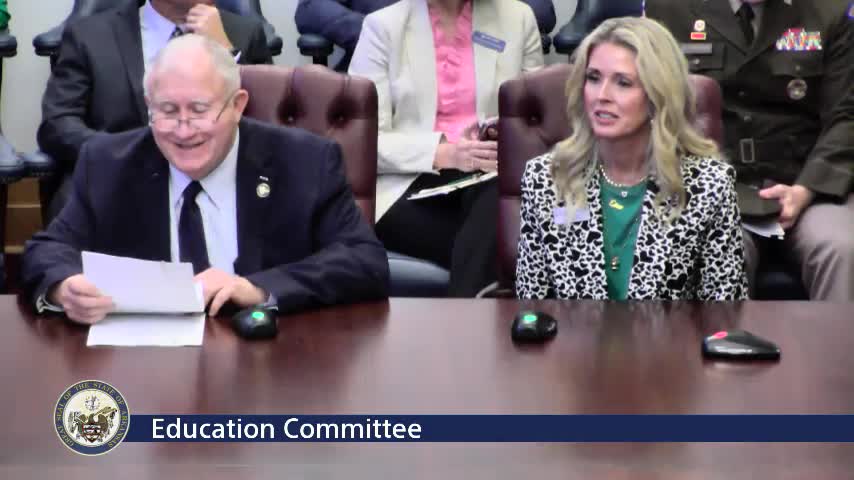
Committee approves several House bills on school cardiac response, military and career outreach to students
Summary
The Senate Education Committee approved three House-originated measures: a requirement for school cardiac emergency plans (HB 1398), increased school access for military recruiters (House bill to allow National Guard access), and a measure encouraging 4-year colleges to provide career resources to students who leave school (HB 1601).
The Senate Education Committee approved multiple House bills covering school safety and student career connections.
Cardiac emergency response (House Bill 1398): Representative Lee Johnson introduced HB 1398, which requires public schools to adopt a cardiac emergency response plan that integrates nationally recognized elements (for example, guidance from organizations focused on emergency cardiovascular care). Testimony included a school board member and a parent who recounted a student cardiac episode; witnesses said many districts already follow best practices and that the bill is intended to ensure every building has a plan and staff awareness without imposing new equipment mandates. The committee voted to pass HB 1398.
Military recruiter access (House Bill 1689 — sponsor identified as State Senator Dave Wallace presenting a House bill): Brig. Gen. Michael Henderson and others testified in favor of work that would give the National Guard similar access to high schools as colleges and businesses currently have for recruiting and career outreach. Sponsors said Arkansas National Guard recruiting access is important to sustain unit readiness and provide students with visibility into military careers. The committee voted to pass the measure.
College career resources for non-completing students (House Bill 1601): Representative Lee Johnson presented HB 1601, which asks state-supported four-year institutions to provide career-resource connections for students who stop attending — a measure intended to help recent dropouts or those who leave with debt connect to trade and workforce training. Sponsor testimony described collaboration with higher-education institutions and emphasized that the bill was intended to be a modest, non-burdensome step to connect students with career-technical options; the committee voted to pass the measure.
Action: The committee passed these House bills (HB 1398, the National Guard access bill, and HB 1601) on voice votes.
Implications: HB 1398 codifies a readiness requirement that many districts already follow, intended to make school buildings safer and clarify emergency processes. The National Guard access bill expands recruiter access and reflects workforce development priorities. HB 1601 responds to concerns about college non-completion and creates a formal expectation that institutions help connect leavers to workforce resources.