Get Full Government Meeting Transcripts, Videos, & Alerts Forever!
Get email alerts on the Vacant Property Ordinance topic
No spam. Unsubscribe anytime.
Lansdale council tables vacant-property registration ordinance after public pushback
Summary
Lansdale Borough Council voted to table Ordinance 1982, a proposed vacant-property and foreclosing-mortgage registration requirement, after multiple residents and business owners raised concerns about unintended consequences, enforcement language and property-owner burdens.
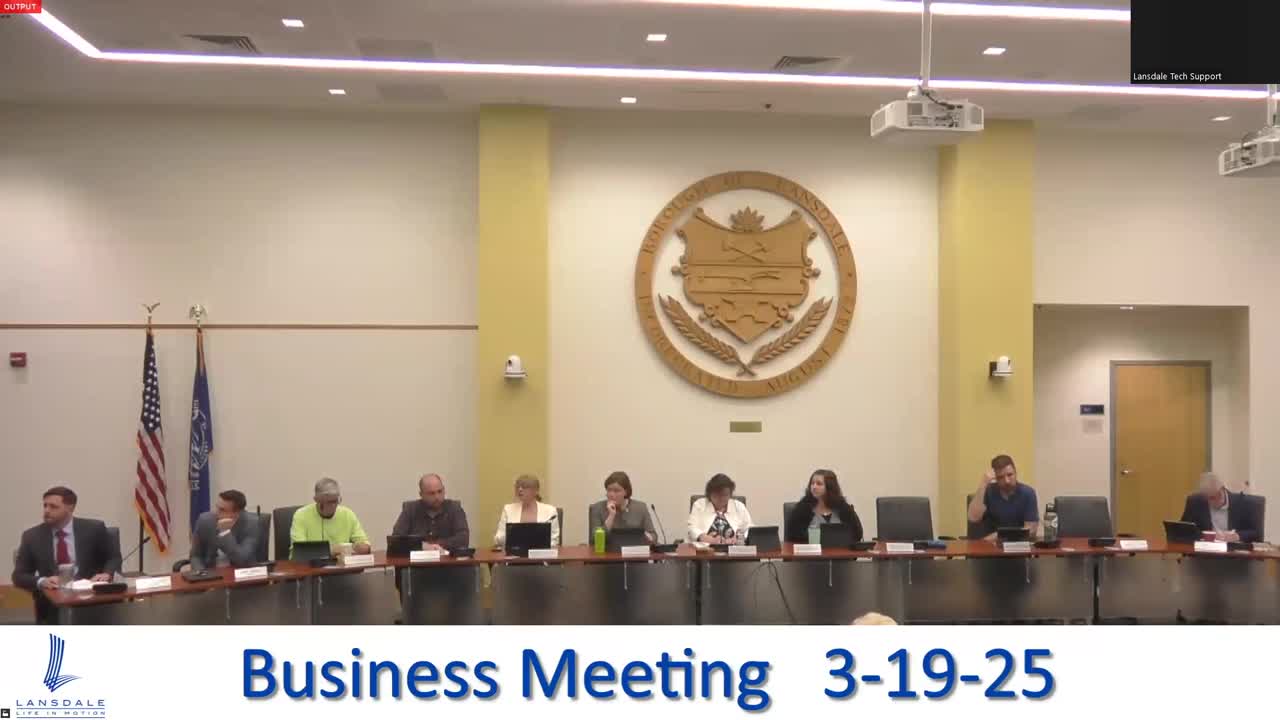
Lansdale Borough Council on Wednesday voted to table Ordinance 1982, a proposed chapter to register foreclosing mortgages and vacant property, after extended public comment and council discussion highlighted concerns about enforcement language and effects on local landlords and businesses.
Supporters of reviewing vacancy and foreclosure issues say the goal is to address blighted storefronts and neighborhood decline; critics argued the draft ordinance, including rules about covered windows and registration, would create burdens and discourage investment.
Richard Strom, owner and principal broker of American Forester Realty, told the council the draft ordinance appeared to be “cut and paste legislation” from other municipalities and not tailored to Lansdale. “If you’re doing this to protect the declining value of our real estate, guess what, people? It’s not declining,” Strom said, citing borough median sales prices and low foreclosure counts. “Please don’t make them cover the windows.”
Strom gave figures saying the borough’s median residential sale price rose from about $189,900 in 2015 to $240,000 in 2020 and to about $380,000 in 2024. He also said there has been “virtually no foreclosures in Lansdale Borough over the last four years” and that, at the time, “there is only one residential foreclosure sale” and three commercial foreclosures in the borough.
Other downtown business owners and residents echoed concerns that the ordinance could impose aesthetic requirements and registration duties that would be onerous or counterproductive. Chip Panico, a Main Street business owner who has spoken at prior meetings about the draft, said additional regulatory obstacles could discourage investors at a time when landlords are already struggling to lease space. “Putting any sort of obstacles in front of people that are looking to invest isn’t conducive to people looking to invest,” Panico said.
Council members acknowledged the ordinance grew out of long-running committee work. Councilwoman Rafia Razak introduced the ordinance at the business meeting, describing it as adding a new Chapter 308 requiring registration and maintenance by mortgagees and owners. Multiple council members, including Councilman BJ Breisch and others, said the measure needed further refinement, particularly around privacy and contractual language tied to a vendor contract referenced in committee work.
Council discussion also raised the separate question of incentives versus penalties. Councilman Breisch said he supported the ordinance’s intent to address vacancy, but that the language and an associated contract needed review to safeguard personal information and ensure the borough wasn’t overreaching on aesthetic controls such as window coverings.
After discussion, a motion to table Ordinance 1982 for further committee review passed; no ordinance provisions were adopted at the meeting. The council asked that the code committee revisit the draft, examine the related contract language, and consider incentive approaches alongside enforcement tools.
Background: The draft ordinance would create a registration requirement for certain foreclosing mortgages and vacant properties, provide penalties and enforcement mechanisms, and set rules intended to limit and reduce registrable properties. Council members and members of the public urged clearer definitions of applicability — for example, how the ordinance would treat large parcels with multiple storefronts — and more precise safeguards on enforcement authority.
Council next steps: The ordinance was sent back to the code committee for redrafting. Council members asked staff to bring revised language and any related contract documents back to committee for additional public review and to consider incentives to encourage occupancy.
Votes and action: The motion to table Ordinance 1982 passed (motion F).