Get Full Government Meeting Transcripts, Videos, & Alerts Forever!
Get email alerts on the Residential Rezoning Quiet Country topic
No spam. Unsubscribe anytime.
Developer seeks rezoning of 22-acre Quiet Country Lane parcel; neighbors press for PUD, traffic study
Summary
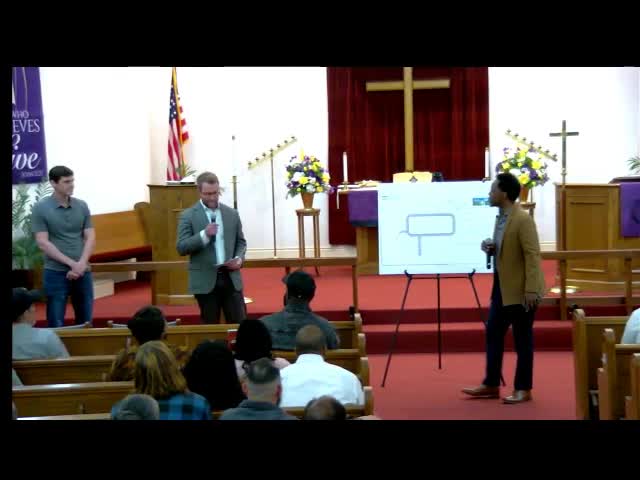
Councilman Reginald Gaffney hosted a community meeting where Coastland Group representatives outlined a rezoning proposal for the eastern 22 acres of 6113 Quiet Country Lane intended to allow denser single-family development than the property's current RR-Acre zoning.
Councilman Reginald Gaffney hosted a community meeting where Coastland Group representatives outlined a rezoning proposal for the eastern 22 acres of 6113 Quiet Country Lane intended to allow denser single-family development than the property's current RR-Acre zoning.
Hayden Phillips, a land-use attorney representing Coastland Group, told attendees, "we filed a rezoning application for the eastern 22 acres of 6113 Quiet Country Lane to rezone that from RR-Acre to RLD-70." He said the developer's initial site plan showed 58 homes on the 22-acre parcel, with an expected price range of $500,000 to $650,000 and typical house sizes between 2,500 and 3,500 square feet.
The meeting drew more than a dozen residents who spoke at length about traffic safety on Bridges Road and Dunn Avenue, drainage and wetlands, school capacity, and the fact that the parcel is currently under contract and has not closed. Denise Johnson, a Bridges Road resident, asked, "is it gonna be one way in and one way out as it is now?" — echoing several neighbors' worries about a single access for dozens of new homes.
Attendees also questioned the development's scope and whether the project could expand in later phases. Ian Brown, a member of the developer team, said the middle parcel of the original 46-acre tract sold recently and that the buyer plans to renovate and remain there, which the developer said reduces the chance of future expansion. Brown added, "58, certainly not 141, and we're willing to do a PUD that would cap us and keep us at that number."
Developers and their engineers addressed technical questions raised by residents. They said sewer service would be routed from the north through an existing JEA corridor and that water is still being finalized. The team committed to performing a traffic study and to working with the city on any recommended improvements. Hayden Phillips said earlier utility outreach to JEA produced a higher-capacity estimate when the entire 46-acre tract was contemplated; that larger number reflected a capacity inquiry rather than an approved build plan for 141 homes.
At the close of the session the developer offered several on-the-spot commitments, while Councilman Gaffney and residents discussed next steps. The development team agreed to amend the application from a conventional RLD-70 rezoning to a Planned Unit Development (PUD) with a site plan and enforceable written commitments; they also offered to reduce the draft lot count from 58 to 53 and to perform a traffic analysis. The team said the projects required city mobility fee would be about $140,000 and proposed coordinating with the council office to direct those funds toward local road improvements if possible.
Councilman Gaffney did not act on the rezoning at the meeting; he offered two options to the neighborhood: attempt a negotiated compromise with the developer, or take the rezoning forward through the city process (LUZ/planning commission then city council). He encouraged the community to organize a seven-member representative group to negotiate and to meet again the following week. The applicant and developer left briefly to consult and returned to confirm the commitments above and to agree to a follow-up meeting the next Thursday.
The rezoning application has been deferred in the city's schedule; the developers said the planning commission hearing had been postponed previously. No formal city vote or council action occurred during the meeting; the developer's commitments are voluntary amendments to their application and would become enforceable only if written into the PUD and approved through the city's formal process.
What happens next: the developer will submit a revised application as a PUD with a site plan and written commitments; a traffic study will be completed and shared with the council office and residents; the community plans to meet again and to select representatives to negotiate further or prepare for the applications review by LUZ and city council.