Get Full Government Meeting Transcripts, Videos, & Alerts Forever!
Get email alerts on the Recycling Programs topic
No spam. Unsubscribe anytime.
Tulsa recycling report: tariffs, prices and local contamination trends
Summary
City staff reviewed recycling markets, material prices and contamination trends, reporting flat volumes year-over-year, recent price gains for aluminum and milk jugs, and continuing uncertainty from tariff and grant changes affecting processing infrastructure.
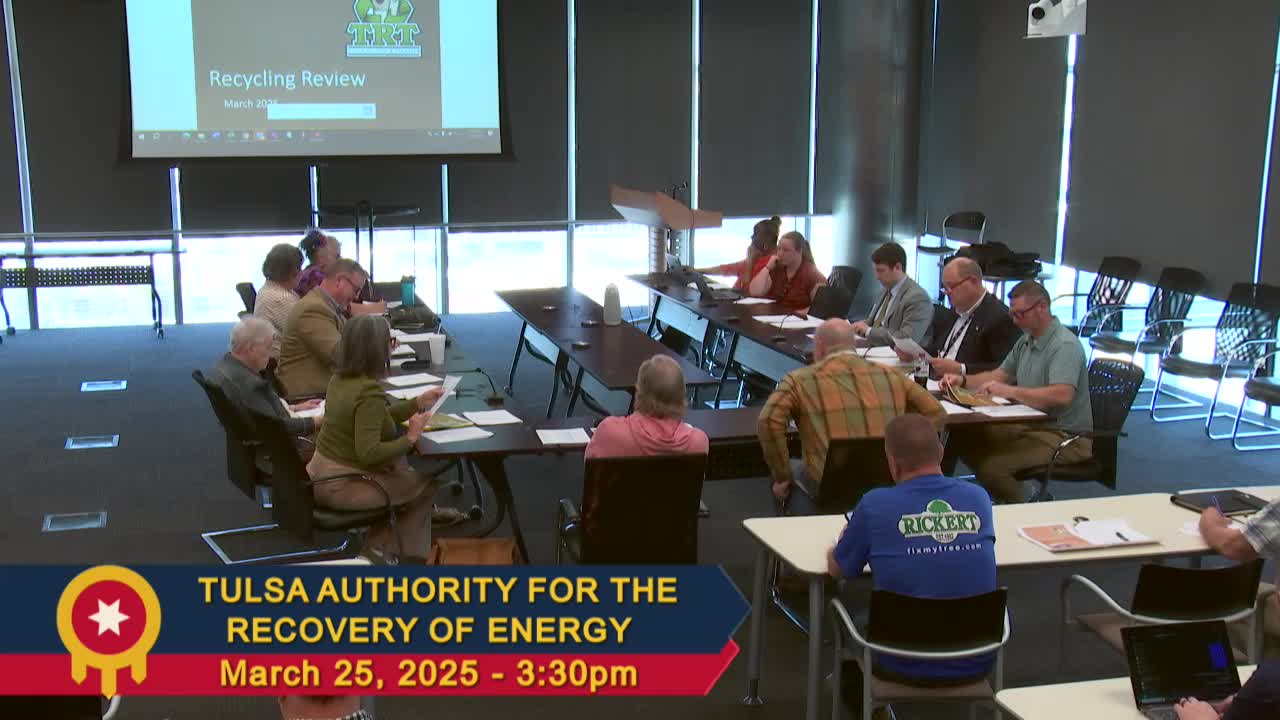
City recycling staff told the Tulsa Authority for the Recovery of Energy on March 25 that broader market and policy shifts have affected recyclable-material values, but local volumes and program performance have remained steady.
"These tariffs, for us, are more Mexico Canada than necessarily anything abroad further," a recycling official said, describing trade and tariff effects on resins and commodities. Staff warned that changes in export markets, domestic processor start-ups and federal grant adjustments can shift prices for PET bottles, #5 polypropylene and cardboard.
Staff said cardboard prices were weak for the second half of 2024 and into 2025 because of supply-and-demand shifts, but predicted seasonal improvements depending on domestic demand and packaging activity. They reported recent price increases for aluminum (about 15 cents per pound over the previous 45 days) and rising prices for milk jugs; glass-processing capacity in the Midwest has eased local costs after a Texas processor shut down.
Locally, staff said contamination in curbside carts has declined after enforcement and removal of heavily contaminated carts, that volumes sold to recycling buyers have been largely flat year-over-year, and that audits are scheduled in April to track contamination rates. Staff also credited outreach channels (City website and Facebook) for public awareness and cited increased web traffic after public events such as the spring clean and home and garden shows.
The authority asked questions about processing capacity, grant-funded start-ups and likely price movements; staff said a number of new plants are in early stages and that glass, aluminum and certain plastics prices may change through the second half of 2025.