Get Full Government Meeting Transcripts, Videos, & Alerts Forever!
Get email alerts on the Expedited Business Filings topic
No spam. Unsubscribe anytime.
Conference committee deadlocks on HB 47 expedited filings; House-backed staff position retained but bill fails
Summary
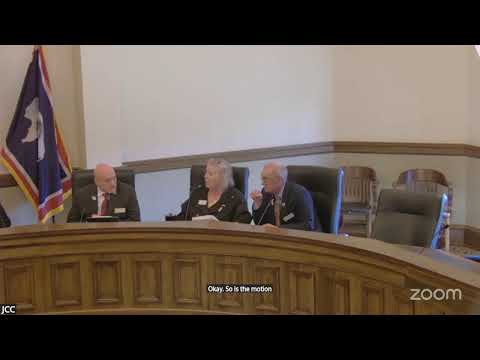
A joint conference committee on House Bill 47, which would authorize expedited business filings and a fee structure, failed to reach agreement. The committee approved inflation adjustment to fees but could not reconcile whether to fund a new staff position; the panel terminated without a conference agreement and the bill failed unless reappointed.
A joint conference committee for House Bill 47 on expedited business filings failed to reach agreement on whether to fund an additional staff position for the Secretary of State’s business division, and the committee terminated without a conference report, effectively killing the bill unless the chambers reappoint the committee.
The bill would authorize an expedited filing process for business documents and includes a provision to adjust certain fees with the Consumer Price Index. Wyoming Secretary of State Chuck Gray testified that the expedited process would require human review and asked the committee to restore language that included one additional full-time position to carry out the work.
Gray, the Wyoming Secretary of State, told the committee the office has 11 full-time employees handling business filings and has seen a rapid increase in volume: “in fiscal year 2024, we had 675,000 filings up from 590,000 in fiscal year 2023,” and revenue rose “from $42,300,000 in fiscal year 2023” to “$50,000,000 and change in fiscal year 2024.” He added, “This position will pay for itself in a little over a day.”
Colin Crossman, business director in the Secretary of State’s office, described the workload created by expedited filings and why automation would not replace human review for the types of documents likely to use the service. “Yes, this is the kind of things that will be requested for expedited filing are the kinds of things that will require hand touching and, much more, I guess, discernment than can generally be automated into a system,” he said, citing complex merger and acquisition documents that require staff to stop other work and correct errors so filings can be completed immediately.
Joe Rubino, general counsel and policy director for the Secretary of State, outlined the rulemaking timeline the agency would follow if the expedited process is adopted, saying “what you have is a minimum 45 days, after promulgation for public comment,” and noting additional time after final adoption for the governor’s review.
Committee action and votes
Representative Pendergraft moved to divide the Senate standing committee amendment (HB0047SS01) into two parts: Division 1 (page 2, lines 5–10), the CPI fee-adjustment language, and Division 2 (the remainder, which would delete the House provision establishing the additional position). The committee ruled the amendment divisible.
- Division 1 (lines 5–10; CPI adjustment to the fee): the committee approved the division (voice vote; committee recorded “aye,” carried). The CPI indexing language remained.
- Division 2 (the remainder, deleting the House provision to add a position): votes on the division were held and the motion to adopt Division 2 (which would have removed the position) was defeated (committee recorded the division as defeated).
After those votes, the committee considered a motion to reinstate the House standing committee amendment that institutes and funds the one additional position. That motion, seconded by Representative Lucas, passed on a voice vote. The committee chair then noted that the House position was affirmed by this committee while the Senate position failed to carry in the conference process.
Because the two chambers’ positions could not be reconciled in the joint conference committee, the panel terminated without a conference report. As the chair stated on the record, “this particular bill will fail based on that disagreement,” unless the presiding officers reappoint a conference committee or the chambers otherwise act to resolve the differences.
Why it mattered
Committee members and the Secretary of State’s office framed the dispute as a question of timing and process: supporters said an extra staff member was warranted to meet Wyoming’s 15-day statutory deadline for processing filings and to prevent staff from becoming overburdened; opponents and some senators said the workload could be addressed through the budget process or by adopting the statutory authorization without immediately funding a position.
Co-chair Andrew Rothfuss (Co-chair Rothfuss) summarized the committee’s intent and the dilemma: “it was a simple bill that just provided the authorization to the secretary of state's office to do this if they chose,” and he cautioned that adding an appropriation in the bill would jeopardize passage on the Senate side.
Next steps
Committee members said the chambers would be notified of the outcome and it will be up to presiding officers whether to reappoint a conference committee or otherwise resolve the disagreement. If reappointed, the committee could revisit the positions, fee structure and associated rulemaking timelines; otherwise HB 47 will fail for this session.