Get Full Government Meeting Transcripts, Videos, & Alerts Forever!
Get email alerts on the Stormwater Construction Permits topic
No spam. Unsubscribe anytime.
Heated hearing on bill to limit local stormwater rules; committee delays vote for amendments
Summary
House Bill 1037, which would bar localities from enforcing stormwater sediment and erosion controls stricter than the state's Construction Stormwater General Permit, drew extensive public testimony and opposition; the committee held the bill to consider amendments and scheduled an amend-and-vote session next week.
Representative Miller and Senator Dorio presented House Bill 1037 to the Environmental Affairs Rules Committee, explaining the bill would prevent municipalities and MS4 operators from adopting or enforcing local sediment and erosion control regulations more stringent than Indiana’s Construction Stormwater General Permit (CSGP).
“10‑37 is about streamlining environmental regulations across our state and making sure our local regulations are not more stringent than the already costly regulations imposed by EPA through IDEM,” Representative Miller told the committee, framing the bill as providing consistency for property owners and developers operating across multiple jurisdictions.
The bill prompted lengthy testimony from local officials, environmental groups, stormwater professionals and industry representatives. Speakers opposing the measure said it would weaken local authority, remove protections for construction sites under an acre (which they said represent the majority of urban projects), and shift cleanup and infrastructure costs to taxpayers and utilities.
Dessie Bridal of Indiana Conservation Voters said HB 1037 “will effectively remove and prohibit any stormwater regulations for sites under an acre,” and described neighborhood photographs showing sediment tracked into Indianapolis streets after a rainstorm. Erica Pena, stormwater program manager for Monroe County, testified that Monroe County’s karst geology and sinkhole networks require locally tailored standards and pre‑construction review to flag site‑specific risks such as sinkholes and steep slopes. The city of Indianapolis’ MS4 stormwater coordinator, Gail Boyston, said last year the city issued 2,680 construction drainage permits and that only 15% were governed by the state general permit; she said HB 1037 would leave the remaining small projects with reduced local recourse to prevent sediment leaving sites.
Other speakers included neutral or technical testimony from the Indiana Association for Floodplain and Stormwater Management, which urged clarification because the CSGP also addresses post‑construction quantity and quality issues that local ordinances currently implement. Bill Blomquist of the White River Alliance said the bill would make the state permit a ceiling rather than a floor and would create a gap for construction sites under an acre, which are excluded from the state permit.
Industry groups including the Indiana Builders Association and the Indiana Manufacturers Association supported the bill, saying it would create regulatory consistency and lower costs for builders who work in many jurisdictions. Builders representatives and the bill’s authors argued the bill does not reduce federal standards and is intended only to align local rules with the state permit during the construction phase.
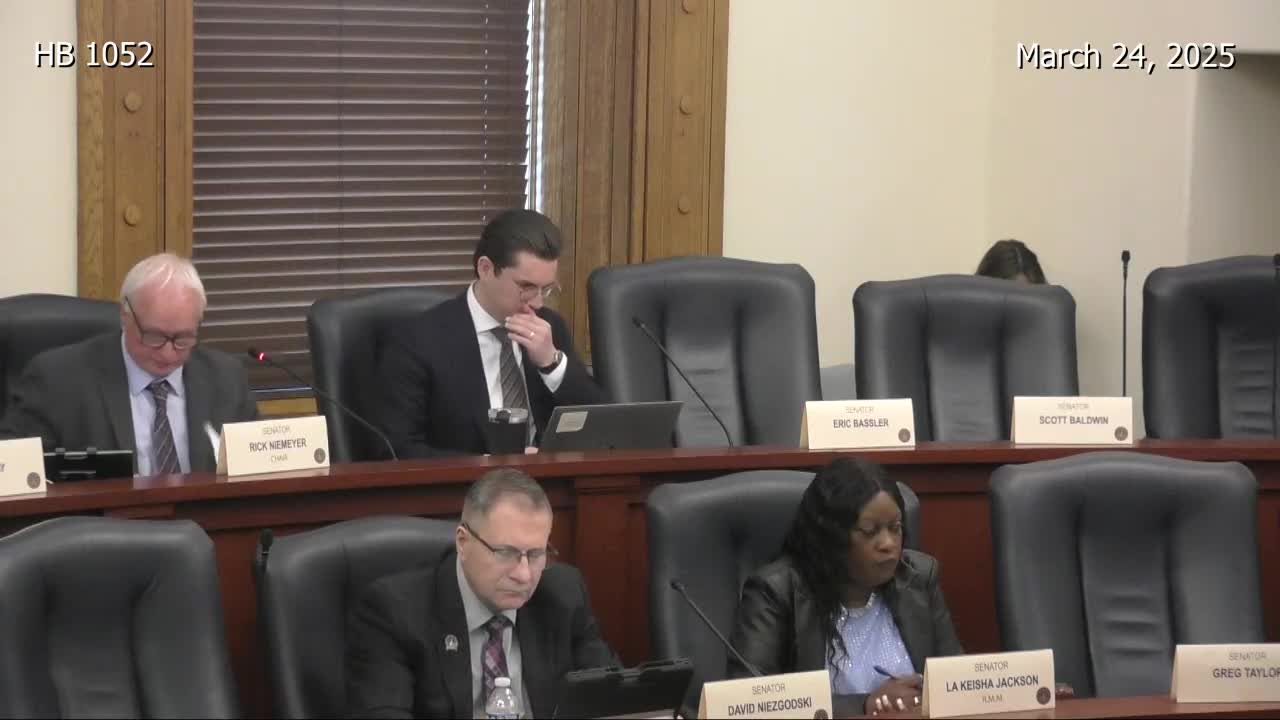
After extended discussion and testimony from more than a dozen witnesses representing municipalities, environmental groups, stormwater professionals, builders and civic organizations, the committee chair said he would hold the bill and return it next week for an amendment and vote only session to allow stakeholders and staff to work through issues raised in testimony.
No formal vote on final passage occurred during the hearing; committee members asked detailed technical questions about permitting jurisdiction, site‑specific engineering, and the state‑local division of responsibilities for erosion control and post‑construction stormwater management.