Get Full Government Meeting Transcripts, Videos, & Alerts Forever!
Get email alerts on the Rural Road Safety Sight Lines topic
No spam. Unsubscribe anytime.
Committee hears bill on visibility at rural intersections; stakeholders urge revisions
Summary
Senate Bill 183, aimed at improving sight lines at rural intersections to reduce collisions, drew emotional testimony from a family that lost a son and concerns from landowners, DNR and Farm Bureau; the committee will work on amendments.
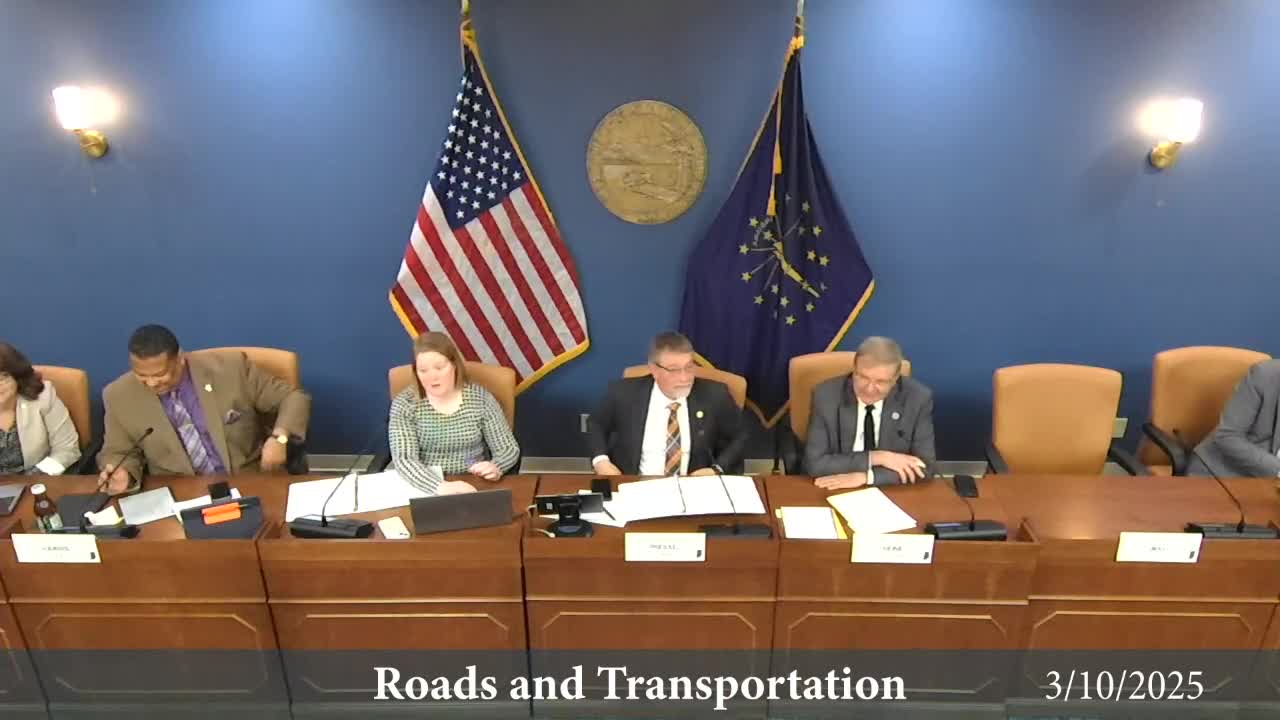
Senate Bill 183, a measure intended to reduce crashes at rural intersections by establishing sight-line requirements and notification for landowners and lessees, drew personal testimony and technical concerns during a lengthy House Roads and Transportation Committee hearing Monday.
Senator Mark Kreider, who presented the bill, said it responds to “situations that happen way too frequently” when crops, trees or other obstructions prevent drivers from seeing oncoming traffic. He characterized the measure as a safety-focused, multiyear effort and said he would work with stakeholders to refine the language.
Riley Sattergren’s family delivered emotional testimony. His father, Jace Sattergren, described how Riley — then 17 — died after colliding with farm equipment at an intersection obstructed by corn. The family described creating a nonprofit to place roadside warning signs and urged lawmakers to adopt rules that would prevent similar tragedies.
The Department of Natural Resources raised practical concerns about applying sight-line rules to the department’s nearly 380 properties across the state, including nature preserves where management and conservation goals could conflict with vegetation removal. Adam Novotny of the Indiana Farm Bureau objected to sections in the bill that he said lacked clarity on notification to landowners and would assign automatic liability without regard to the case’s merits.
Committee members and witnesses discussed options including a clear right-of-way buffer, certified-mail notice to landowners, and the scope of any civil-liability provisions. Senator Kreider and other committee leaders said they would continue drafting amendments to address DNR maintenance capacity, notification procedures and liability concerns.
Outcome: Committee held the bill for amendment to work with stakeholders; no final vote recorded.