Parents and staff say Conroy Education Center move to Southbrook would harm students; cite bathrooms, space and CAD program
Loading...
Summary
At a lengthy public hearing, parents, teachers and clinical staff urged the district not to relocate Conroy Education Center to Southbrook, saying the Manchester facility—ontains specialized spaces and community connections that cannot be replicated without detailed renovation plans and costs.
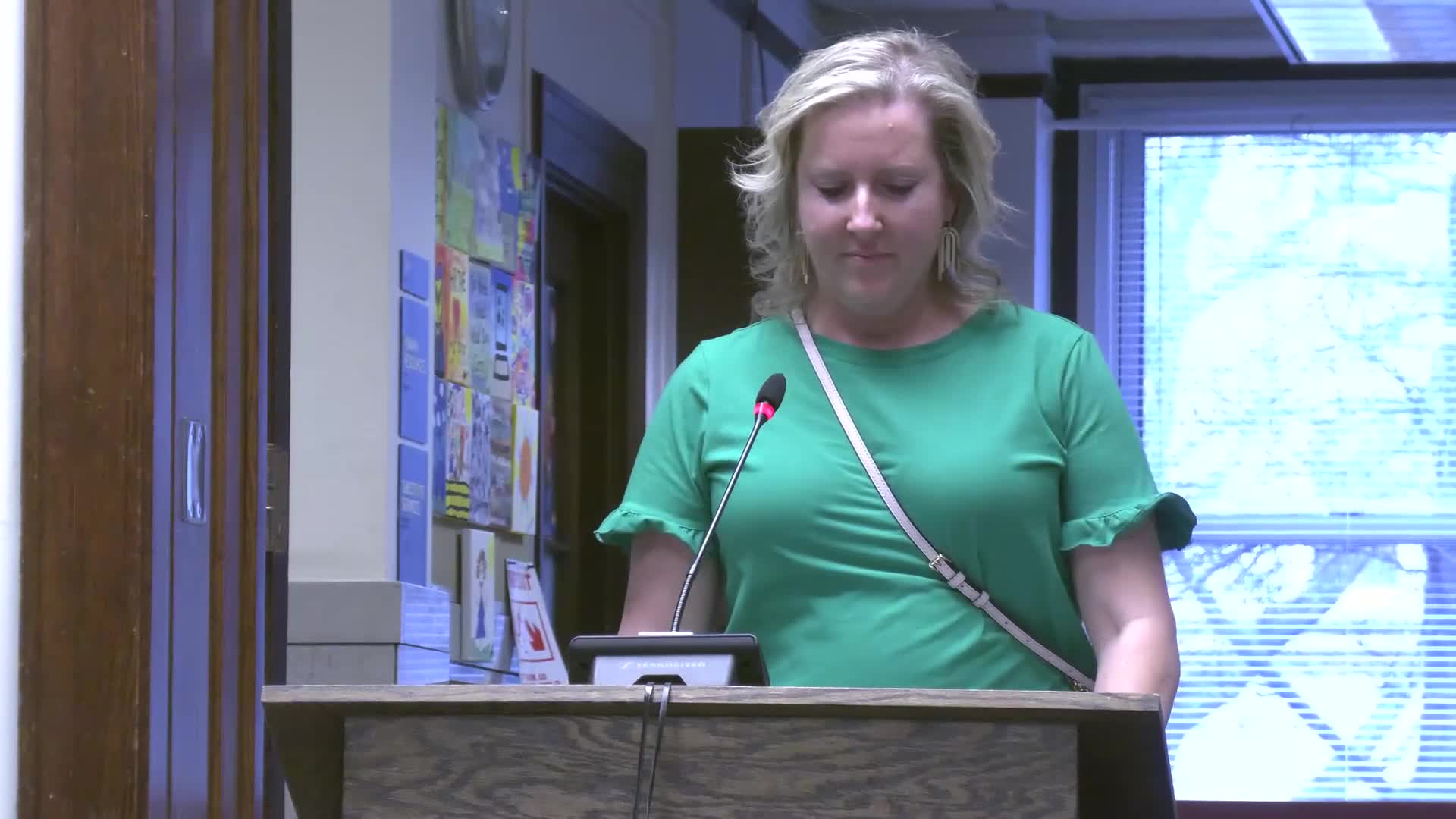
Parents, teachers and clinicians from Conroy Education Center made repeated appeals at the March 24 public hearing to keep the specialized school at its current Manchester site, saying the building nd neighborhood supports are integral to student outcomes and cannot be reproduced at Southbrook without substantial renovation and a clear implementation plan.
Conroy staff and families described the school as serving students with significant intellectual and behavioral needs and as providing daily features that staff said are essential: classrooms with nearby or in-class bathrooms, multiple calm-down and sensory spaces, large hallways for movement, an on-site kitchen and vocational training spaces, a gym and auditorium, and proximity to neighborhood resources used for community-based instruction. "These aren't just rooms or spaces. They're essential parts of our students' lives," life-skills support teacher Randy Green testified.
Teachers and therapists quantified the population: multiple speakers said Conroy serves about 196 students and includes 24 homerooms (Megan Balog). Staff described the Center for Autism and Developmental Disorders (CAD), a long-standing clinical partnership with UPMC that provides intensive behavioral and psychiatric outpatient services: school nurse Reagan Kaneski said CAD’s intensive program serves 12 students and provides outpatient psychiatric care to about 40 students, and that staff administer about 46 daily medications tied to the CAD provider.
Families and staff detailed the potential impacts of a move: loss of bathroom dignity for students who need nearby, private restrooms; fewer rooms for related services and smaller sensory spaces; reduced access to vocational and nearby community sites; and the logistical difficulty of increased travel time for families and work-based learning. "Bathroom dignity, for example, is an absolute must," parent Jordan Williams said.
Several speakers contested the administration's characterization that Southbrook offers equivalent assets. Teachers who worked summers at Southbrook described smaller classrooms, shared bathrooms and fewer gross-motor and sensory areas compared with Conroy. Conroy staff warned that some current Conroy classrooms would not fit into Southbrook and that moving will not replicate the Conroy building—cosystem even with renovations.
Some parents said the district had told them the chief reason for the proposed move was the need to replace Conroy's roof, a cost they've been given as about $8,000,000. Several parents asked why the district would invest in Southbrook renovations rather than repair the Conroy roof.
Ending: Conroy parents and staff asked the board to remove Conroy from the closure/relocation list until the district produces a detailed plan that enumerates required renovations at Southbrook, the exact spaces that would be lost or recreated, costs, timelines and guarantees for continuing CAD and other specialized services.